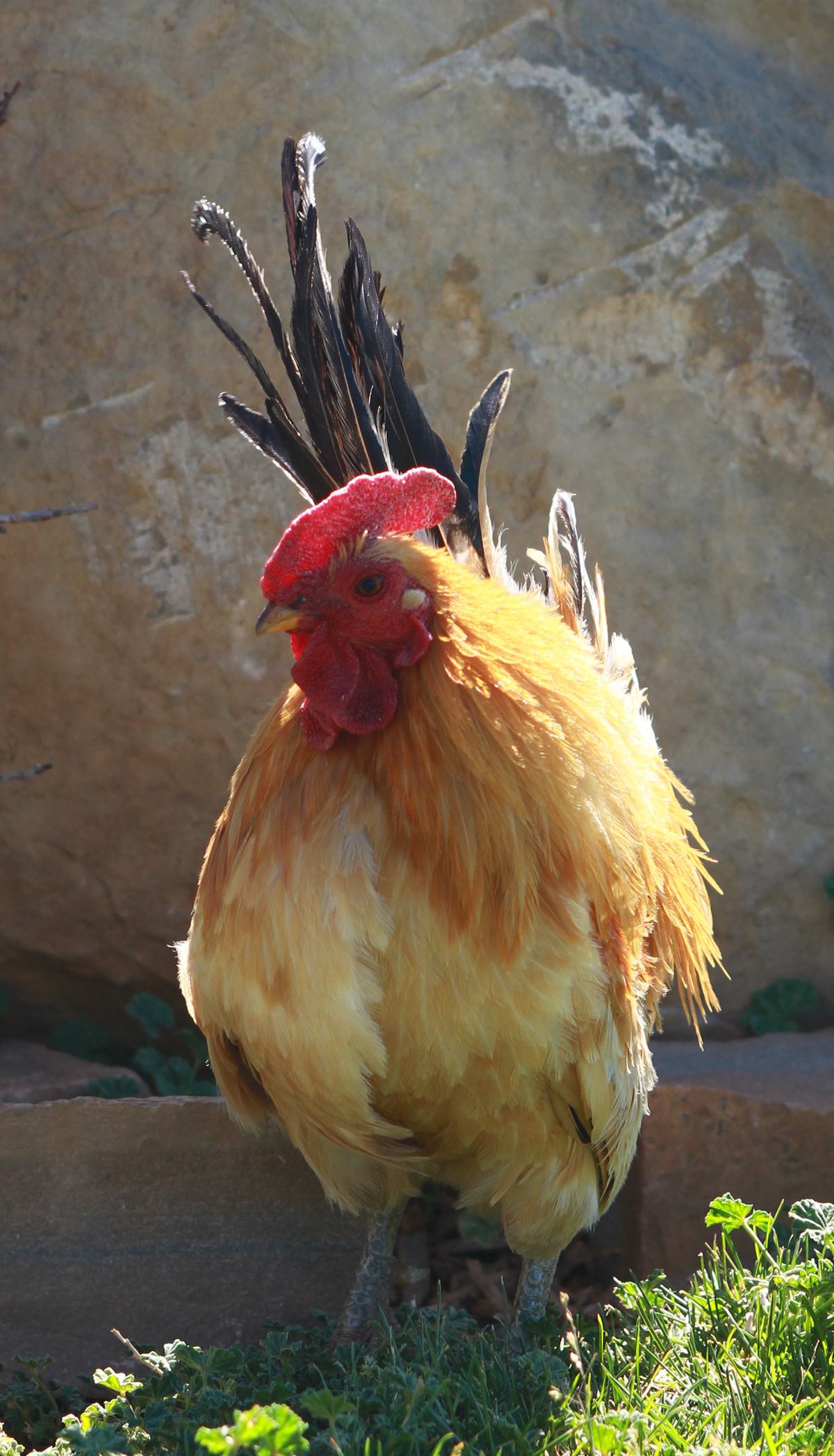
Ask my Year 4 class what the most common bird in the world is, and someone will always say a pigeon, or a seagull, or (last year) a penguin. The answer is the chicken, and it is not close. There are more chickens on Earth than any other bird by a very wide margin, and the ordinary farmyard hen turns out to be far cleverer than she lets on.
The Most Common Bird on Earth
At any given moment there are somewhere around 25 to 35 billion chickens alive, which is more than every wild bird put together. They outnumber people roughly three to one. No other bird comes close. If you added up all the sparrows, starlings and pigeons in the world, you would still fall well short of the number of chickens quietly pottering about in coops and back gardens. Somehow the most familiar bird is also the most numerous.
A Dinosaur in the Coop
Chickens are not merely descended from dinosaurs. In a real sense they are dinosaurs, the living end of the same family tree that produced Tyrannosaurus rex. Birds are theropods, the group of two-legged meat-eating dinosaurs, and the chicken is one of their most closely studied relatives. When scientists recovered protein fragments from a T. rex fossil, the nearest match among living animals was, of all things, the humble chicken. (Yes, really.)
From Jungle Bird to Farmyard
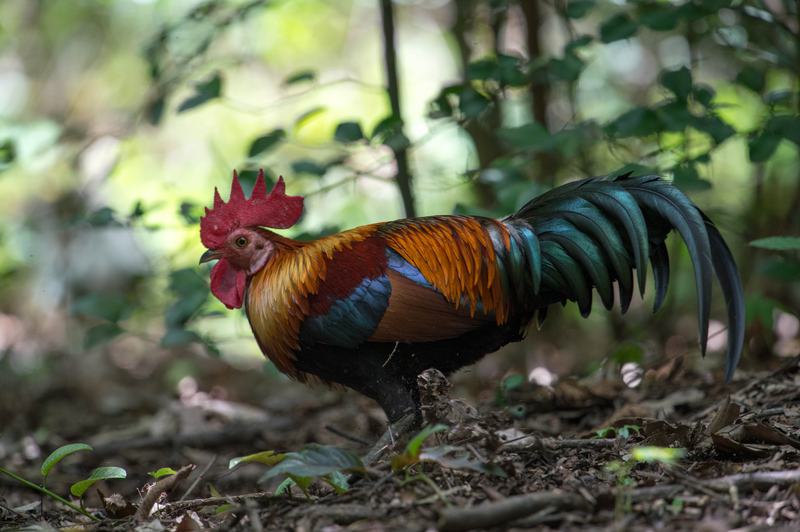
Every chicken alive traces back to the red junglefowl, a shy, russet bird still found in the forests of South and Southeast Asia. People began keeping them a few thousand years ago, and recent research suggests domestication is more recent than we once believed, tied to the spread of rice farming around 1500 BCE. The wild ancestor is smaller and warier than a farmyard hen, but the strut and the crow are unmistakable.

Where the Pecking Order Began
The phrase pecking order is not a metaphor borrowed from the office. It came straight from chickens. In 1921 a Norwegian student, Thorleif Schjelderup-Ebbe, described how hens sort themselves into a clear social ranking, with each bird knowing who it may peck and who may peck it. The top hen eats first and roosts where she likes. Add a new bird to the flock and the whole thing reshuffles until everyone knows their place again.
They Know Your Face
Chickens are surprisingly good with faces. They can tell apart roughly 100 individuals, chicken and human alike, and hold on to those memories for a long stretch. A hen who has decided you are the one with the food will pick you out of a crowd and hurry over. They also keep track of who ranks above whom, which is a great deal of social bookkeeping for a bird we tend to call bird-brained.
Chicks That Can Count
Newly hatched chicks have a basic head for numbers. In experiments, chicks only a few days old could track small quantities, tell more from less, and even follow simple sums as objects were hidden and shuffled behind screens. They seem to line numbers up from left to right, smaller values on the left, much as many people do. Not bad for an animal that has been out of its shell for under a week.

More Than Thirty Things to Say
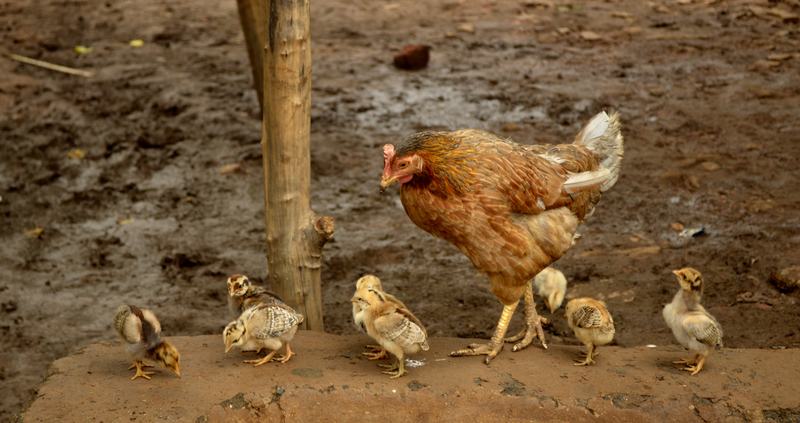
Chickens are chatty, and their calls carry real information. Researchers have catalogued somewhere around 24 to 30 distinct sounds, including separate alarm calls for a hawk in the sky and a fox on the ground. Hearing the aerial call, the other birds crouch and look up. Hearing the ground call, they stand tall and scan sideways. A rooster who finds food makes a special tidbitting call to summon the hens, though he is not above bluffing.
Talking Before They Hatch
The conversation starts before hatching. In the last days inside the egg, a chick begins to peep, and its mother clucks softly back through the shell. Chicks in neighbouring eggs can hear one another too, and this seems to help a clutch hatch closer together. So the very first thing a chicken ever does, before it has even met the world, is have a quiet word with its mum.
Frequently Asked Questions
Are chickens really related to dinosaurs?
Yes. Birds are living dinosaurs, part of the theropod group that included Tyrannosaurus rex. Chickens are among the relatives scientists study most, and protein recovered from a T. rex fossil matched chicken more closely than any other living animal tested at the time.
How many chickens are there in the world?
Around 25 to 35 billion at any one time, making the chicken by far the most numerous bird on the planet. They outnumber humans roughly three to one, and there are more chickens than all wild bird species put together.
Can chickens recognise people?
Yes. Chickens can distinguish around 100 individual faces, both chickens and humans, and remember them over time. A hen often learns which person brings the food and will single that person out, approaching them ahead of strangers. The same memory helps them navigate the flock's ranking.
What is a pecking order?
A pecking order is the social hierarchy within a flock, where each bird ranks above or below others and higher birds get first access to food and roosts. The term was coined in 1921 from studies of hens, and is now used well beyond the farmyard.
Sources
- Chicken - Encyclopaedia Britannica
- Are birds dinosaurs? - Natural History Museum
- The biocultural origins and dispersal of domestic chickens - PNAS
- Number-space mapping in the newborn chick resembles humans' mental number line - Science
- Thinking chickens: a review of cognition, emotion, and behaviour in the domestic chicken - Animal Cognition