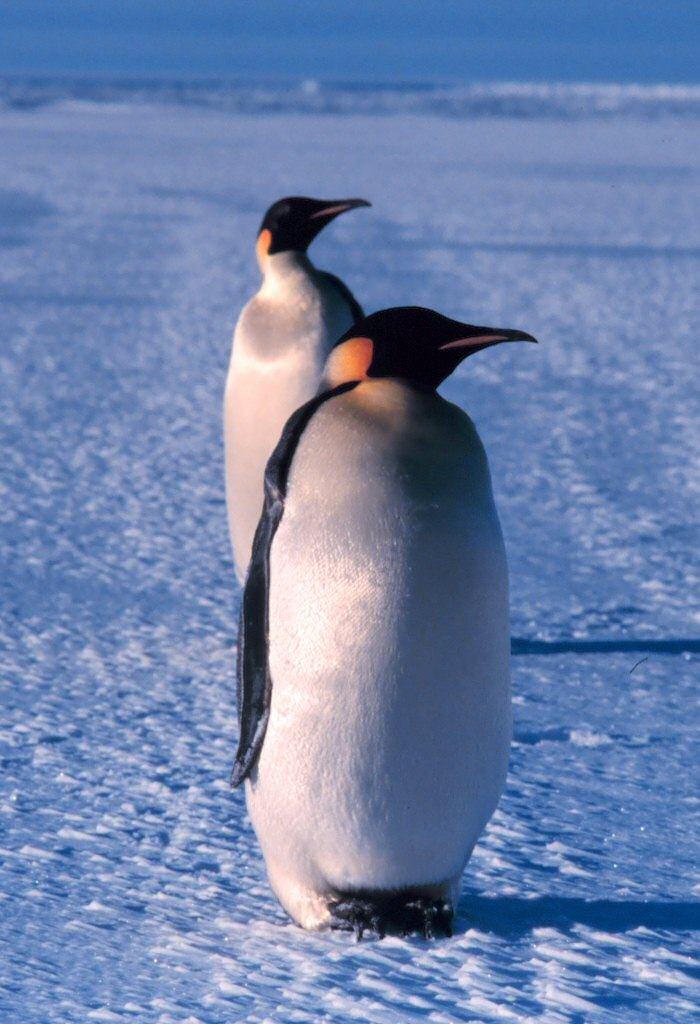
If you asked my Year 4 class to draw a penguin, you would get eighteen small waddling gentlemen in dinner jackets. Which, fair enough. But penguins are birds that looked at the sky, decided against it, and went the other way instead. They are some of the finest swimmers in the ocean, and one of them dives deeper than a submarine tour would dare. Here is what they are actually up to.
A Bird That Gave Up Flying
Penguins are birds. They have feathers, they lay eggs, they have wings. They simply cannot fly with those wings [6]. Somewhere back in time their ancestors traded flight for swimming, and the wings became stiff, flat flippers built for pushing through water rather than air [6]. So a penguin does still fly, in a sense. It just does it underwater, with its wings, several metres below the surface. Nobody warned me that "flightless bird" secretly meant "flying, but wet".
Eighteen Species, One Rule-Breaker
There are around eighteen species of penguin, and almost every one of them lives in the Southern Hemisphere [3]. Not all on ice, mind. Some live on the coasts of South Africa, Australia, and New Zealand in perfectly mild weather. The odd one out is the Galápagos penguin, which lives right up on the equator and is the only penguin found north of it [3]. So the classic image of a penguin shivering on an ice floe is true for some, and wildly wrong for others.

The Emperor Dives Deeper Than Any Bird
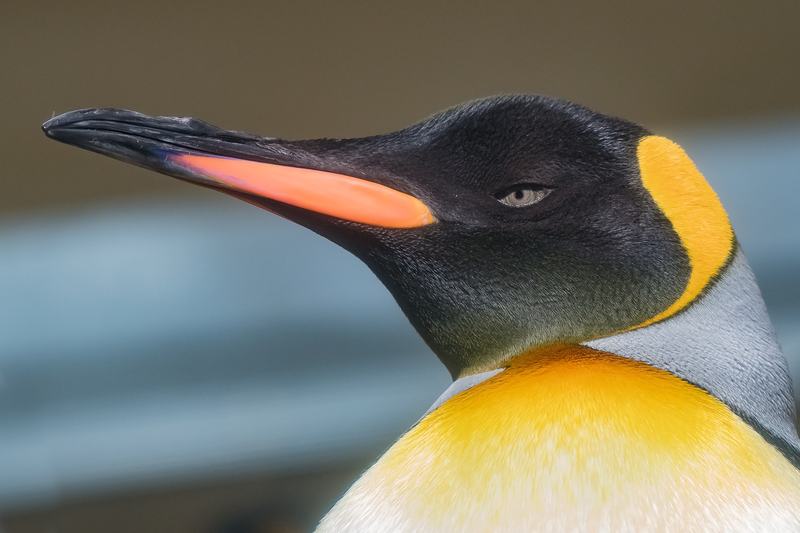
The emperor penguin is the biggest of the lot, standing over a metre tall, and it is the record holder for the deepest dive by any bird [6]. The confirmed record is 564 metres straight down [5]. Most dives are gentler, around 100 to 200 metres, but even that is a long way to go on one held breath [1]. And they can hold that breath for over twenty minutes, which is roughly the length of a very long assembly [1].
Dad Holds the Egg
Here is the bit my kids never quite believe. The female emperor lays a single egg, then heads off to sea to feed. The male stays behind through the Antarctic winter, balancing that egg on his feet under a warm flap of skin, for about sixty-five days [2]. He eats nothing the entire time [2]. He just stands there in the coldest, windiest place on Earth, holding his egg, waiting for mum to come back with dinner. Somehow.

They Drink Seawater
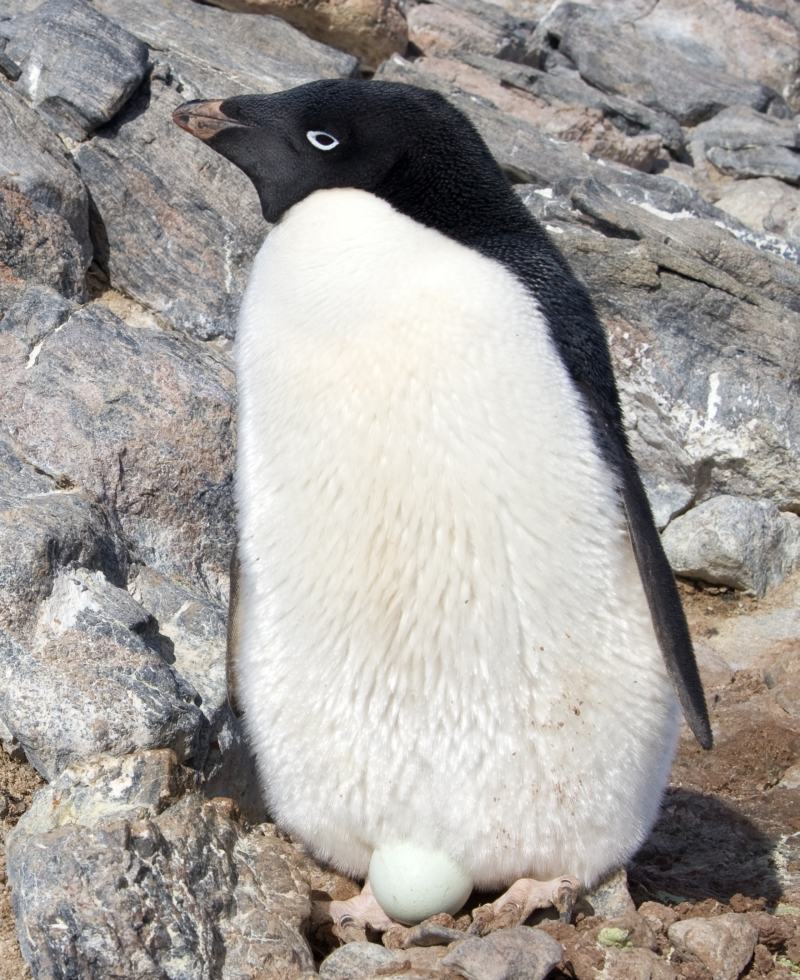
A penguin spends its life surrounded by salt water and no fresh water at all, which is a genuine problem for most animals. Penguins solved it. They have a special gland above their eyes that pulls the salt out of their blood, and the salty leftovers drip out through the bill [6]. So a penguin can drink straight from the sea and be perfectly fine. My Year 4 class would give anything for a face that does the tidying up for you.
The Tuxedo Is Camouflage
The smart black-and-white outfit is not for show. It is camouflage, and a rather clever kind. Seen from above, the dark back blends into the deep water below. Seen from below, the white belly blends into the bright surface above [6]. This trick is called countershading, and it hides the penguin from hungry seals underneath and predators overhead at the same time. So the tuxedo is not fancy dress. It is a disguise that works from both directions.
The Fastest Swimmer Wears a White Bonnet
The gentoo penguin, easily spotted by the white band across the top of its head, is the fastest swimming bird in the world [4]. It can reach around thirty-six kilometres an hour through the water [4]. That is faster than most people can cycle, done by a knee-high bird with no arms. On land a gentoo waddles like the rest of them. Put it in the sea and it turns into a torpedo with a bonnet on.
Their Ancestors Were Our Size
Penguins have been around for a very long time, and the early ones were not small. Fossils show ancient penguins that stood roughly as tall as a grown adult [6]. Imagine a penguin looking you level in the eye on the walk to school. The species alive today are the modest ones. So the next time an emperor penguin seems impressively large, remember it is the polite, scaled-down version of a much bigger idea.
Frequently Asked Questions
Can any penguin fly?
No. No penguin can fly through the air. Their wings evolved into flippers built for swimming, so they "fly" underwater instead, using the same wing motion a flying bird uses in the sky. All eighteen species are flightless.
Do all penguins live in cold places?
No. Many penguins live in mild or even warm climates, including species on the coasts of South Africa, Australia, and New Zealand. The Galápagos penguin lives on the equator. Only a few species, such as the emperor and Adelie, live on Antarctic ice.
Why do male emperor penguins hold the egg?
The female emperor lays the egg and returns to sea to feed, so the male incubates it on his feet under a fold of skin for about sixty-five days. He fasts the whole time. The pair share the effort, just at different stages.
How deep can a penguin dive?
The emperor penguin holds the record for any bird, with a confirmed dive of 564 metres. Most of its dives are shallower, around 100 to 200 metres. It can stay underwater for more than twenty minutes on a single breath.