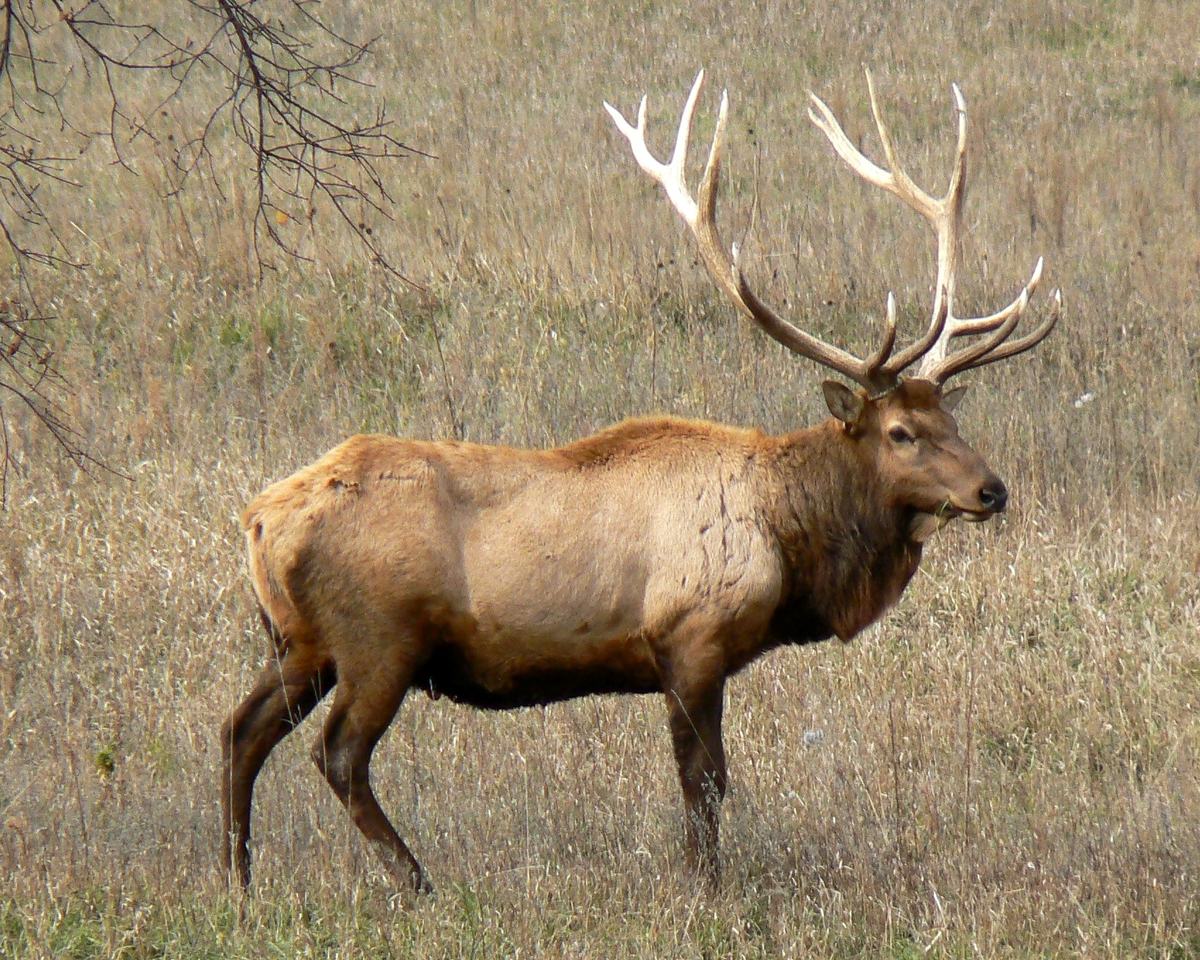
The first thing to know about the elk is that half the world calls it something else. In North America it is an elk. In much of Europe the word 'elk' means the moose, so this animal gets the name wapiti instead. I once watched an entire pub work this out in real time, and it did not end quickly. So let us agree, just here, that elk means the big American deer with the enormous antlers and the strange autumn call. Right. On we go.
One of the Largest Deer Alive
Only the moose is bigger. A bull elk stands about 1.5 metres at the shoulder and can weigh anywhere from 320 to 450 kilograms, which is roughly a small horse with better posture. Cows are lighter, usually 200 to 300 kilograms. For all that bulk, an elk is quick and light on its feet, capable of running at around 72 kilometres per hour and swimming across a wide river without much fuss. Not bad for something that mostly eats grass.
The Name Nobody Agrees On
Many biologists think 'wapiti' comes from a Shawnee word meaning 'white rump', which is a fair description. The elk wears a large pale patch on its backside, easy to spot as the animal moves off through the trees. The European muddle is genuine, by the way. Early settlers saw a huge deer, reached for the biggest deer word they knew, and 'elk' stuck to the wrong animal. Scientists now tend to use wapiti to save everyone the headache. (It rarely helps.)
Antlers That Grow an Inch a Day
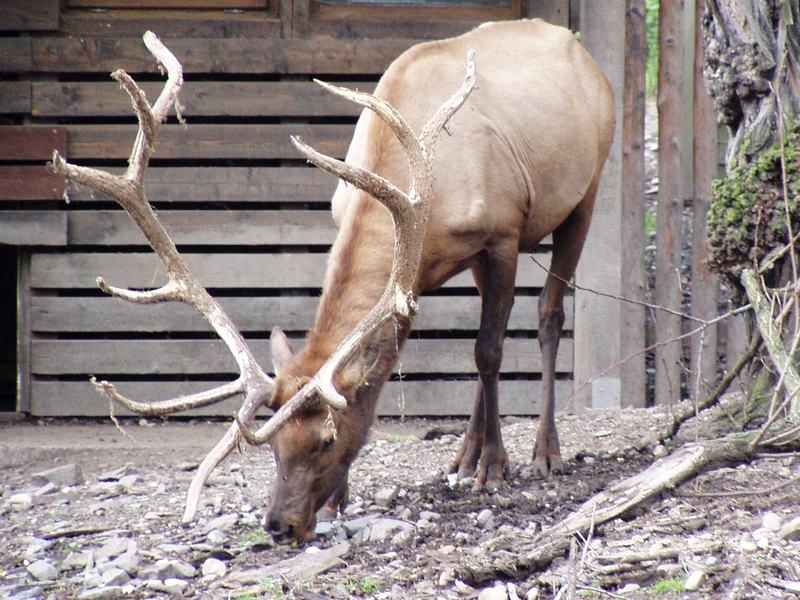
Only bulls grow antlers, and they grow them at a genuinely startling pace. During the summer peak, an elk's antlers can add about 2.5 centimetres a day, which makes them among the fastest growing tissues of any mammal. A full set can reach 1.2 metres in length and weigh up to 18 kilograms. While growing they are wrapped in a soft, blood-rich skin called velvet. Then, once winter is over, the whole lot drops off and the bull starts again. Every single year.

A Bugle You Hear Across the Valley
The elk's autumn call is one of the odd wonders of the animal world. A bull throws his head back and produces a bugle that climbs from a deep bellow into a high, ringing squeal, and it carries for miles. Here is the clever part. The sound has two separate pitches at once, made by two different sources in the animal's body, a trick called biphonation. The point of all this is simple enough. He is telling the cows he is available and warning rival bulls to keep their distance.

Two Teeth Made of Ivory
Tucked at the front of an elk's upper jaw sit two small canine teeth called 'ivories'. They are made of the same material as an elephant's tusks, and they are thought to be leftovers from a distant ancestor that carried proper sabre-like fangs. Over millions of years the tusks shrank to little stubs about the size of a thumbnail. Every elk alive still grows them. It is a small, quiet reminder that today's grazing giant descends from something rather more fanged.
Bulls, Harems and the Autumn Rut
Come September, the whole system tips into the rut. A dominant bull gathers a group of cows, sometimes twenty or more, and spends his days herding them, bugling, and seeing off any rival who fancies his luck. When two well-matched bulls will not back down, they lower their heads and lock antlers, shoving until one gives way. It is exhausting work. A big bull can lose a large slice of his body weight over the season, running mostly on nerve by the end.
Calves Born Spotted and Hidden
A cow usually has a single calf in late spring, weighing around 15 kilograms at birth. The calf arrives dappled with pale spots, which break up its outline beautifully against sun-dappled ground. For the first week or two it barely moves, lying still and low while its mother feeds nearby, relying entirely on staying unseen. Then the spots fade, the legs strengthen, and within a month the calf can keep pace with the herd. They grow up quickly, as they rather have to.
Herds, Grass and a Long Road Back
Elk are herd animals and social ones, gathering in groups that can swell into the hundreds where food allows. They are ruminants, chewing the cud like cattle, and they graze on grasses, shrubs and bark across a huge range of North America and Central Asia. It was not always so settled. Hunting and lost habitat once pushed elk out of much of their old range, and their return across many regions is one of the quieter conservation successes of the last century.
Frequently Asked Questions
What is the difference between an elk and a moose?
In North America, an elk is a large deer with a pale rump and branching antlers, while a moose is bigger still, with a long nose and broad, flat antlers. Confusingly, the word 'elk' in much of Europe refers to the moose, which is why the American elk is also called the wapiti.
How big do elk get?
A bull elk stands about 1.5 metres at the shoulder and typically weighs between 320 and 450 kilograms. Cows are smaller, usually 200 to 300 kilograms. Only the moose is a larger member of the deer family, which makes the elk the second largest deer alive today.
Why do elk bugle?
Bull elk bugle mainly during the autumn rut to attract cows and to warn off competing males. The call can travel for miles and famously contains two pitches at once. A bull's bugling is a signal of his size and fitness, and rivals often judge each other by it before any fighting begins.
Do female elk have antlers?
No. Only bull elk grow antlers, which they regrow every year and shed in winter. This sets elk apart from reindeer, the one deer species in which both sexes grow antlers. A cow elk's status in the herd rests on age and experience rather than headgear.