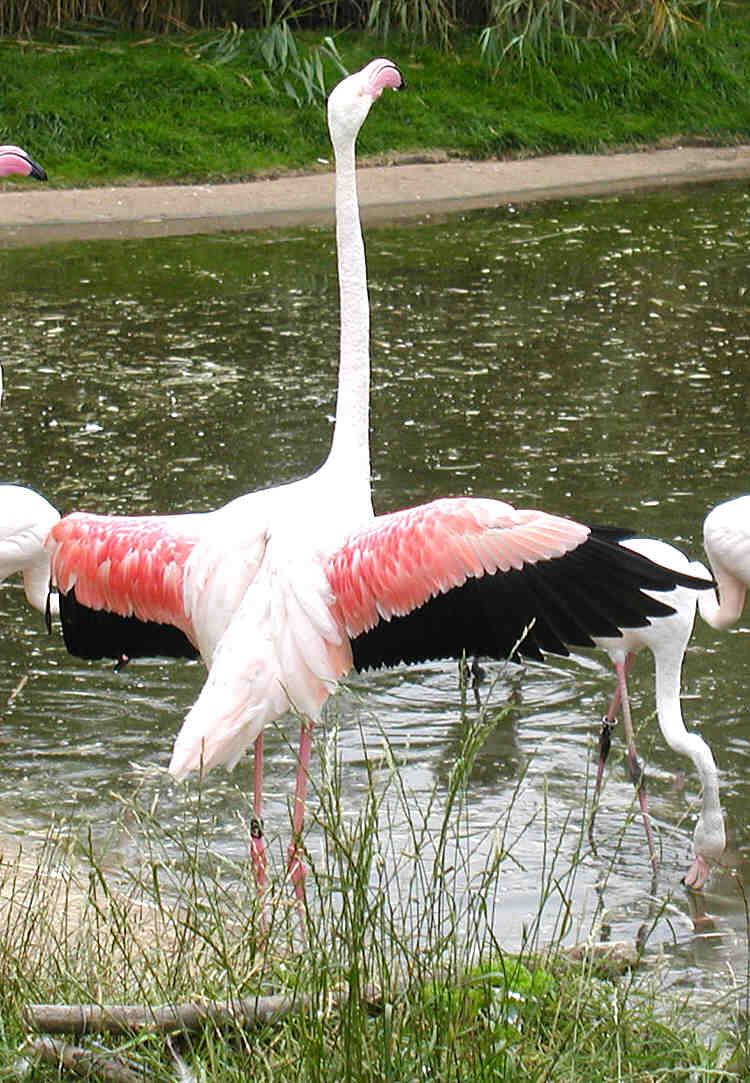
If you asked my Year 4 class what colour a baby flamingo is, every hand would go up and every hand would be wrong. Flamingos are not born pink. They earn it. And once you learn how, a lot of other flamingo habits start to make a strange sort of sense.
The Pink Comes From Dinner
Flamingo chicks hatch a dull grey and stay that way for a good while. The famous colour comes entirely from what they eat: algae and tiny shrimp packed with pigments called carotenoids [1]. Their bodies break these pigments down and tuck the colour into feathers, skin and bill. Take the pigment out of the diet and a flamingo slowly fades to white. In the most literal sense, you are what you eat.
They Eat With Their Heads Upside Down
A flamingo feeds by putting its head in the water the wrong way up. The bill works as a sieve. Rows of tiny comb-like plates called lamellae line the edges, and the thick tongue pumps water through them, trapping shrimp and algae and pushing the rest back out [1]. It is the same trick a whale does with baleen, only performed by a bird the colour of a birthday cake.

Six Species, One Very Tall Cousin
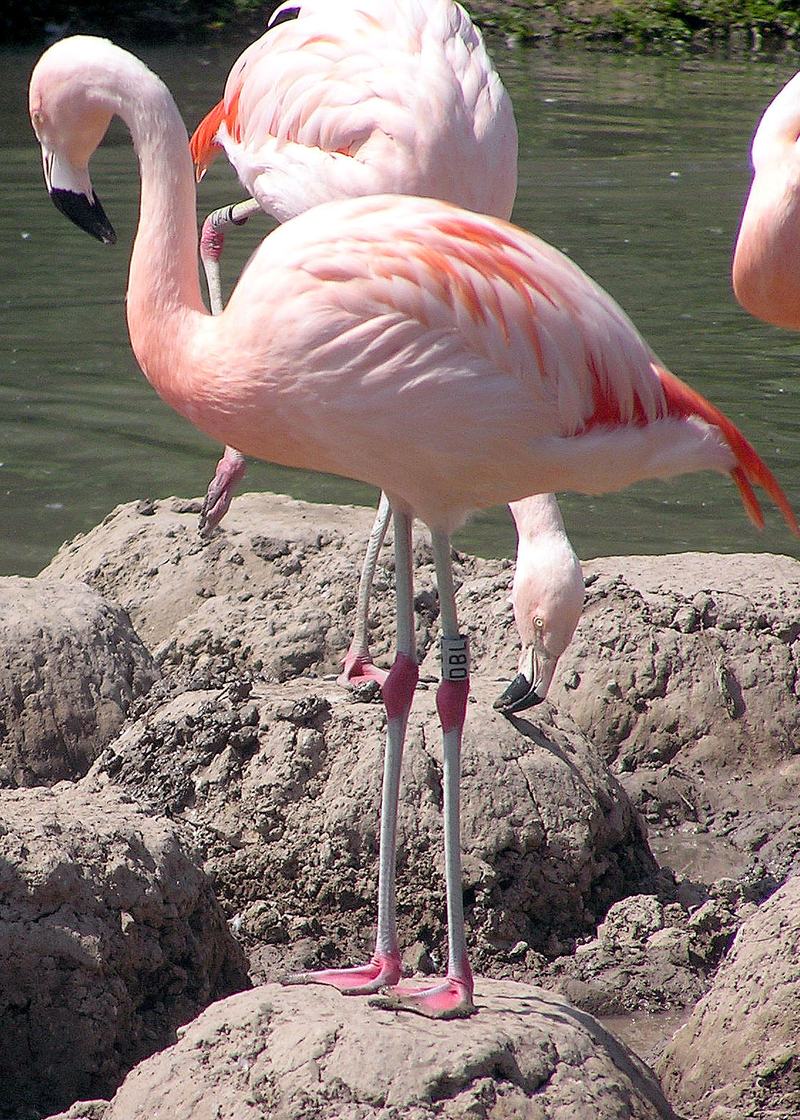
There are six species of flamingo [1]. The greater flamingo is the tallest, standing up to about 1.5 metres, which is taller than most of my Year 4 class [2]. The smallest, the lesser flamingo, is also the most numerous, with something like two million birds, mostly in Africa [3]. So the common flamingo is the little one. (Nature does enjoy a twist.)
The One-Leg Thing Is Genuinely Lazy
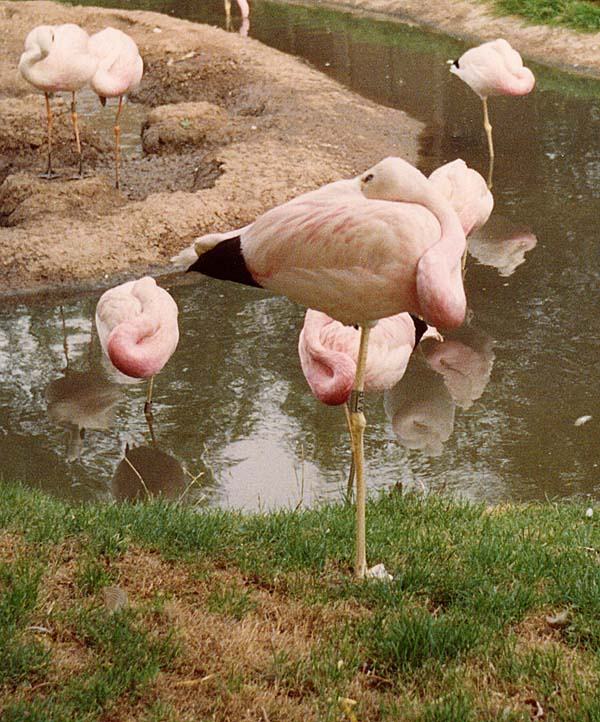
Everyone asks why flamingos stand on one leg. The honest answer is that it is easier. Researchers found a flamingo can lock its leg into place and hold itself up with almost no muscular effort at all [4]. A flamingo cadaver can balance on one leg unaided, and a live bird sways less when asleep than when awake [5]. Standing on two legs actually takes more work. Which, fair enough.

The Backwards Knee Is Not a Knee
That joint halfway up the leg, the one that seems to bend the wrong way, is not a knee. It is the ankle [2]. The real knee is tucked up high, hidden under the feathers close to the body. So a flamingo is essentially standing on very long tiptoes all day. Once you have seen it, you cannot unsee it.
The Parents Make Red Milk
Both parents feed their chick a substance called crop milk, produced in the upper part of the digestive tract [1]. It is bright red, rich in fat and protein, and, unusually, the fathers make it too. The parents fade as they produce it, going pale while the grey chick fills out. The chick, being grey already, is entirely unbothered.
They Feed in Water That Would Burn You
Lesser flamingos gather on soda lakes in East Africa, such as Lake Natron in Tanzania. The water is so caustic it can strip skin and corrode metal [3]. The flamingos wade straight in, protected by tough skin on their legs, and feed on the algae that thrive in the harsh conditions. Almost nothing else can survive there, which means almost nothing else competes for lunch.
A Flock Has a Wonderful Name
A group of flamingos is called a flamboyance, which may be the most accurate collective noun in the English language. These flocks can be enormous, sometimes over a million birds on a single lake, moving in great pink waves [3]. Before breeding they perform synchronised group struts, all heads turning at once, like a very committed dance troupe.
They Live a Remarkably Long Time
Flamingos are not quick to wear out. In captivity many pass fifty, and a greater flamingo at Adelaide Zoo, known simply as Greater, reached at least 83 before he died in 2014 [6]. In the wild they usually manage twenty to thirty years [2]. For a bird that spends its days standing in caustic water on one leg, that is a very decent innings.
Frequently Asked Questions
Why are flamingos pink?
Flamingos get their pink colour from their food, not their genes. They eat algae and small crustaceans rich in pigments called carotenoids, which their bodies deposit in the feathers and skin. Chicks are born grey and only turn pink after months of eating this pigment-heavy diet.
Why do flamingos stand on one leg?
Because it takes less effort than standing on two. A flamingo can lock its leg joint passively and support its full body weight with almost no active muscle. Studies even found that a flamingo cadaver can balance on one leg, so the pose is largely automatic rather than tiring.
What do flamingos eat?
Flamingos eat algae, small shrimp and other tiny water creatures. They feed with their heads upside down, using comb-like plates in the bill to filter food from the water. The carotenoid pigments in this diet are what give the birds their distinctive pink colour.
How long do flamingos live?
Wild flamingos typically live twenty to thirty years, while birds in zoos often reach fifty or more. The record holder was a greater flamingo named Greater at Adelaide Zoo, who was at least 83 years old when he died in 2014, making him the oldest known flamingo.
Sources
- Flamingo - San Diego Zoo Wildlife Explorers
- All About Flamingos, Physical Characteristics - SeaWorld
- Lesser Flamingo - Wikipedia
- Mechanical Evidence That Flamingos Can Support Their Body on One Leg - Biology Letters, The Royal Society
- How Flamingos Stand on One Leg Without Falling Over - Audubon
- Greater (flamingo) - Wikipedia)