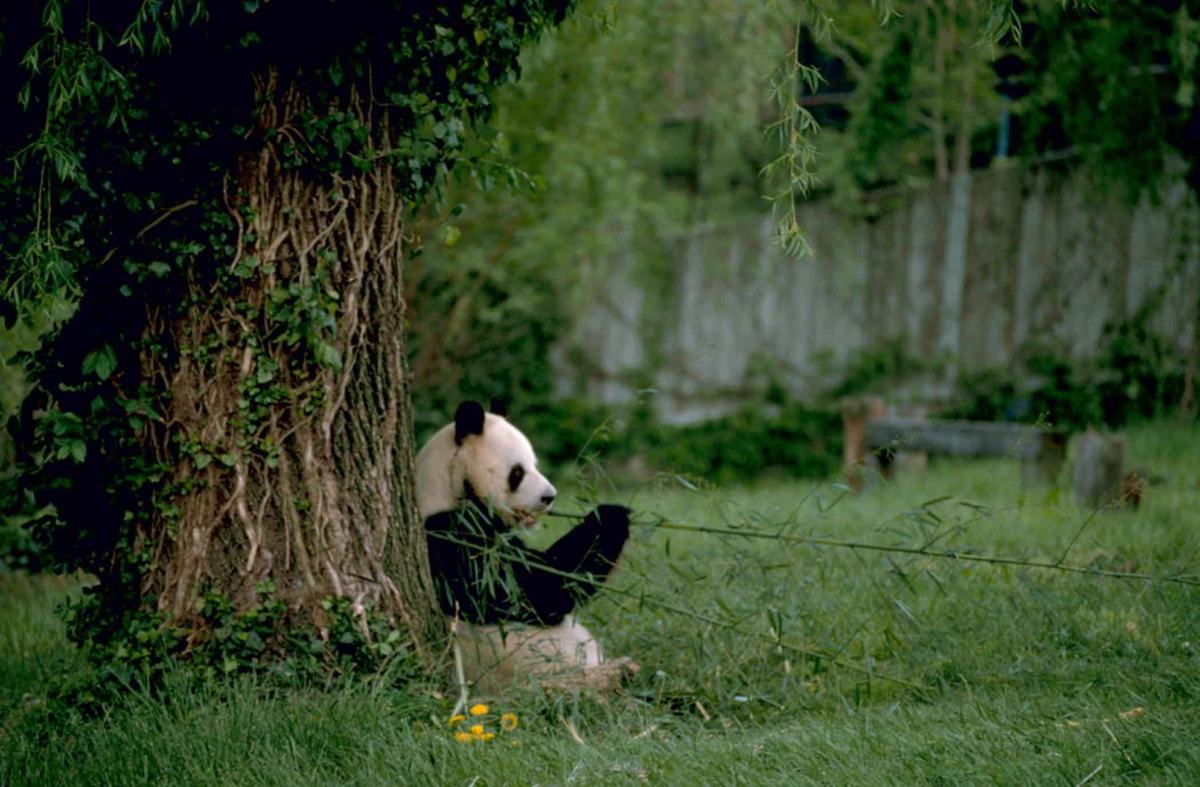
If you asked my Year 4 class what a panda eats, they would say bamboo, and they would be right. What they would not guess is that a panda is built like a meat-eater and simply ignores the memo. It has the insides of an animal that should be chasing deer. Instead it sits in a forest, chewing stalks, for most of the day. And somehow it works.
A Bear, Not a Bamboo Creature
Let us clear this up first. The giant panda is a proper bear, in the family Ursidae, related to the grizzly and the black bear [3]. It even has the short gut of a carnivore, the kind meant for meat, not leaves [1]. Which is a bit like inheriting a sports car and using it only to fetch the shopping. The panda kept the body of a hunter and quietly retired from hunting.
Bamboo for Most of the Day
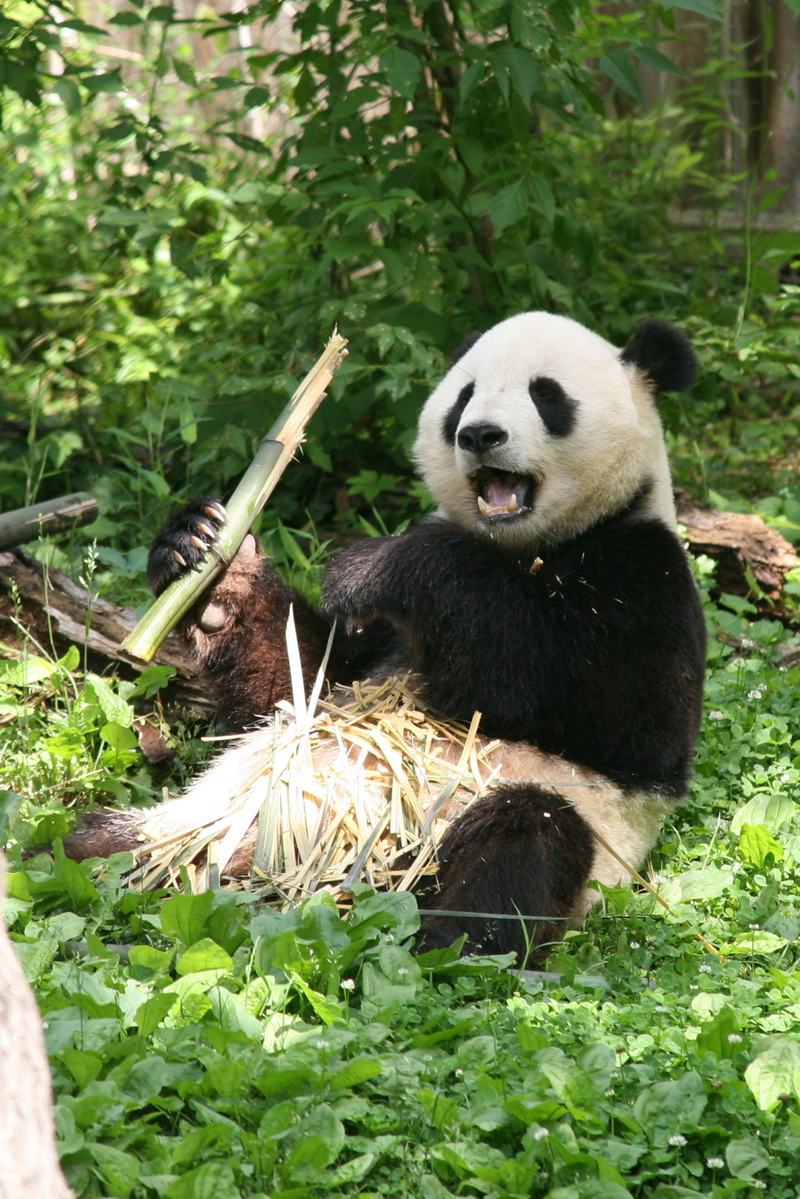
A panda's diet is roughly 99% bamboo [2]. Because its stomach is so bad at digesting the stuff, it has to eat an enormous amount to get by. That means up to 38 kilograms of bamboo a day, and 10 to 16 hours spent eating it [1]. Picture doing one thing, all day, every day, with barely a pause. That is a panda's entire schedule, more or less.

The Thumb That Is Not a Thumb
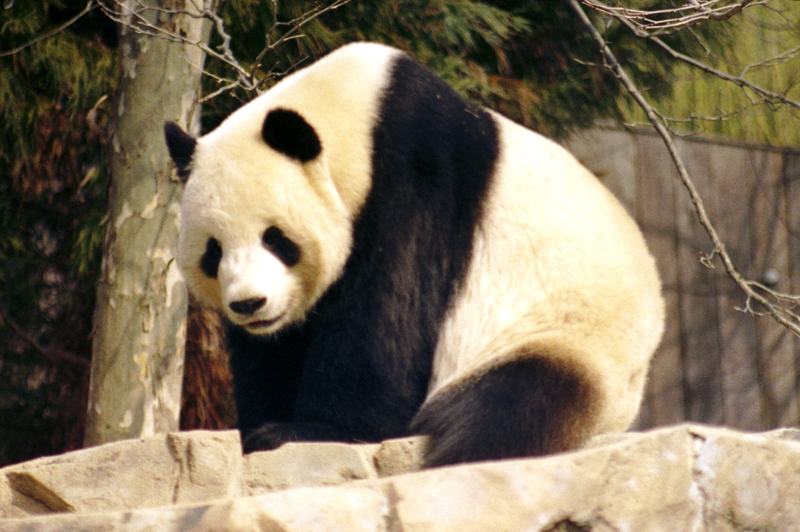
Pandas grip bamboo with what looks like a sixth digit, a little thumb on the side of the paw [4]. It is not a real thumb. It is an enlarged wrist bone, the radial sesamoid, that grew into a handy stub for holding stalks steady [4]. So the panda strips and eats with the elegance of a person using a spare knuckle. Evolution, making it up as it goes.
Newborns the Size of a Stick of Butter
Here is the one that stops people. A newborn panda weighs about 100 grams, roughly one nine-hundredth of its mother [1]. It arrives pink, blind and nearly bald, looking nothing like the animal it becomes [4]. Very few mammals produce a baby so tiny compared to themselves. A grown panda can top 100 kilograms. It starts life smaller than the remote control.
_%22Tian_Tian%22.jpg)
They Do Handstands to Leave Messages
Pandas mark their patch with scent, and the higher the mark, the bigger they seem to a rival [4]. So a panda will back up to a tree, lift its hind legs into the air, and do a wobbly handstand to leave its message as high as possible [4]. A large animal, upside down, signing the wall. I would pay to watch that at the London Zoo.
Dozens of Loo Trips a Day
Because bamboo passes through so poorly, very little goodness is absorbed, and what goes in comes out quickly [1]. A panda can produce droppings dozens of times a day [4]. Not glamorous, but it is the honest cost of a low-quality diet eaten in bulk. Everything about a panda, in the end, comes back to bamboo going in one end and straight out the other.
The Coat Might Be Doing Two Jobs
Nobody is entirely sure why a panda is black and white, but the leading idea is that the coat does two things at once [4]. The white blends into snow, the black into shade and rock, so the pattern helps a panda hide across seasons. The dark ears and eye patches, meanwhile, may help pandas recognise and signal to one another. Camouflage and name badge, in one outfit.
From Endangered to Merely Vulnerable
For years the panda was the poster animal for extinction. Then, in 2016, the IUCN moved it from endangered down to vulnerable, after habitat protection and breeding programmes started paying off [3]. The last big survey counted about 1,864 pandas in the wild [2]. Still not a crowd, and still at risk, but heading the right way for once. A rare bit of good news in this line of work.
Loaned, Never Given
Almost every panda you see outside China is on loan. China does not sell or give its pandas away, it rents them, and the cubs born abroad belong to China too [2]. It is sometimes called panda diplomacy, and it has been going on for decades. So that panda at your local zoo is, in a quiet legal sense, a guest with a return ticket.
Frequently Asked Questions
What do giant pandas eat?
Giant pandas eat almost entirely bamboo, around 99% of their diet. A panda can get through up to 38 kilograms in a day and spends 10 to 16 hours feeding. They are capable of eating meat but rarely bother, so bamboo does nearly all the work.
Are pandas actually bears?
Yes. Giant pandas are true bears in the family Ursidae, related to grizzlies and black bears. They share the short digestive system of a carnivore, which is why they digest bamboo so poorly and have to eat such large quantities of it every day.
How many giant pandas are left in the wild?
The last full survey counted about 1,864 giant pandas in the wild. In 2016 the IUCN moved the species from endangered to vulnerable, thanks to habitat protection and breeding programmes, though the panda remains at risk and dependent on continued conservation.
Why are baby pandas so small?
A newborn panda weighs roughly 100 grams, about one nine-hundredth of its mother's weight. It is born pink, blind and almost hairless. This is one of the largest size differences between a mother and her newborn among placental mammals.