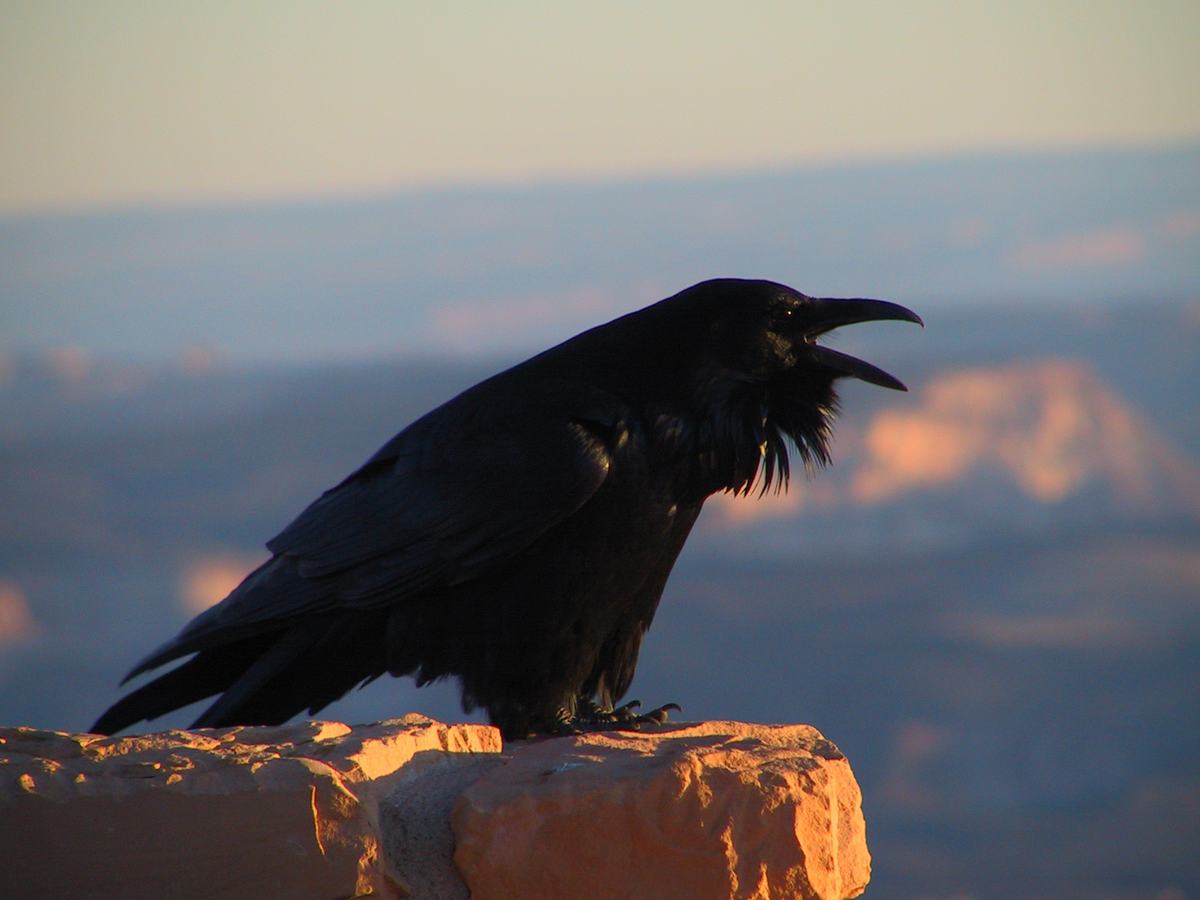
If you asked my Year 4 class to name a clever animal, they would go straight for dolphins or chimps. Nobody ever says the big black bird on the fence post. Which is a shame, because the common raven quietly runs rings around most of the animals we praise. It plans, it plots, and it remembers your face. (Yes, really.)
The Largest Songbird Alive
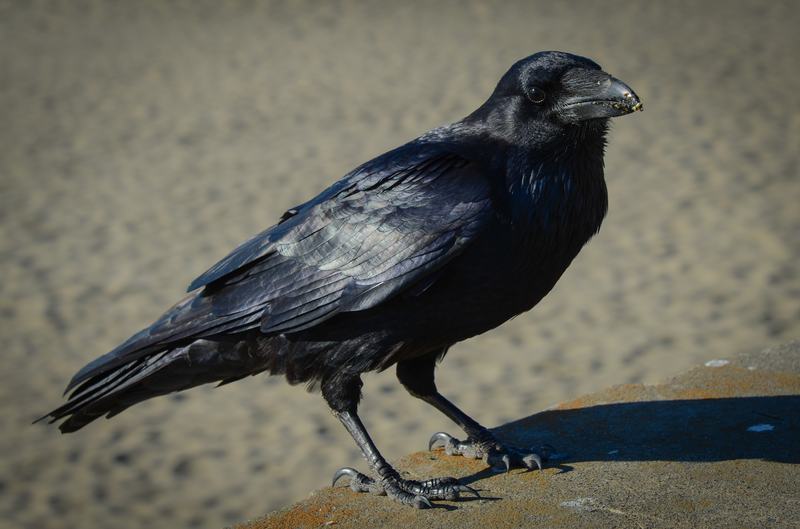
A raven is technically a songbird, which feels like a stretch until you hear one try to sing. It is the biggest of the lot [1]. Wingspan reaches about 1.2 metres, and a heavy male can top a kilogram [1]. Stand one next to a carrion crow and the difference is obvious. The raven looks like the crow that went to the gym and never came back.
A Brain to Match the Body
Ravens sit near the top of the bird intelligence league, alongside their crow cousins [6]. They solve puzzles, use objects as tools, and hide food in hundreds of spots they somehow remember later [6]. Researchers keep designing tests they expect the birds to fail. The ravens keep passing them. As it turns out, a walnut-sized brain packed the right way goes a very long way.

They Plan for Tomorrow
Here is the one that stopped me mid-cup-of-tea. In a 2017 study, ravens learned to pick a tool that would only be useful later, then held onto it until the moment came [2]. They also turned down a small treat now for a better swap in the future [2]. Planning ahead like that was thought to be an ape and human trick. The ravens did not get the memo.
They Know What You Can See
Ravens seem to track what other ravens can and cannot see. In one experiment, a bird guarded its food stash more carefully when it believed a rival might be watching through a peephole, even with no rival in sight [3]. In plain terms, a raven can work out that someone else has a point of view. Most animals show no sign of this at all.
Raven or Crow? Look at the Tail
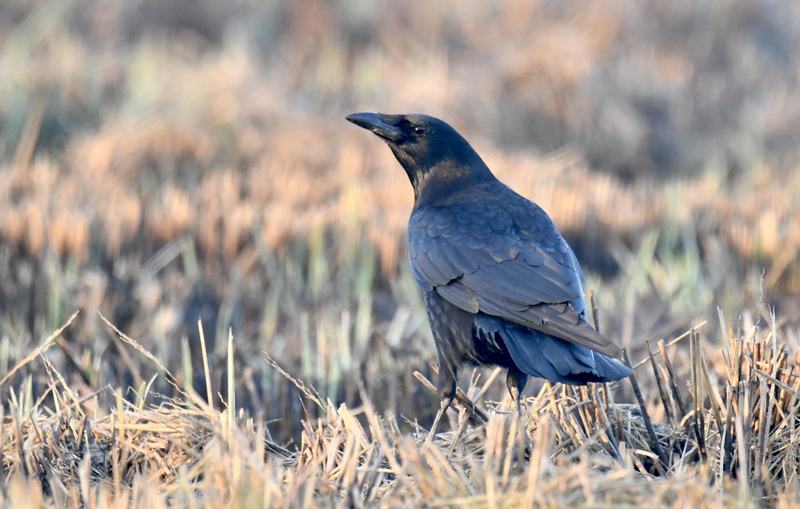
People mix the two up constantly, so here is the cheat sheet. Ravens are much larger, with a heavier beak and shaggy throat feathers [1]. In flight, a raven's tail is wedge-shaped, coming to a point, while a crow's fans out straight across [1]. And the sound gives it away. A crow says "caw". A raven gives a deep, croaking "gronk" that seems to come from somewhere much larger.

They Play for the Fun of It
Ravens genuinely seem to enjoy themselves, which is not something you can say about most birds [4]. They slide down snowy roofs, roll down banks, and tumble through the air just to do it again [4]. Young ones will hang upside down from a branch like a small feathered show-off. My kids would love this. I suspect the ravens would find my kids equally entertaining.
They Follow Wolves to Dinner
Out in the wild, ravens shadow wolf packs and wait for a kill to scavenge from [4]. It is a neat arrangement. The wolves do the hard work, and the birds get a free meal. Ravens will even call out to lead predators toward a carcass they cannot open themselves [4]. Somehow they worked out that a wolf makes an excellent tin opener.
The Tower of London's Feathered Guards
Legend says that if the ravens ever leave the Tower of London, the Crown and the kingdom will fall [5]. So a small group of ravens is kept there, cared for by a dedicated Ravenmaster [5]. It is a superstition dressed up as a job description, and nobody in charge seems keen to test it. Which, fair enough.
Frequently Asked Questions
Are ravens really as intelligent as apes?
On several tests, yes. Ravens match great apes on tasks involving planning, self-control, and tool use. Their intelligence works differently from a primate's, but the results in controlled studies are strikingly close.
Can ravens talk like parrots?
Ravens can mimic human speech and other sounds, and captive birds sometimes do it more clearly than parrots. In the wild they rarely copy human words, saving their mimicry for other ravens and the noises around them.
What is a group of ravens called?
A group of ravens is called an "unkindness" or a "conspiracy". The names suit the bird's slightly ominous reputation, though the ravens themselves are just being sociable rather than plotting anything.
How long do ravens live?
Wild ravens often live 10 to 15 years, and some reach far older. In captivity, with steady food and no predators, ravens have been recorded living well past 40 years.
Are ravens and crows the same bird?
No. Both belong to the same family, but ravens are a distinct, larger species with a wedge-shaped tail, a heavier beak, and a deeper croaking call. Crows are smaller, with a fan-shaped tail and a sharper "caw".
Sources
- Common Raven - Cornell Lab of Ornithology, All About Birds
- Ravens parallel great apes in flexible planning for tool-use and bartering - Science
- Ravens attribute visual access to unseen competitors - Nature Communications
- Common Raven - National Geographic
- The Ravens - Historic Royal Palaces, Tower of London
- Common Raven - Audubon Field Guide