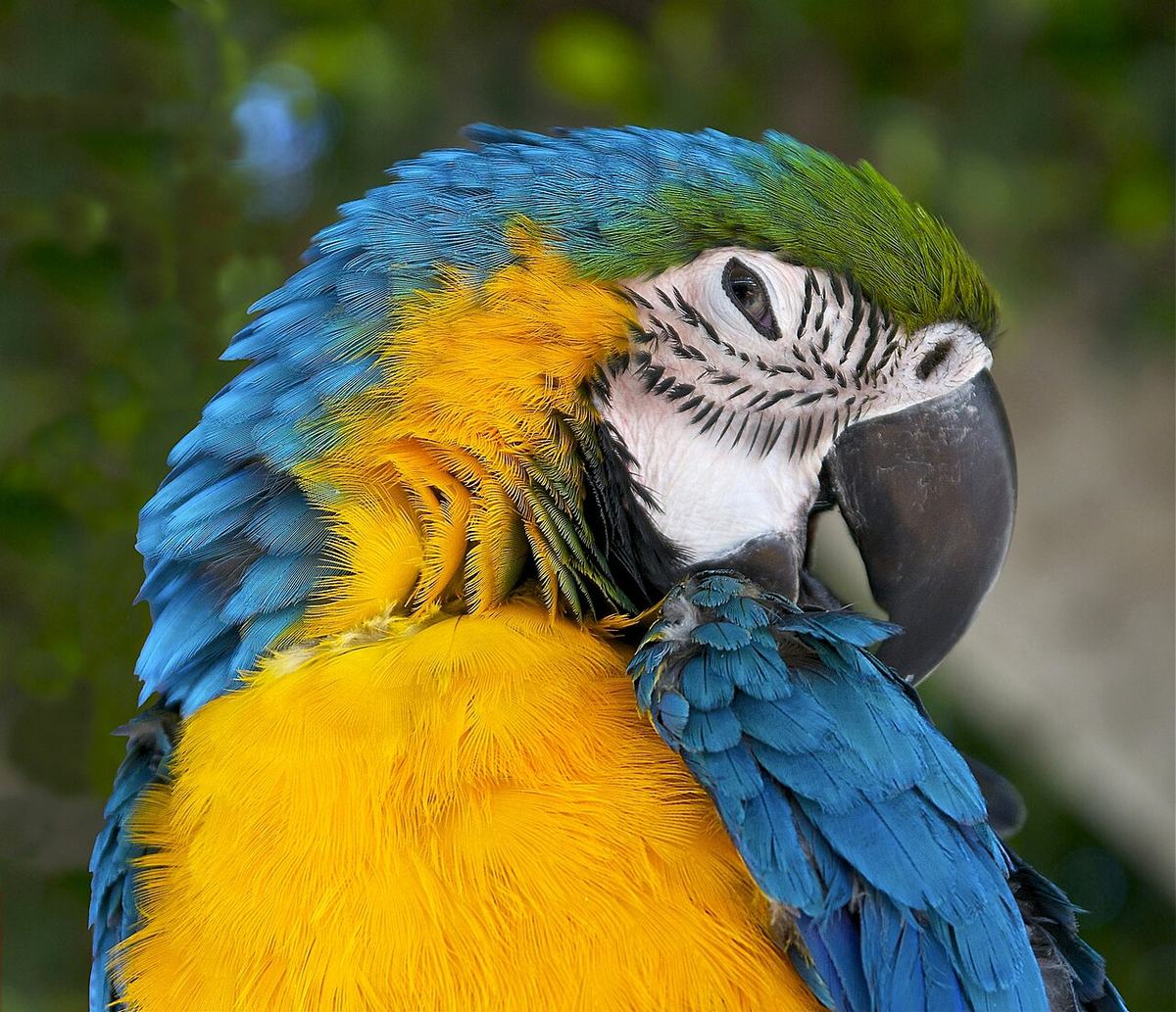
If you asked my Year 4 class what makes a parrot special, every hand shoots up with the same answer: they talk. Fair enough. But talking is nearly the least interesting thing a parrot does. These are birds that climb with their beaks, mix their own paint for their feathers, and, in one famous case, understood what zero means. The talking is just the bit that gets them on the telly.
Four Toes, Two Each Way
Look at a parrot's foot and you will see something most birds do not have. Two toes point forward and two point backward, an arrangement called zygodactyl [1]. It turns the foot into a proper hand. A parrot can pick up a nut, turn it over, and lift it to its beak, one-footed, like a rather dignified child with a biscuit. Most parrots even have a favoured foot, left or right, just as we are left- or right-handed [1].
The Beak Is a Third Limb
A parrot's curved beak is not just for eating. It is a climbing tool. When a macaw scales a branch it reaches up, grips with the beak, then hauls its feet after it, so the beak works as a third limb [1]. The same beak is astonishingly strong. A big macaw can crack a Brazil nut, one of the hardest nuts going, which most of us would need a hammer for. Powerful, and yet delicate enough to peel a grape.

Talking Without Vocal Cords
Here is the odd part about parrots talking: they have no vocal cords [2]. They make sound with an organ called the syrinx, deep down where the windpipe splits, then shape it using a thick, muscular tongue [2]. That tongue is why parrots can copy human speech so well when most birds cannot. They are not speaking, exactly. They are mimicking, the way you might imitate an accent. But some parrots learn to attach the right word to the right moment, which is where it gets interesting.
Alex and the Meaning of Zero
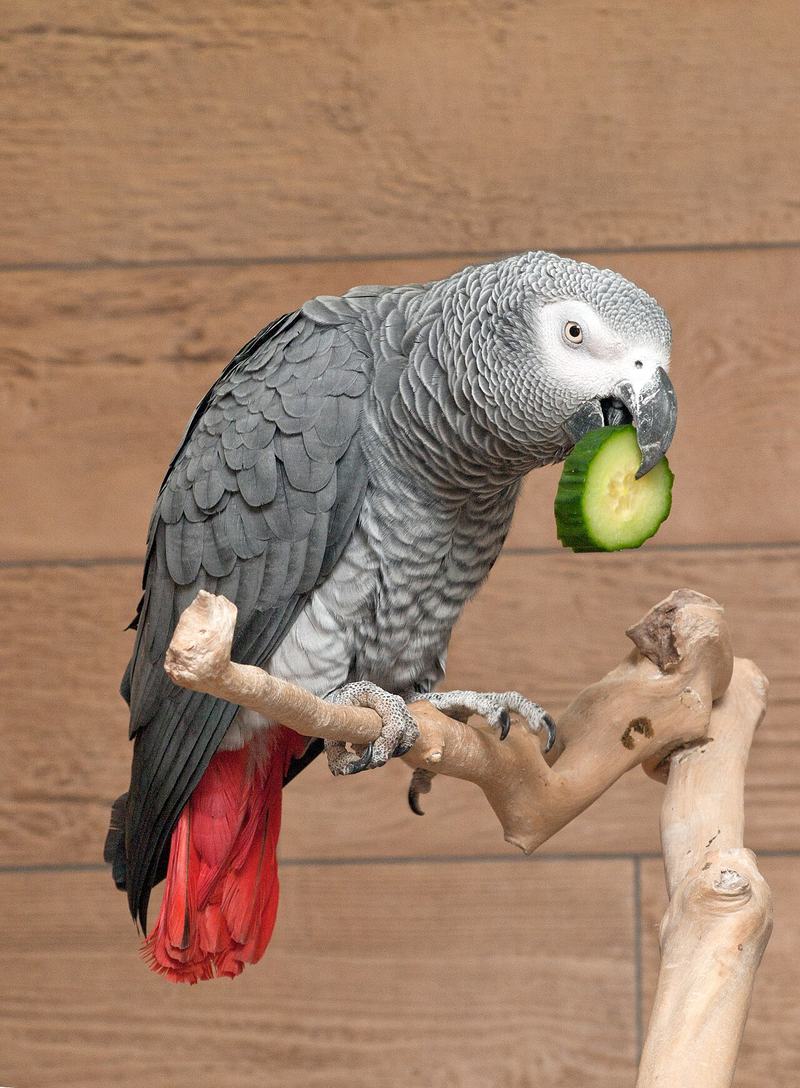
The most famous parrot in science was an African grey named Alex. Over thirty years the psychologist Irene Pepperberg taught him to label colours, shapes and numbers, and he came to use around 100 words meaningfully [3]. He could look at a tray and tell you how many blue blocks were on it. Most remarkably, when asked, he grasped a version of zero, the idea of none, which very few animals manage [3]. His last words to Pepperberg were 'You be good, I love you'.

Their Colours Come From Within
Most bright birds get their colour from their food. Flamingos go pink because of the shrimp they eat. Parrots do it differently. Their reds, oranges and yellows come from a special class of pigments called psittacofulvins, which the birds make in their own feathers rather than borrowing from their diet [4]. These pigments are found nowhere else in the animal kingdom. The blues and greens come from the structure of the feather bending light. So a parrot is part paint, part prism.
Some Outlive Their Owners
A budgie might live eight years, but the big parrots are in it for the long haul. Large macaws and cockatoos regularly reach fifty, and some go much further [1]. A Major Mitchell's cockatoo named Cookie, who lived at Brookfield Zoo near Chicago, made it to 83 [5]. That is a pet you would name in your will. It is also why taking on a big parrot is a genuine commitment, sometimes a lifelong one, and occasionally longer than your own.
The Parrot That Forgot to Fly
Not every parrot flits about the treetops. New Zealand's kakapo is a large, moss-green parrot that cannot fly at all [6]. It is nocturnal, smells faintly of honey, and when startled it tends to freeze rather than flee, which worked splendidly until people brought cats and rats to the islands. Today the kakapo is critically endangered, with only a few hundred birds left, each one named and watched over by conservationists [6]. Somehow, it stays cheerful about the whole thing.
They Visit Clay Banks on Purpose
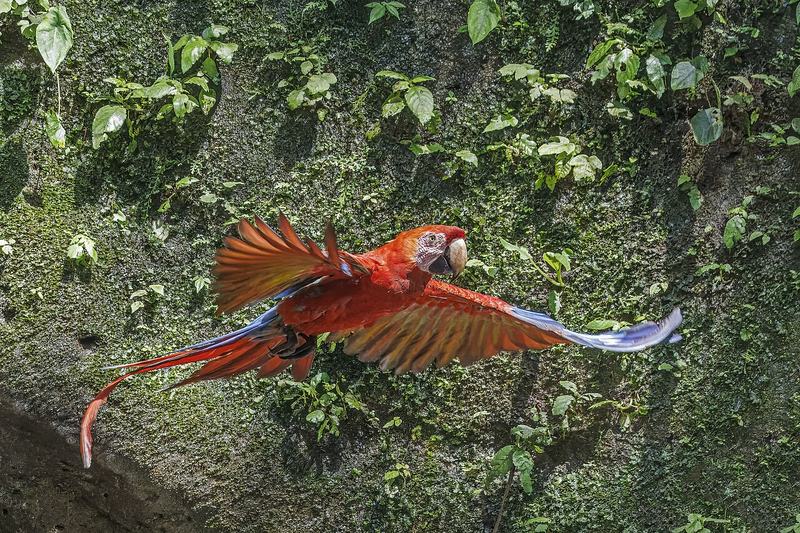
Along the rivers of the Amazon, macaws gather by the hundred at exposed clay banks and eat the mud [1]. For a long time nobody was sure why. The leading explanation is sodium: the region's plants are low in it, and the clay is a rare salty snack in a landscape short of salt. It may also settle the stomach after a diet of unripe, slightly toxic seeds. Either way, it is one of the great birdwatching sights, a cliff face turning red, blue and gold.
Frequently Asked Questions
Can all parrots talk?
No. Most parrots can mimic sounds, but only some species become good talkers, and many pet parrots never say a word. African greys and some Amazon parrots are the strongest mimics. Ability varies by species and by individual bird, and a quiet parrot is perfectly normal.
What is the smartest parrot?
African grey parrots are generally considered the most intelligent, thanks partly to Alex, a grey who learned to label colours, shapes and numbers. Keas, the alpine parrots of New Zealand, are also famous problem-solvers. Both can crack puzzles that defeat many mammals.
How long do parrots live?
It depends on size. Small parrots like budgies live around 5 to 10 years, while large macaws and cockatoos often reach 50 or more. One cockatoo lived to 83. A big parrot can easily be a lifelong companion, so it is a serious commitment.
What do parrots eat?
Most parrots eat seeds, nuts, fruit, flowers and the occasional insect. Their strong beaks are built for cracking hard shells. Some wild macaws also eat clay from riverbanks, probably for the sodium and to help settle a diet of tough, slightly toxic seeds.