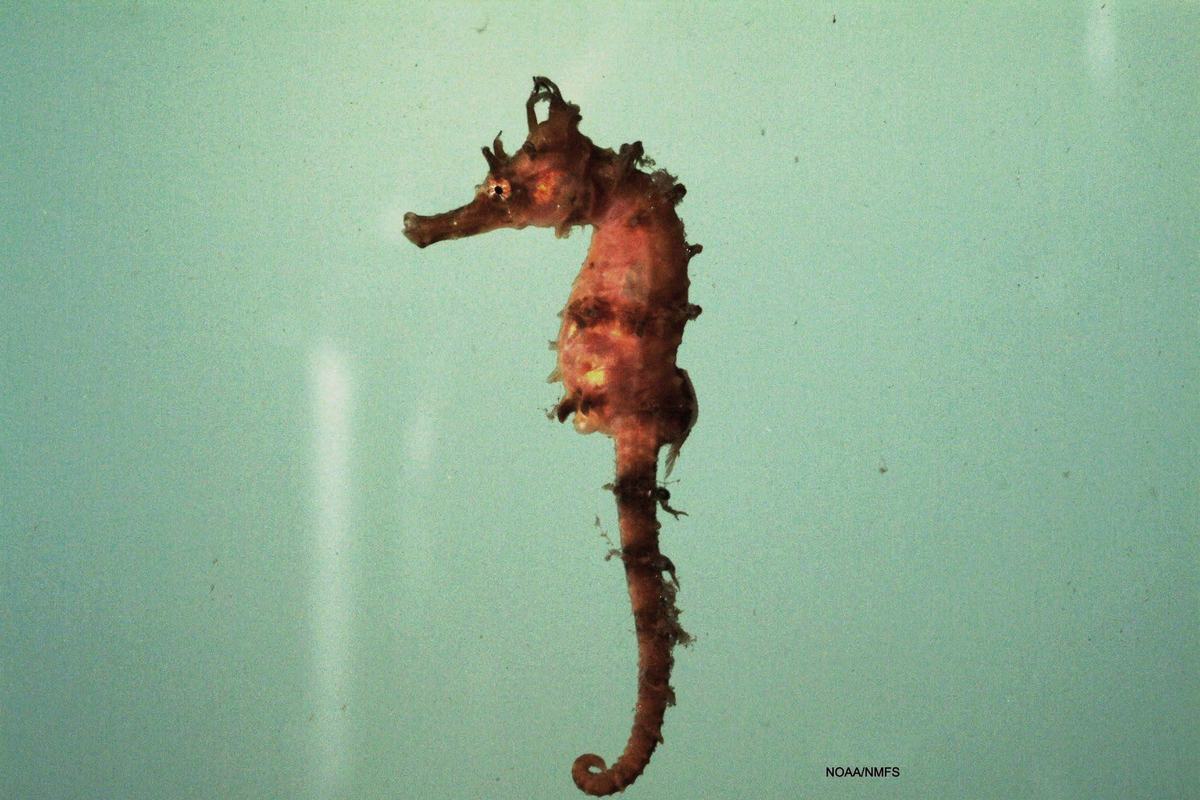
If you ask my Year 4 class what a seahorse is, half of them will tell you it is a tiny horse that lives in the sea. It is an easy mistake, and a lovely one, but it is a fish. A very strange fish. It swims standing upright, it has no stomach, and when it comes to having babies, it is the father who gets pregnant. There are around 46 species of them, from one the size of a grain of rice to one as long as a banana. Almost nothing about a seahorse works the way you would expect.
Yes, They Are Fish
Let us settle the horse question first. Seahorses are fish, genus Hippocampus, part of a family that also includes pipefish and the wonderfully named sea dragons.[1] The name gives the game away. Hippocampus comes from the Greek words for horse and sea monster, which is a fair description of the head. They breathe through gills, they have a swim bladder to stay afloat, and they are covered not in scales but in bony plates arranged like armour. A fish in a suit of armour, standing up. (My kids need a moment with this one.)
The Fathers Give Birth
Here is the fact that stops every class dead. In seahorses, it is the male who becomes pregnant.[2] The female deposits her eggs into a pouch on the front of the male's body. He fertilises them inside the pouch, carries them for two to four weeks, and then, in a series of muscular contractions, gives birth to as many as a thousand tiny young.[2] They arrive fully formed, miniature versions of the adults, and are on their own from the first second. Seahorses are one of the only animals on Earth where the male does the carrying. (Yes, really.)
A Tail Built for Gripping
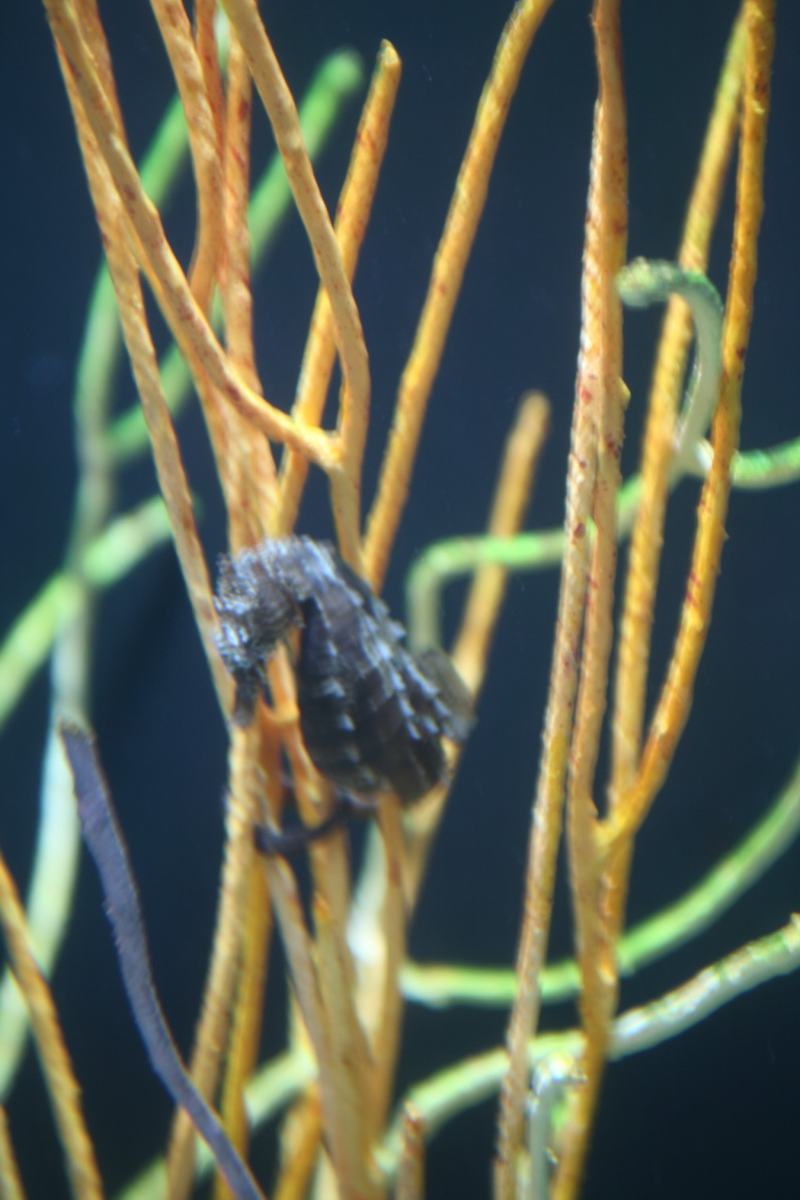
A seahorse does not have a fanned tail like most fish. It has a long, muscular, prehensile tail that grips, the way a monkey's tail wraps a branch.[1] It uses this to anchor itself to seagrass or coral so the current does not carry it off. Even odder, the tail is square in cross-section rather than round. Engineers who studied it found the square shape grips harder and springs back into place better after being crushed, which has since inspired designs for bendy robots.[3]

No Stomach, So They Never Stop Eating
A seahorse has no stomach and barely any digestive system to speak of.[4] Food passes straight through, which means it has to keep eating almost constantly simply to stay alive. A seahorse can hoover up as many as 3,000 tiny shrimp and other morsels in a single day.[4] It has no teeth either. It sucks prey in through that long snout like a straw, in a sudden strike so quick the shrimp rarely sees it coming. Slow at nearly everything, then lightning fast at the one thing that matters.
Eyes That Work Independently
Seahorse eyes move independently of each other, each one swivelling on its own.[1] One eye can watch for a passing meal while the other keeps a lookout for danger, rather like a chameleon. For an animal that swims as badly as a seahorse does, this is essential kit. It cannot dart away from trouble, so it survives by seeing everything at once and staying perfectly, patiently still. A seahorse's whole strategy is to be somewhere without appearing to be anywhere.
The Slowest Fish in the Sea
Seahorses are hopeless swimmers, and one of them holds a genuine record for it. The dwarf seahorse is the slowest-moving fish known, creeping along at roughly 1.5 metres per hour.[5] They stay upright and propel themselves with a small fin on the back that flutters somewhere between 30 and 70 times a second, a blur too fast to count.[4] Even at that speed they get almost nowhere. In a strong current a seahorse can simply tire out and drown, which is why that gripping tail matters so much.
Partners That Dance at Dawn
Many seahorse species pair up, and some stay with the same partner for a whole breeding season.[1] Each morning the pair perform a greeting dance, swimming side by side, sometimes changing colour, occasionally linking tails and turning slow circles together.[6] It looks unbearably romantic, though the real point is practical. The dance keeps the pair in step so the female's eggs are ready exactly when the male's pouch is. Biology dressed up as a waltz. My kids call it the seahorse wedding, and I have stopped correcting them.
From a Grain of Rice to a Banana
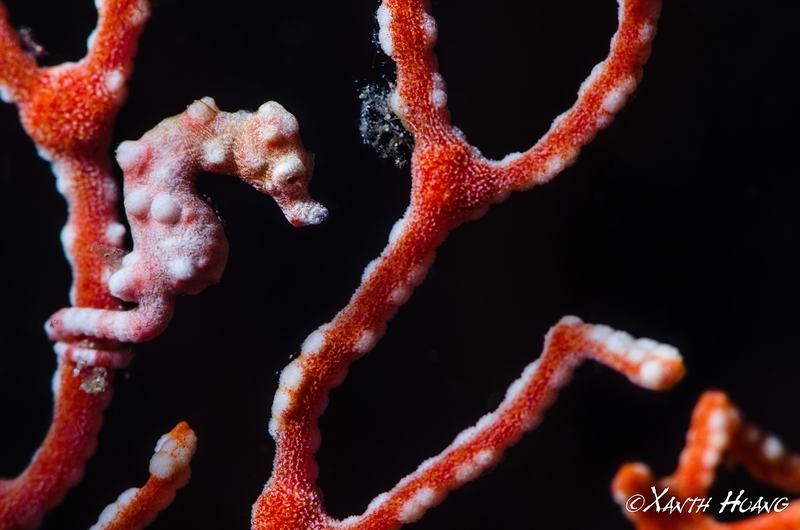
Seahorses come in a startling range of sizes. The smallest, Satomi's pygmy seahorse, is under 1.5 centimetres long, about the size of a grain of rice.[7] Pygmy seahorses are so tiny and so perfectly matched to the coral they live on that several species were only discovered when someone examined the coral back in a lab and found the seahorses hiding in the photographs. The largest, the big-belly seahorse, reaches around 35 centimetres, roughly the length of a banana.[7] Same animal, wildly different scale.

Why They Are in Trouble
For all their charm, seahorses are having a hard time of it. Millions are taken from the sea every year, dried for use in traditional medicine or sold as curios and souvenirs, and many more are lost as accidental bycatch in trawl nets.[8] The seagrass beds and reefs they depend on are shrinking too. Every seahorse species is now listed under CITES, the international agreement that controls trade in threatened wildlife.[8] It is a lot of pressure for a fish that swims 1.5 metres in an hour and asks for very little.
Frequently Asked Questions
Do male seahorses really get pregnant?
Yes. The female places her eggs into a pouch on the male's body, and he fertilises and carries them for two to four weeks before giving birth. He can release up to a thousand fully formed young at once. Seahorses are among the very few animals where the male becomes pregnant.
Are seahorses fish?
Seahorses are fish, belonging to the genus Hippocampus in the same family as pipefish and sea dragons. They breathe through gills, have a swim bladder, and are covered in bony plates instead of scales. They differ from most fish by swimming upright and having a gripping, prehensile tail.
How many species of seahorse are there?
There are around 46 recognised species of seahorse, though scientists still debate the exact number and occasionally describe new ones. They range from tiny pygmy seahorses under 1.5 centimetres long to the big-belly seahorse at about 35 centimetres. They live in shallow tropical and temperate waters worldwide.
Why do seahorses eat so much?
Seahorses have no stomach, so food passes through their bodies very quickly and they must eat almost constantly. A single seahorse can consume up to 3,000 small shrimp and other prey in a day. They have no teeth and suck food in through their long, tube-shaped snout.
Are seahorses endangered?
Many seahorse species are threatened. Millions are harvested each year for traditional medicine and the curio trade, and many are caught accidentally in trawl nets. Loss of seagrass and reef habitat adds further pressure. All seahorse species are now protected under the international CITES trade agreement.
Sources
- Seahorse - Encyclopaedia Britannica
- Seahorse Fathers Take Reins in Childbirth - National Geographic
- Why a Seahorse's Tail Is Square - Scientific American
- Seahorses - Smithsonian Ocean
- Slowest Fish - Guinness World Records
- Lined Seahorse - Smithsonian's National Zoo and Conservation Biology Institute
- Hippocampus - IUCN Red List
- Seahorses and the Aquarium Trade - Project Seahorse / IUCN Seahorse, Pipefish and Seadragon Specialist Group