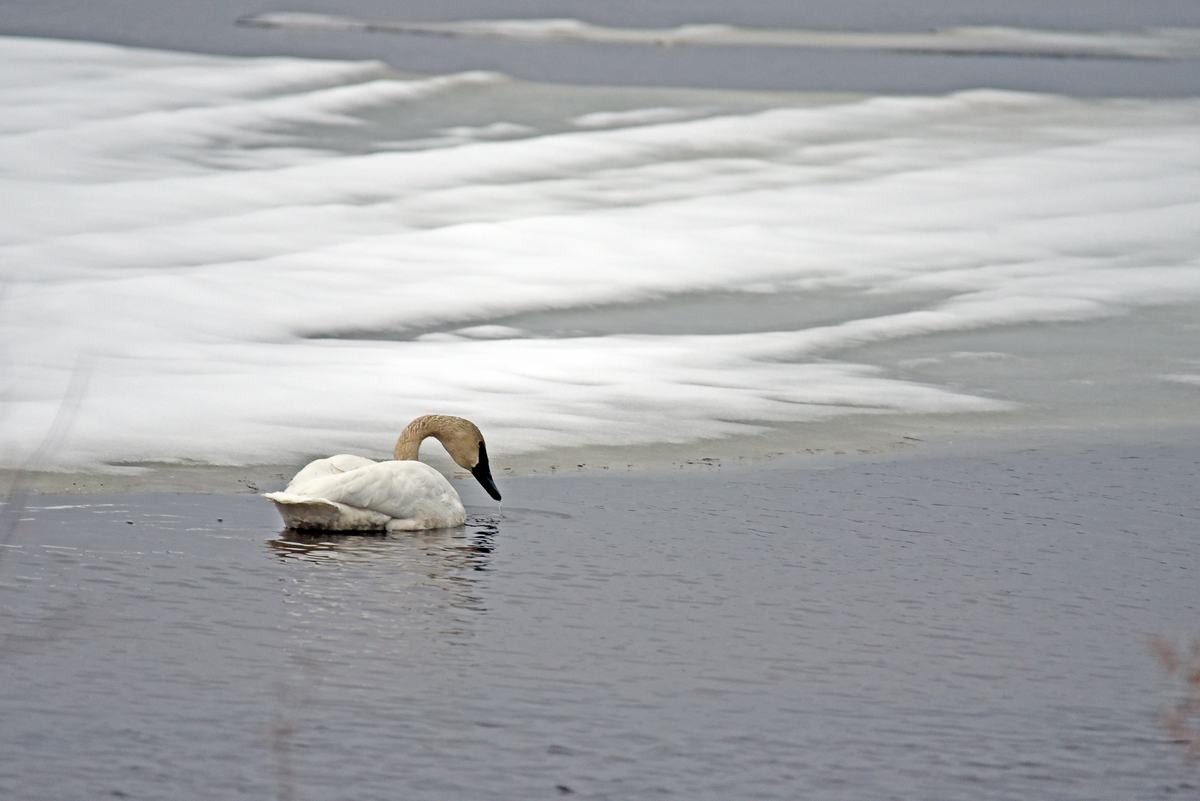
If you asked my Year 4 class to describe a swan, they would say white, cross, and lives near the duck pond. All fair. But swans are stranger than their postcard looks suggest. They carry thousands of feathers, own a neck that would make a giraffe jealous, and in Britain they technically belong to the King. Let us take the pretty bird apart, gently.
About 25,000 Feathers
A swan wears a lot of coat. Counts of around 25,000 feathers have been recorded on a single bird, one of the highest totals of any species, and a good chunk of those sit on the head and neck alone [5]. Most of that is soft down trapping warm air against the skin, which is why a swan can sit on freezing water looking entirely unbothered. It is the avian equivalent of a very good duvet. (Nobody warned me about this the first time I counted.)
A Neck Full of Bones
That elegant curve is not one long bone bending. A swan's neck holds somewhere between 22 and 25 vertebrae, far more than most birds and well ahead of the seven a human or a giraffe has to work with [5]. All those joints turn the neck into a flexible pole, which matters because swans feed by upending. They tip forward, tail in the air, and reach down to graze plants off the riverbed [1]. The neck does the diving so the body never has to.
Heavier Than They Look
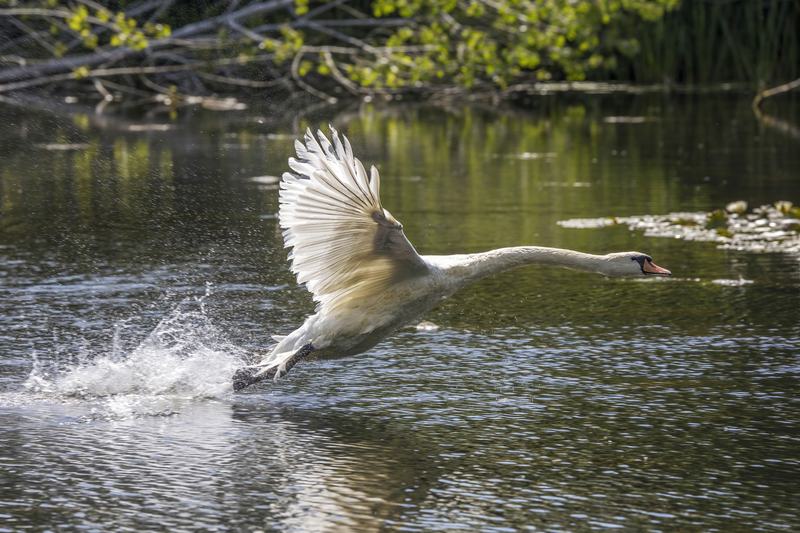
Swans are among the heaviest birds that still get off the ground. A large mute swan can push past 10 kilograms [1], which is a lot of bird to lift with feathers alone. This is why you never see a swan spring straight up like a sparrow. It needs a runway. A swan patters across the water for several metres, wings hammering, before it finally heaves into the air [5]. Graceful in flight, deeply undignified at takeoff.
The Biggest of the Lot
The mute swan of English rivers is not even the giant of the family. That title goes to the trumpeter swan of North America, the heaviest native waterfowl on the continent and the largest living waterfowl anywhere [2]. Wingspans stretch from about 1.8 metres to well over 3 metres, and the largest bird on record weighed roughly 17 kilograms [3]. That is a wingspan wider than most doorways, attached to something that honks like a small brass band.

They Mostly Pair for Life
Swans have a reputation for lifelong romance, and it is largely earned. Pairs tend to stay together year after year and defend the same patch together [1]. The heart-shape two swans make when their necks meet is real, if accidental. That said, swans are not saints. If a pair fails to raise chicks, they will sometimes split and find new partners, which ornithologists call divorce with a straight face [5]. Loyal, then, but not blindly so.
Cygnets Are Grey, Not White
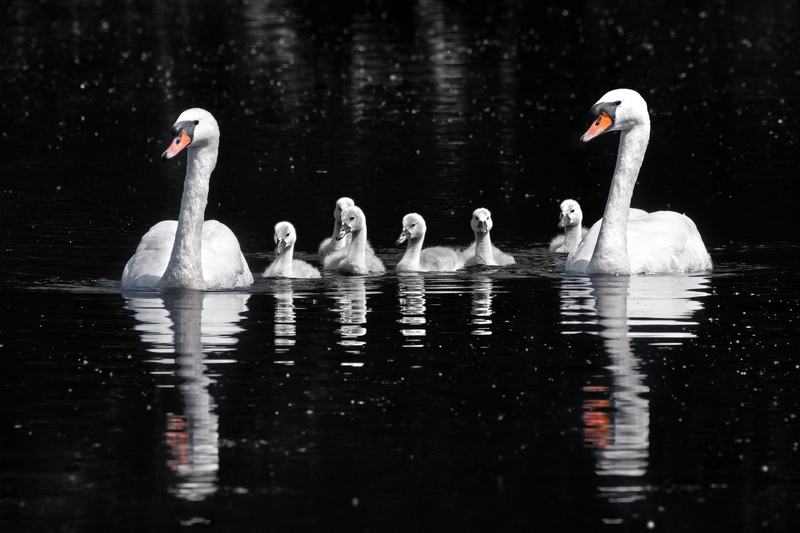
Baby swans, called cygnets, arrive in a dull grey-brown, nothing like the white birds they become [1]. This is the whole engine of the Ugly Duckling story, except the duckling was a swan the entire time and simply had not caught up with itself. The grey down is useful camouflage while they are small and edible. The clean white plumage takes a couple of years to grow in, which for a bird is a long and awkward adolescence. My kids find this deeply reassuring.

The King Owns Them
Here is the one that reliably stops a dinner table. By ancient custom, the British Crown can claim ownership of all unmarked mute swans on open water, a right going back to at least the twelfth century [4]. Every July, in a ceremony called Swan Upping, teams row up the Thames counting and checking the birds over five days [4]. It began as a way to guard a royal dinner and survives now as a wildlife census. The King, in effect, keeps a register of swans.
Not So Mute, and the Swan Song Myth
The mute swan is not actually mute. It is simply the quiet one of the family, hissing, grunting, and snorting rather than trumpeting like its cousins [5]. Which brings us to the swan song, the old belief that a swan sings one beautiful tune as it dies. It does not. The idea is thousands of years old and completely made up, though it gave us a lovely phrase for a final performance. And yet people still repeat it as fact.
There Are Black Swans
For centuries Europeans used a black swan as shorthand for something impossible, because every swan they had ever seen was white. Then Europeans reached Australia and found the black swan, an entirely real bird, swimming about as if it had always existed, which it had [6]. The phrase stuck around anyway, now meaning a rare event nobody saw coming. A whole idiom, quietly undone by one Australian bird.
Frequently Asked Questions
Do swans really mate for life?
Mostly, yes. Swans form long pair bonds and often stay with the same partner for many years, raising chicks and defending territory together [1]. It is not absolute, though. Pairs that repeatedly fail to breed will sometimes separate and find new mates, a behaviour researchers refer to as divorce [5].
Can a swan break your arm?
It is very unlikely. Swans are large and territorial and will hiss, chase, and beat their wings to drive you off, which can bruise or frighten [1]. But the popular claim that a swan can snap a human arm is not supported by evidence. Give a nesting swan space and it will leave you alone.
What is a baby swan called?
A baby swan is called a cygnet. Cygnets hatch with grey or brown down rather than white feathers, and they stay that dull colour for their first year or so [1]. The bright white adult plumage grows in gradually as the bird matures.
Why is it called a swan song?
The phrase comes from an ancient legend that a swan sings one beautiful song just before it dies. It is a myth with no basis in fact, since mute swans are among the least vocal birds [5]. The expression survives as a term for a final, farewell performance.
Sources
- Mute Swan Overview - Cornell Lab of Ornithology, All About Birds
- Trumpeter Swan Overview - Cornell Lab of Ornithology, All About Birds
- Trumpeter Swan (Cygnus buccinator) - U.S. Fish and Wildlife Service
- Swan Upping - The Royal Family
- Mute Swan - Audubon Field Guide
- Black Swan - Encyclopaedia Britannica