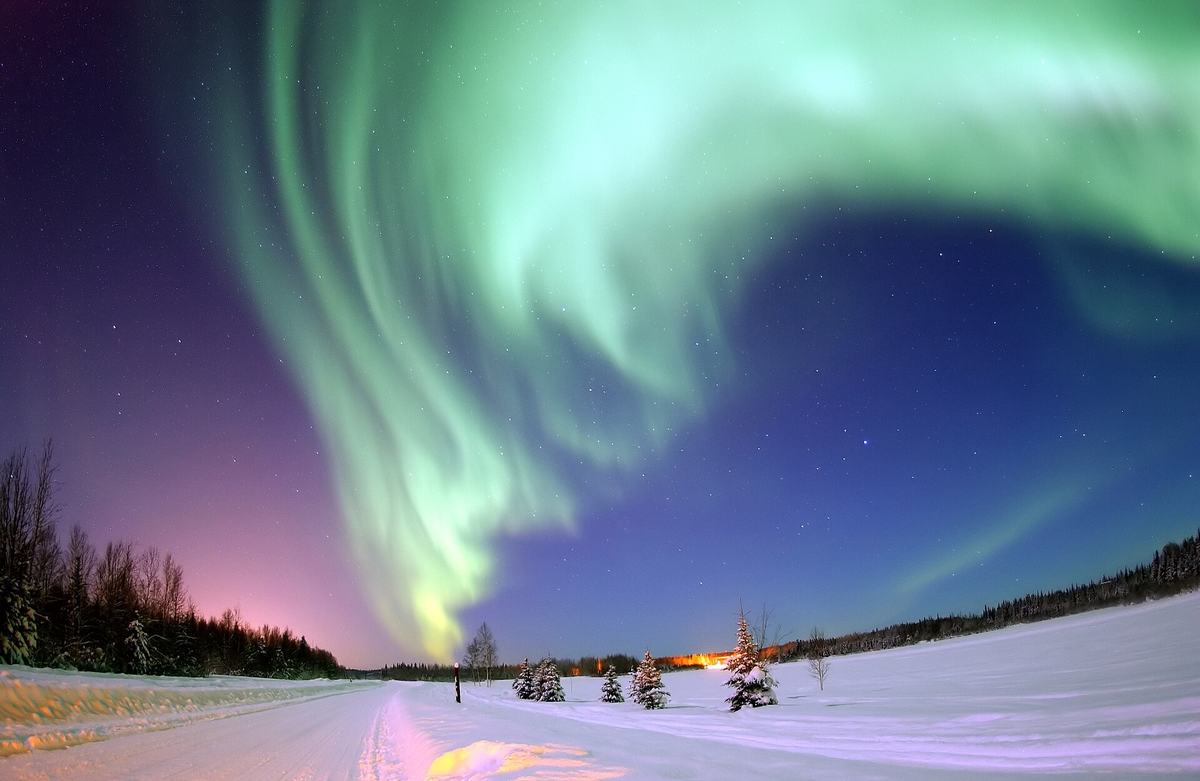
In 2016, sky photographers across Canada started sharing pictures of a thin ribbon of purple and white light and assumed they had caught a rare kind of aurora. Scientists studying the images agreed at first, and the light show earned a new name: STEVE. A few years of research later, they had to walk that back — the purple ribbon turned out not to be an aurora at all, but a separate celestial phenomenon that just happens to sit next to real auroras in the sky.
That mix-up is a good way into what an aurora actually is. The shimmering curtains most people call the northern or southern lights come from a running exchange between the Sun and Earth's atmosphere, and they turn out to be older, stranger, and more varied than the postcard photos suggest, with cousins on Jupiter and, it turns out, even on stars far outside the Solar System.
What Makes the Sky Glow Red, Green, and Purple
On Earth, the most intense displays start with solar storms: charged particles fall into the upper atmosphere, excite the gases there, and set off a glow in red, green, and purple. Which color dominates depends on altitude. Reds show up highest, where oxygen atoms are scarce and human eyes are less sensitive to that wavelength, so a red aurora only becomes visible when solar activity is strong enough to compensate for both problems at once.
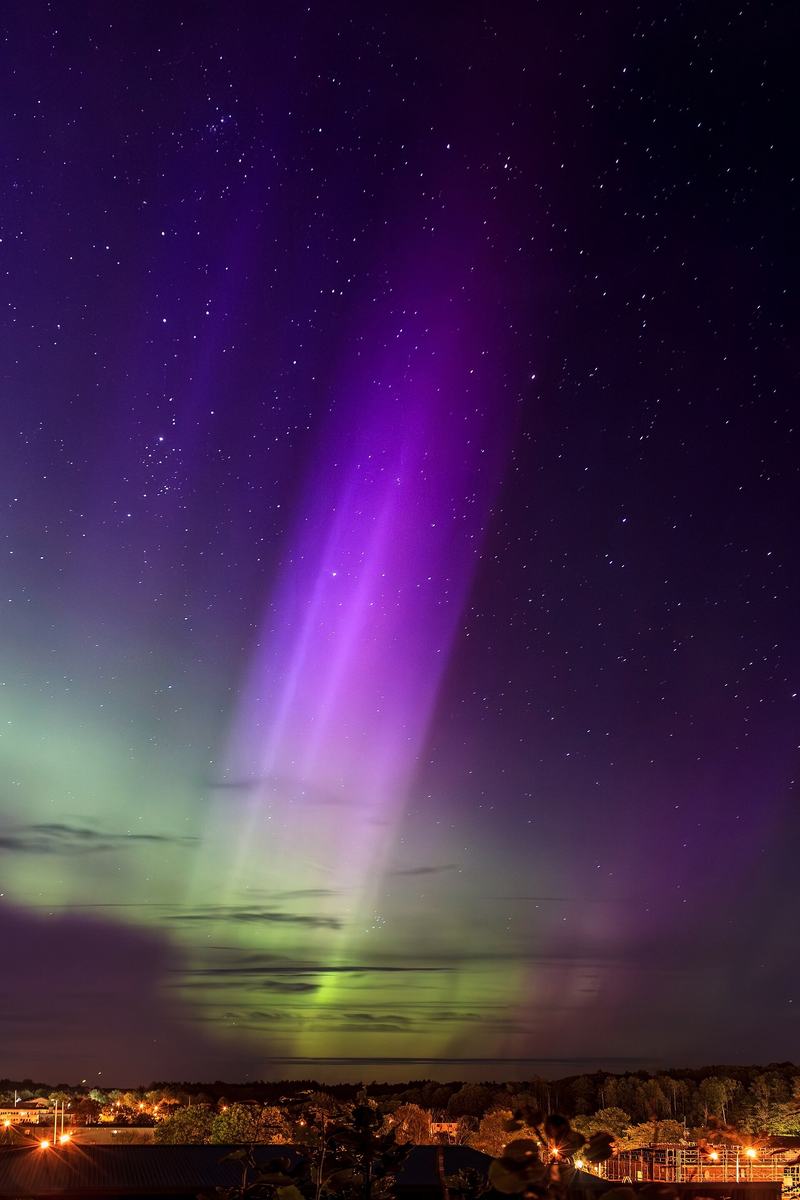

That altitude dependence is why the same storm can look completely different from one night to the next. It also explains why the reddest displays make headlines: a faint curtain is unremarkable, but a sky that visibly turns red is a sign that something unusual is happening overhead.
The Auroral Zone Isn't Where You'd Guess
Auroras are most reliably seen not at the poles themselves but in a ring around them: a band roughly 6 degrees of latitude wide, about 660 km across, centered near 67 degrees north and south. That band sits well away from the geographic pole, which is why the best places to watch the lights are Arctic towns south of the pole, not the pole itself.
Under normal conditions, the aurora keeps to that band. During the Carrington Event, remembered as the greatest geomagnetic storm ever observed, the rules broke down completely: auroras were seen even in the tropics, far from where they are normally visible.
An Impostor Named Steve
STEVE's story is a reminder that even well-studied skies can still surprise professional astronomers. When the purple-and-white ribbon was first brought to scientists' attention in 2016, it was filed away as a newly noticed type of aurora, an understandable mix-up, since it turned up in the same skies that genuine auroras do. Follow-up work changed the diagnosis: the streams of light that make up STEVE come from an entirely different mechanism and do not belong in the aurora family after all.
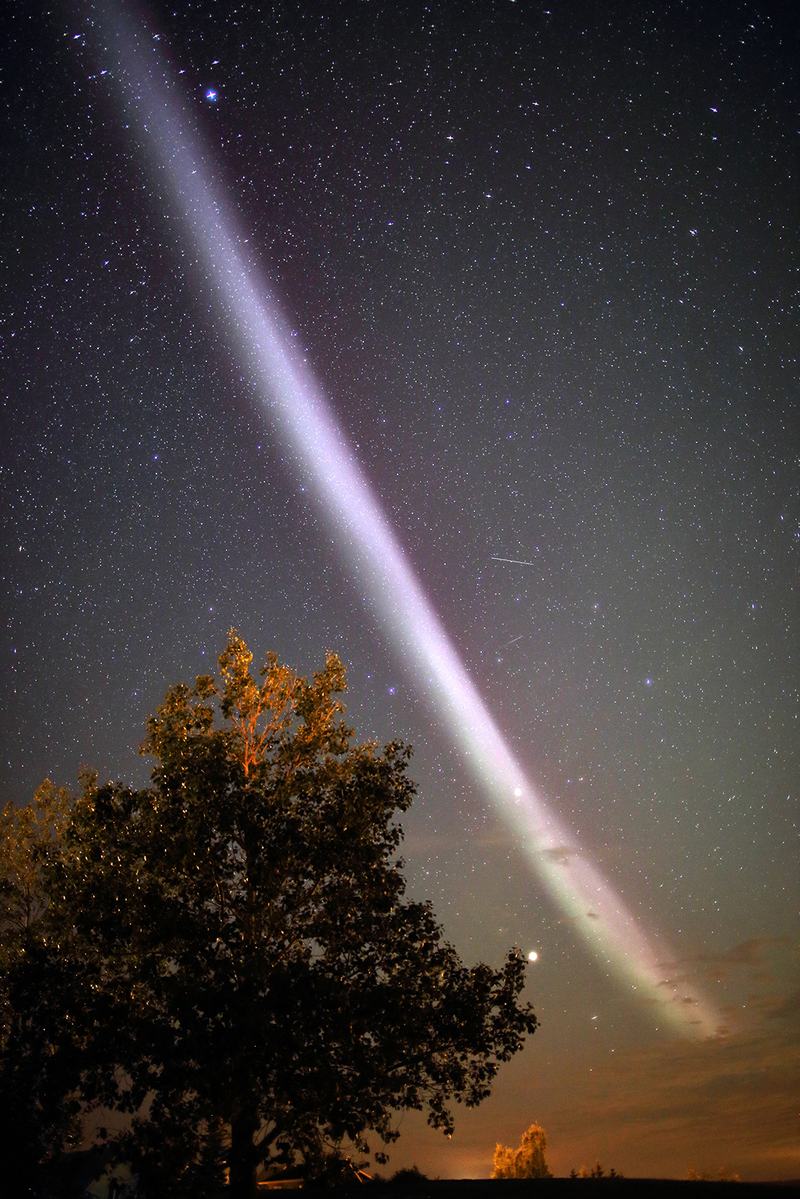

Untangling that took further research comparing STEVE's behavior with how real auroras work, and the two simply did not match. What had looked like one more auroral variety turned out to be its own, unrelated phenomenon that had simply gone unnoticed until amateur photographers started sharing pictures of it.
The Backronym Born From a Cartoon Shrub
The nickname has an unusually silly origin. The citizen scientists who first spotted the strange light show over Canada named it after a piece of throwaway comedy: in the 2006 animated film Over the Hedge, a group of woodland animals encounter an unfamiliar hedge and, not knowing what else to call it, decide to name it Steve. Aurora researchers borrowed the joke wholesale.
Space physicist Elizabeth MacDonald, who works at NASA's Goddard Research Center and founded the first citizen science network for auroras, liked the STEVE name and had her team build a scientific-sounding label around it afterward: STEVE, for Strong Thermal Emission Velocity Enhancement. The acronym was built to fit a name that citizen scientists had already picked, the paperwork catching up with the joke rather than the other way around.
Confusingly, STEVE sometimes travels with a companion that actually is an aurora. A green feature that occasionally appears alongside STEVE's purple streak behaves like ordinary auroral light, even though the purple ribbon right next to it does not, meaning a single sighting can hold one genuine aurora and one impostor side by side.
Citizen Scientists Keep Finding New Shapes
STEVE is not the only auroral surprise that came from amateur observers rather than a professional survey mission. Working alongside university space researchers, a group of Finnish amateur photographers turned up an entirely new auroral form, one that had not previously been catalogued.
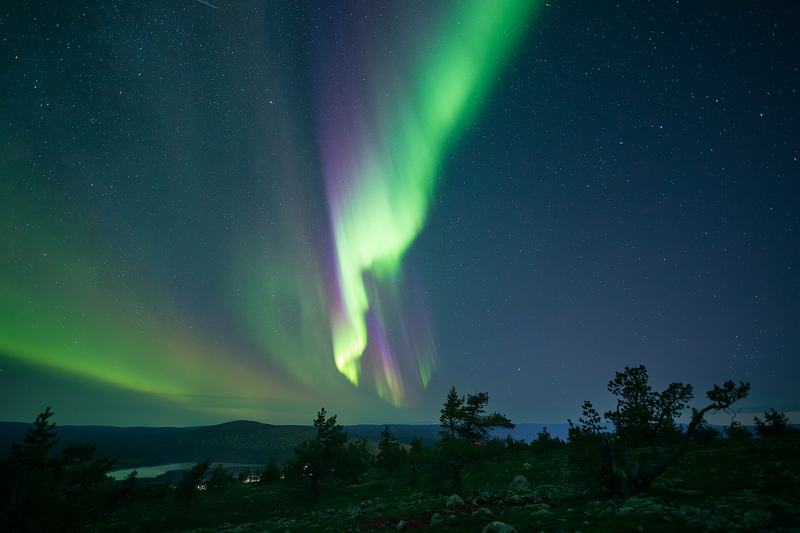

Researchers describe each distinct auroral form as its own kind of fingerprint, typical of one particular phenomenon in the auroral zone. That framing helps explain why an amateur photograph can still be a discovery: what looks like a minor variation to a casual viewer can turn out to be the signature of a mechanism nobody had documented before.
A Light Show on Jupiter That Never Sleeps
Earth's auroras are impressive, but Jupiter's put them in perspective. They are enormous, and on top of that, Jupiter's light shows pack hundreds of times more energy than anything Earth ever produces, and unlike Earth's, they never cease.
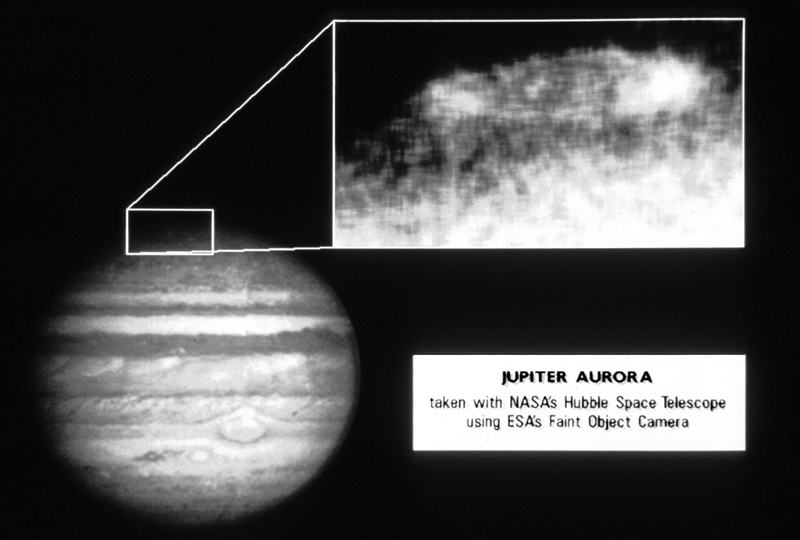

Part of the reason is that Jupiter has a second fuel source Earth does not. Along with the charged particles arriving in the solar wind, Jupiter's auroras are topped up by particles thrown into space by its moon Io, whose volcanoes are large and numerous enough to keep feeding the planet's magnetic environment with fresh material. Earth has no moon like Io nearby, which helps explain why its auroras do not run continuously the way Jupiter's do.
Auroras Far Beyond Earth
The aurora concept does not stop at the edge of the Solar System, either. In July 2015, astronomers reported the first-ever detection of an aurora beyond the Solar System, spotted around the brown dwarf star LSR J1835+3259. Finding an aurora there suggests that the basic recipe behind Earth's northern lights, a magnetic field intercepting a stream of charged particles, plays out on objects far removed from any familiar planet.
Written Into Ancient Skies
The aurora is one of the oldest recorded natural phenomena there is. The earliest datable written account of one appears in the Bamboo Annals, a chronicle of ancient China, dated to 977 or 957 BC, centuries before most events people think of as "ancient history" were ever written down. An even older depiction may survive in Cro-Magnon cave paintings in northern Spain, dated to around 30,000 BC, though pinning prehistoric art to one specific event is inevitably less certain than reading a dated chronicle.
Old records still occasionally rewrite the modern picture, too. A 1770 Japanese diary describing auroras over Kyoto, rediscovered in 2017, hinted that the storm behind it may have been roughly 7% stronger than the Carrington Event, the same storm whose telegraph-disrupting reach is usually treated as the ceiling for how extreme a geomagnetic storm can get. If that comparison holds up, the record for the most intense storm in recorded history may not belong to the storm most people credit with it.