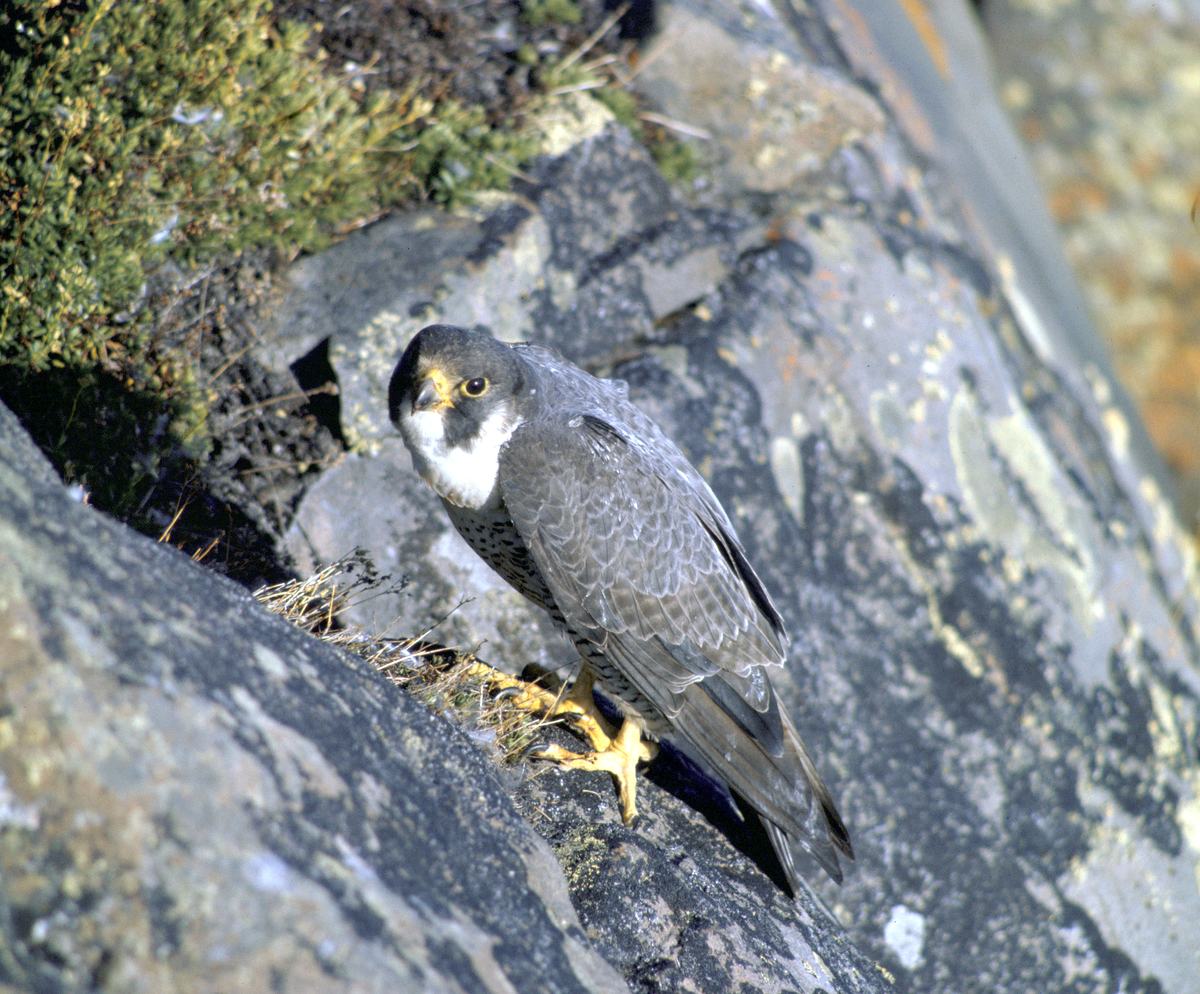
If you asked my Year 4 class to name the fastest animal on Earth, they would shout "cheetah", every time. The cheetah is quick. It is also not even close. The fastest animal alive is a bird roughly the size of a crow, and it does its best work falling out of the sky.
The Fastest Animal Alive
The peregrine falcon can reach more than 320 kilometres per hour when it dives, a move falconers call a stoop [1]. That is faster than a Formula 1 car and roughly the speed of a small aircraft coming in to land. It does not flap to get there. It folds its wings, points its head down, and lets gravity do the rest. A cheetah tops out near 100 km per hour, and only for a few seconds. The falcon wins, and it is not close.
A Falcon Is Not a Hawk
People use "falcon" and "hawk" as if they mean the same thing. They do not. Falcons belong to the genus Falco, a group of around 40 species, and they are built differently [2]. Their wings are long and pointed, swept back like a paper dart, rather than broad and rounded. They also have a tooth. A small notch on the upper beak, called the tomial tooth, helps a falcon sever the spine of its prey [2]. Hawks manage without one.

Built to Survive the Dive
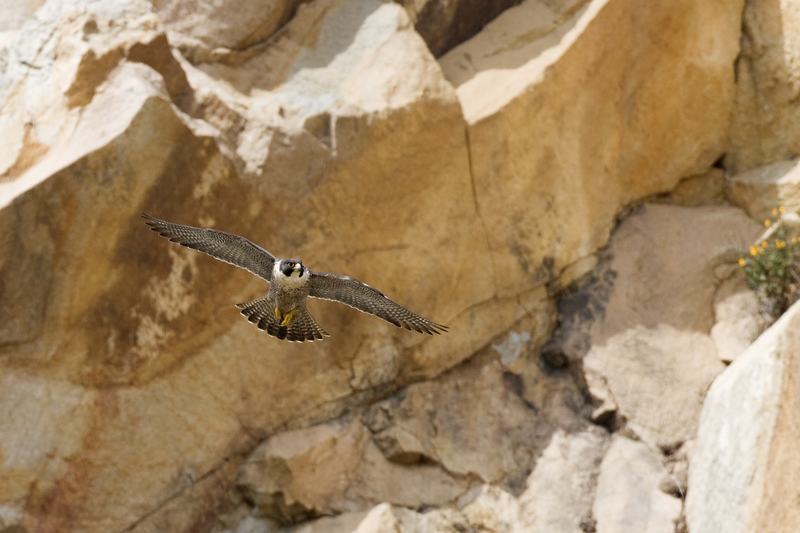
Falling at 320 km per hour causes problems that most birds never have to solve. A peregrine has a see-through third eyelid, the nictitating membrane, that sweeps across each eye to clear away dust and keep it moist mid-stoop [4]. Its nostrils have small bony bumps that slow the rush of air as it pours in, so the bird can still breathe at full speed [4]. Engineers who design jet engines have looked at those nostrils for ideas. The falcon got there first.
Eyes Like Binoculars
A peregrine can spot a pigeon from more than a kilometre away [4]. Its eyesight is often put at around eight times sharper than ours, which is roughly like reading a newspaper from across a football pitch. The eyes are so large they barely move in the skull, so the bird turns its whole head instead. If you have ever watched a falcon swivel to keep an eye on you, that is why. It is not being dramatic. It simply cannot move its eyes.
The Female Is the Bigger One
In most of the animal kingdom the male is the larger sex. Falcons flip it. The female peregrine is about a third bigger than the male, which is why falconers call the male a "tiercel", from the Latin for a third [3]. The larger female can take bigger prey, so the pair rarely squabble over the same meals. It works out rather tidily. My Year 4 class find this deeply unfair to the males, somehow.

Falcons That Nest on Skyscrapers
Falcons are hopeless at building nests. They do not bother [3]. A peregrine scrapes a shallow dip into gravel on a cliff ledge and lays its eggs there, and that is the whole plan. Cities are essentially full of artificial cliffs. Skyscrapers, cathedrals, and bridges all do the job, and the pigeons that flock to towns make convenient dinners. Peregrines now nest on buildings from New York to London, often with a webcam pointed at them [3].
Back From the Brink
Not long ago the peregrine nearly vanished. The pesticide DDT built up in the birds and thinned their eggshells, so the eggs cracked under the weight of the sitting parent [5]. By the 1960s peregrines had disappeared from the eastern United States entirely. After DDT was banned and captive-bred birds were released, they recovered, and in 1999 the peregrine was taken off the United States endangered species list [5]. One of conservation's genuine success stories.
Hunting Partners for Thousands of Years
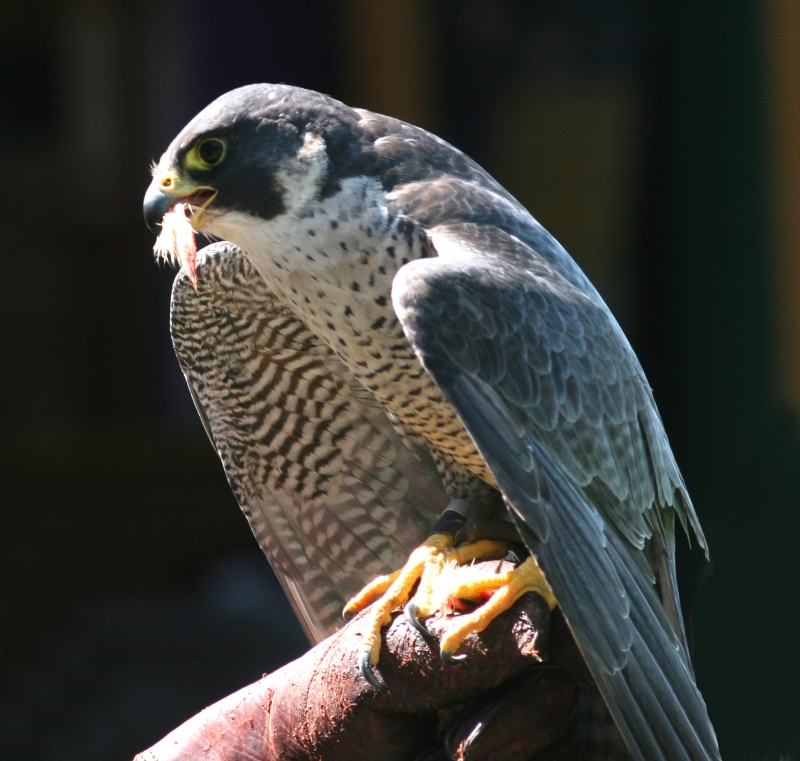
Humans have hunted with falcons for at least 3,000 years, and probably longer [6]. Falconry spread across Central Asia, the Middle East, and Europe, and UNESCO now lists it as a living piece of human heritage shared by dozens of countries [6]. A trained falcon is not really a pet. It stays because the arrangement suits it, and it could leave at any moment. Falconers will tell you that is rather the point.
The Kestrel's Party Trick
Not every falcon is a speed demon. The kestrel, a small falcon common across Britain, hunts by hovering, hanging almost still in the air with its tail fanned and its head locked in place [2]. It is also thought to see ultraviolet light, which helps it pick out the urine trails that voles leave through the grass [2]. So while it hangs there looking peaceful, it is really reading a map of mouse traffic. (Yes, really.)
Frequently Asked Questions
How fast can a falcon fly?
In level flapping flight a peregrine falcon cruises around 40 to 60 kilometres per hour. Its famous speed comes in the stoop, a steep dive in which it can exceed 320 kilometres per hour. That makes it the fastest animal on Earth, and no other creature moves faster.
What is the difference between a falcon and a hawk?
Falcons have long, pointed wings and a notched "tomial tooth" on the beak, and they belong to the genus Falco. Hawks have broader, rounded wings and kill mainly with their talons. Falcons tend to hunt in open air, while hawks work among trees and cover.
What do falcons eat?
Most falcons eat other birds, caught in flight, along with small mammals and large insects. Peregrines favour pigeons and doves, while smaller falcons such as kestrels take voles, mice, and beetles. They hunt live prey and rarely scavenge from carcasses.
Can you keep a falcon as a pet?
No. Falcons are wild birds of prey, and in most countries keeping one requires a licence and formal falconry training. They need large amounts of space, live prey, and daily flying. They are working hunting birds, not house companions.