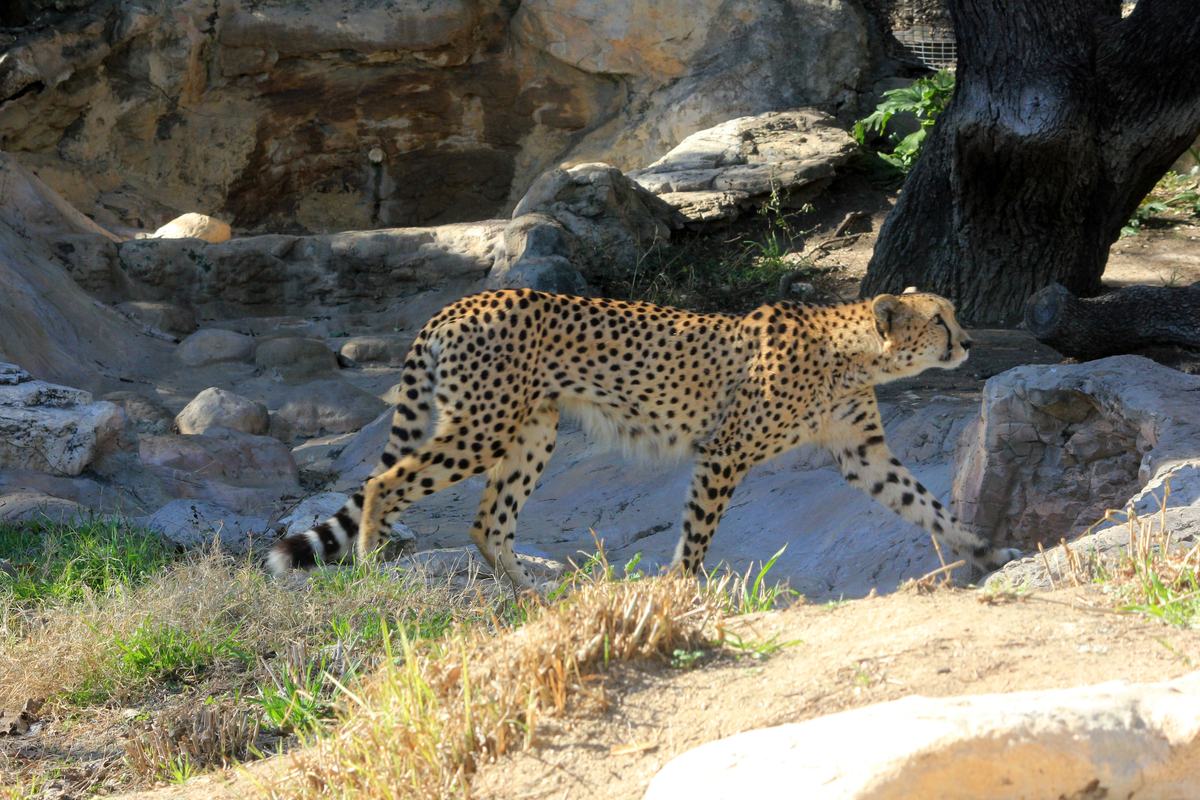
If you asked my Year 4 class to name the fastest animal, they would say cheetah in about half a second, which is fitting. What they would not guess is how much the cheetah gives up to be that fast. It is the sports car of the animal world, and like a sports car, it is expensive to run, easily bullied, and hopeless in a fight. The speed is real. Almost everything else about the cheetah is a compromise made to keep that speed.
The Fastest Land Animal
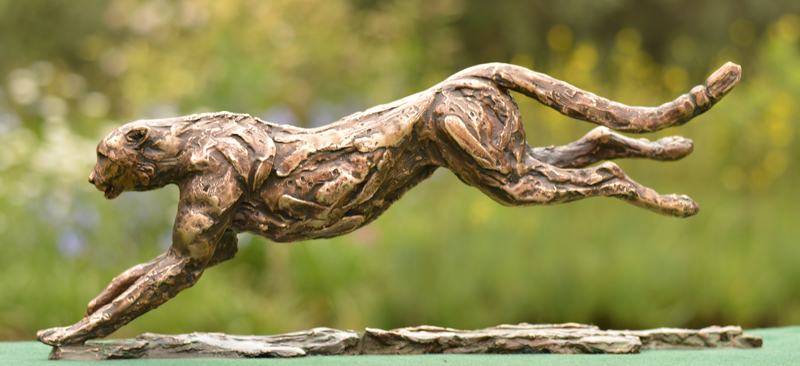
A cheetah can reach roughly 100 to 110 kilometres per hour in a sprint, faster than any other animal on land [1]. More impressive than the top speed is the getting there. A cheetah goes from a standstill to about 100 kilometres per hour in around three seconds, which is quicker off the line than most sports cars [2]. At full stretch its stride covers about seven metres, and for part of each bound all four feet leave the ground entirely. It is less running, more controlled flying.
Built Like a Spring
Nearly every part of a cheetah exists to serve the sprint. It has a long, flexible spine that coils and releases like a bow, small collarbones, and a deep chest packed with big lungs and a large heart [1]. The legs are long and thin, the head small and light. All of this makes for a beautifully quick animal and a fairly delicate one. A cheetah is built the way a racing bike is built, and you would not use a racing bike to carry bricks.

Claws That Never Sheathe
Most cats keep their claws tucked away and pull them out only when needed. The cheetah cannot really do this. Its claws are only semi-retractable and stay mostly out all the time, working like the studs on a footballer's boots to grip the ground during a turn [3]. It is one of the features that sets the cheetah apart from the big cats. The trade-off is that those claws are blunt and not much use as weapons, which is part of why a cheetah loses so many arguments.
The Sprint Has a Timer
Here is the fact my kids find almost unfair. A cheetah can only keep its top speed for about twenty to thirty seconds before it has to stop [1]. All that effort builds up heat faster than the body can shed it, and the cheetah risks overheating. So the chase is a gamble. If the cheetah does not catch its prey in the first few hundred metres, it usually gives up and stands there panting, having spent an enormous amount of energy for nothing. The fastest animal on Earth runs on a very short battery.
A Cat That Cannot Roar
Lions roar, tigers roar, leopards make a noise like a saw. The cheetah does none of this. It has a different arrangement in its throat, so instead of roaring it purrs, and it chirps [4]. The chirp genuinely sounds like a bird, a high little chirrup that mothers and cubs use to find each other. Imagine the fastest predator on the savannah calling to its babies in the voice of a startled sparrow. Somehow that is exactly right.
Those Black Tear Marks
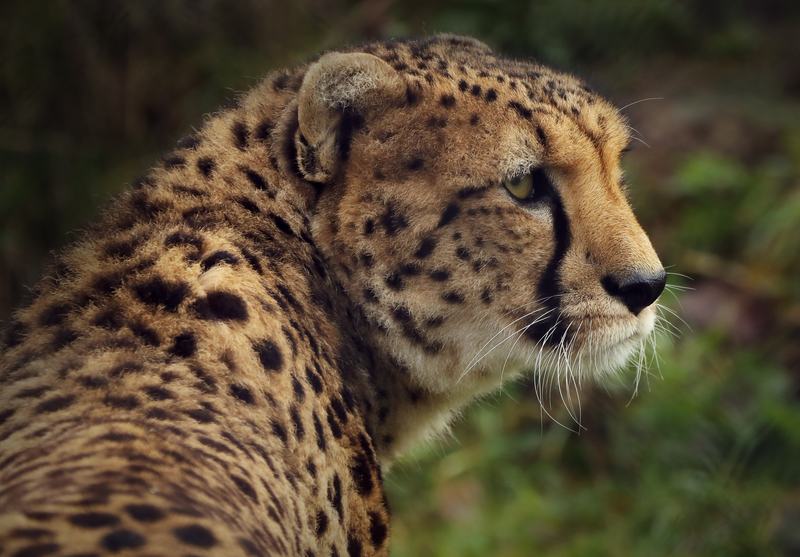
Look at a cheetah's face and you will see two dark lines running from the inner corner of each eye down to the mouth, like smudged mascara. These "tear marks" are not decoration. They are thought to cut down glare from the harsh sun and help the cheetah keep prey in sharp focus during a daytime chase, much like the black stripes an athlete paints under their eyes [3]. The cheetah hunts by day partly to avoid lions and hyenas, so good vision in bright light earns its keep.

Cubs Wear a Disguise
Cheetah cubs are born with a thick mantle of long, silvery-grey fur down their backs, so they look rather different from the sleek adults [4]. One idea is that this fluffy cape helps a cub resemble the honey badger, a small animal so ferociously bad-tempered that most predators leave it well alone. Whether or not the disguise really works, cub life is dangerous, and a great many do not survive their first months. The mantle fades as they grow into their proper spotted coats.
All Cheetahs Are Near-Twins
This one is quietly remarkable. Cheetahs went through a severe population crash thousands of years ago, and the survivors were so few that today's cheetahs are almost genetically identical, more like a family than a wild population [3]. You can graft skin from one unrelated cheetah onto another and the body will not reject it, which normally only happens with identical twins. This lack of variety is a problem. It leaves the whole species more vulnerable to disease and less able to adapt.
Fast, But Not Safe
For all its gifts, the cheetah is in trouble. It is listed as Vulnerable, with only around 6,500 mature adults left in the wild, spread thinly across Africa and a tiny, critically endangered population in Iran [5]. Habitat loss, conflict with farmers, and the illegal pet trade all take a toll, and cheetahs need vast open ranges to hunt. The animal that outruns everything cannot outrun this. Conservation groups are working to hold the line, which is cautious, necessary news.
Frequently Asked Questions
How fast can a cheetah actually run?
A cheetah can reach roughly 100 to 110 kilometres per hour, making it the fastest land animal. It accelerates from a standstill to about 100 kilometres per hour in around three seconds. It can only sustain that top speed for twenty to thirty seconds before it must stop to cool down and rest.
Why can't cheetahs roar?
Cheetahs have a different structure in the throat from lions, tigers, and leopards, so they cannot roar. Instead they purr, growl, and make a high, bird-like chirp. Mothers and cubs use this chirp to locate one another, and it sounds surprisingly like a startled bird rather than a large cat.
What are the black lines on a cheetah's face?
They are called tear marks, dark stripes running from the inner eyes to the mouth. They are thought to reduce sun glare and help the cheetah focus on prey during daytime hunts, similar to the black marks athletes wear under their eyes. They are a hunting aid, not just a pattern.
Are cheetahs endangered?
Cheetahs are listed as Vulnerable by the IUCN, with roughly 6,500 mature individuals left in the wild. The Asiatic cheetah, found only in Iran, is Critically Endangered with very few remaining. Habitat loss, human conflict, and the illegal pet trade are the main threats to the species.