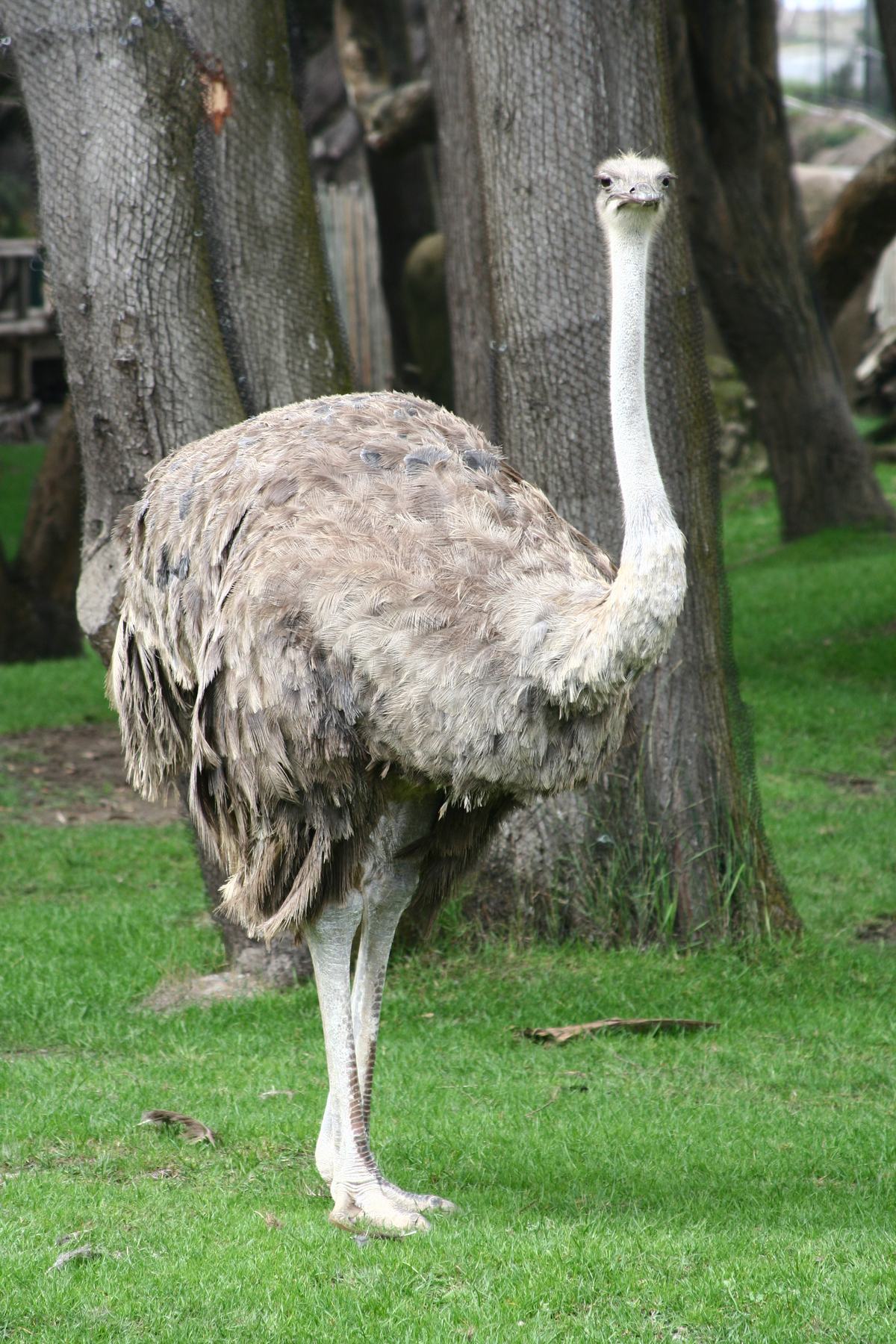
If you asked my Year 4 class to name the biggest bird, they would start with an eagle, then argue about penguins, then someone would confidently say 'a swan'. The real answer stands over two and a half metres tall, cannot fly at all, and could outrun the school minibus. Here is the ostrich, told properly.
The Biggest Bird Alive
Ostriches are the largest living birds on Earth. A big male can reach about 2.7 metres tall and weigh up to roughly 156 kilograms, which is heavier than most of the adults you know [1]. They are so far ahead of the competition that there is no real second place in the same room. Everything else with feathers is, comparatively, a rounding error.
Faster Than You'd Expect
An ostrich cannot fly, so it did the next best thing and became the fastest bird on land. It can sprint at up to about 70 kilometres per hour, and hold a steady 50 for a good while [2]. Each stride can cover three to five metres. That is a creature the size of a small horse moving faster than the traffic outside my classroom window. (Nobody warned me about this.)
Two Toes, One Serious Kick
Most birds have three or four toes. The ostrich has two on each foot, and it is the only bird that does [3]. One toe is large and carries most of the weight, ending in a claw that looks a bit like a hoof. Those legs are not just for running. An ostrich kicks forward with enough force to be genuinely dangerous, which is a polite way of saying you do not want to annoy one.

Eyes Bigger Than Its Brain
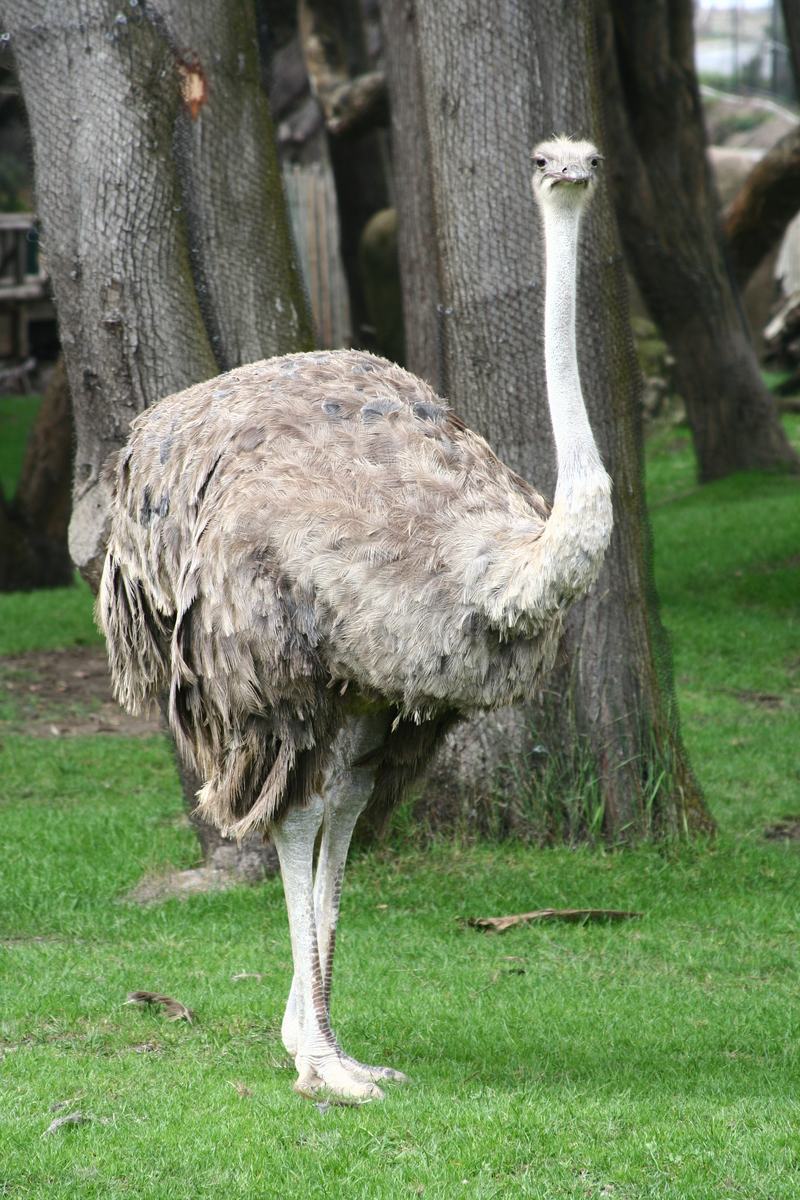
Each ostrich eye is around five centimetres across, the largest of any land animal, and yes, larger than the ostrich's own brain [1]. This is the fact my class repeats for weeks afterwards. It does mean excellent eyesight for spotting a lion on the horizon. It does not mean deep strategic thinking. The ostrich sees the danger clearly, then relies almost entirely on those legs.
The Head-in-Sand Myth
Ostriches do not bury their heads in the sand. They never have. The myth comes from a real habit: they dig shallow nests in the ground, then lower their heads to turn and check the eggs [4]. From a distance, a bird with its head down among the grass looks like it has vanished into the earth. It hasn't. It is just doing the avian equivalent of tidying the nursery.

The Largest Egg of Any Bird
An ostrich egg weighs around 1.4 kilograms, the biggest egg laid by any living bird [1]. One is roughly the volume of two dozen chicken eggs, and the shell is thick enough to take an adult's weight without cracking. Here is the twist, though: relative to the size of the mother, it is actually the smallest egg of any bird. Big bird, big egg, but the maths still comes out modest.
Sharing the Nursery
Ostriches nest as a group. A dominant female lays her eggs in the centre of a communal ground nest, and several other females add theirs around the edge [4]. The dominant pair does most of the incubating, the male often taking the night shift. It is co-parenting on a scale my staff room could learn from, and it means dozens of eggs can share one carefully guarded patch of ground.
Swallowing Stones on Purpose
Ostriches have no teeth, so they swallow pebbles and grit to help grind up their food [3]. These stones sit in the gizzard and do the chewing that the beak cannot. A single ostrich can carry around a kilogram of little stones inside it at any time. They also cope remarkably well without drinking, pulling most of the water they need straight from the plants they eat.

Frequently Asked Questions
How fast can an ostrich run?
An ostrich can reach roughly 70 kilometres per hour in a sprint and cruise at about 50 over longer distances [2]. That makes it the fastest bird on land and faster than most animals it might meet. Its long, muscular legs and light frame do all the work, since it cannot escape by flying.
Do ostriches really bury their heads in the sand?
No. Ostriches never bury their heads in the sand. The idea comes from watching them lower their heads to the ground to turn their eggs or nibble food [4]. At a distance the head seems to disappear into the earth, but the bird is simply reaching down to the ground.
How big is an ostrich egg?
An ostrich egg weighs about 1.4 kilograms, the largest egg of any living bird [1]. It holds roughly the same volume as two dozen chicken eggs. The shell is strong enough to support the weight of an adult person standing on it without breaking.
Can ostriches fly?
No, ostriches cannot fly. They are too heavy and their wings are too small to lift them [1]. Instead the wings help with balance while running, with courtship displays, and with regulating body temperature. Ostriches rely on speed and powerful legs to escape predators rather than taking to the air.
How long do ostriches live?
In the wild, ostriches typically live around 40 to 45 years [3]. In captivity, with steady food and protection from predators, some live even longer. They are among the longer-lived birds, and a single ostrich can raise many broods of chicks across its lifetime.