If you ask my Year 4 class to describe an otter, you get "cute" and then "it swims" and then a long pause. All true, and all rather selling the animal short. Otters carry their own tools. They wear the densest fur of any animal alive. Some of them hold hands so they do not drift apart in their sleep. There are thirteen species of them, from a creature you could hold in two hands to one nearly two metres long. There is a great deal going on beneath all that fur.
Thirteen Species, One Family
Otter is not one animal but thirteen, spread across rivers, coasts, and swamps on every continent except Australia and Antarctica.[1] They all belong to the weasel family, the mustelids, alongside badgers, stoats, and wolverines. So an otter is, more or less, a weasel that took up swimming and never looked back. The smallest is the Asian small-clawed otter, light enough to sit in your cupped hands. The largest is the giant otter of South America, which is a different proposition entirely.
The Densest Fur on Earth
Here is the fact that stops my class dead. A sea otter has up to a million hairs packed into a single square inch of skin.[2] You have perhaps a hundred thousand hairs on your entire head. Otters do not have a layer of blubber to keep warm, unlike seals or whales, so their coat has to do all the work. It traps a layer of air against the skin, keeping the animal warm and, remarkably, dry underneath. This is also why a grooming otter always looks so busy. A dirty coat is a cold coat.

They Use Tools
Sea otters are one of the very few mammals that use tools, which puts them in company with chimpanzees and crows.[3] An otter will fetch a rock from the seabed, balance it on its chest while floating on its back, and smash a stubborn clam or sea urchin against it until the shell gives way. Many keep a favourite rock, tucked into a loose pouch of skin under the foreleg, and carry it from meal to meal. A pet stone, essentially. My kids find this the single most convincing argument that otters are cleverer than they look.
Holding Hands While They Sleep
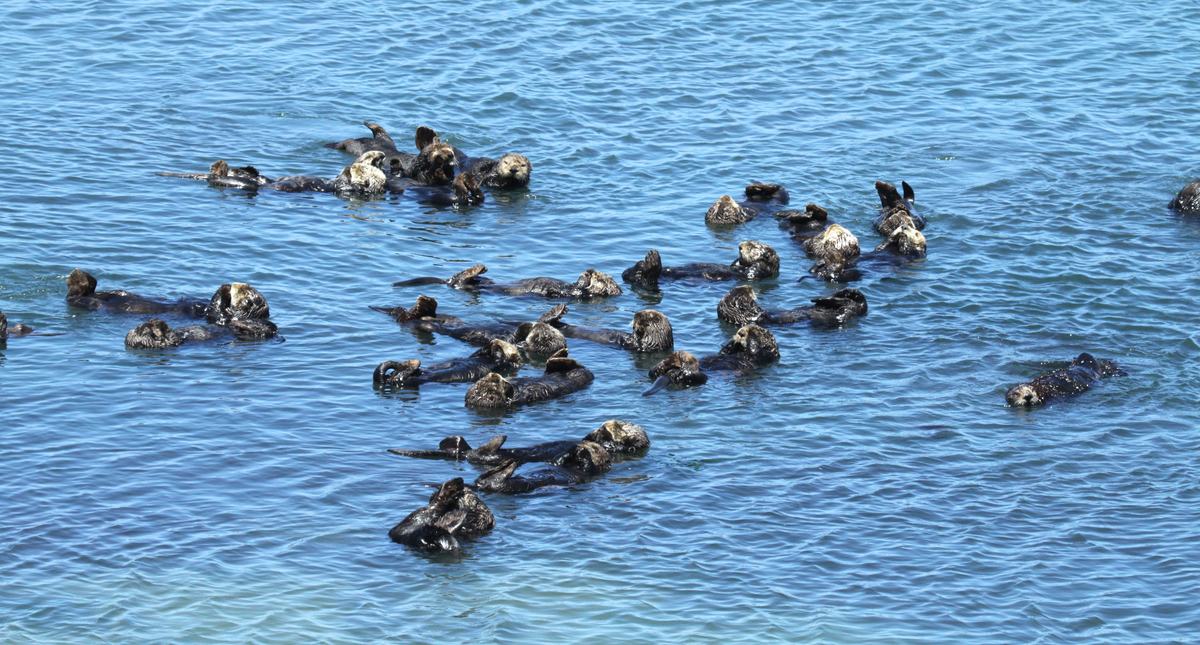
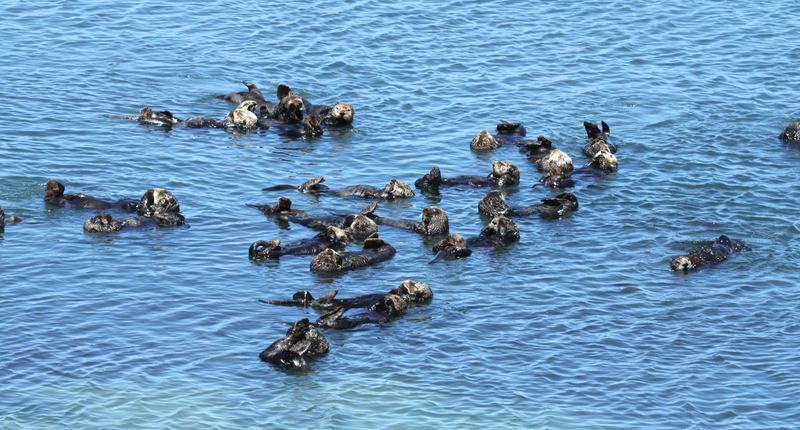
Sea otters sleep floating on their backs at the surface, which brings an obvious problem. Drift off, and you drift off. So they hold hands. A resting group, called a raft, will link paws so the tide does not scatter them overnight.[4] Mothers sometimes wrap a pup in seaweed for the same reason, anchoring it in place before diving for food. It is one of those facts that sounds too sweet to be real. It is real, and it is also just good sense.
A Keystone That Grows Forests
Sea otters do a job the whole coast depends on. They eat sea urchins, and sea urchins eat kelp. Where otters were hunted out, urchin numbers exploded and mowed the underwater kelp forests down to bare rock.[5] Bring the otters back, and the kelp returns, and with it the fish, crabs, and everything else that shelters there. Ecologists call an animal like this a keystone species. Pull it out, and a surprising amount of the structure falls down with it.

The Giant Otter Talks
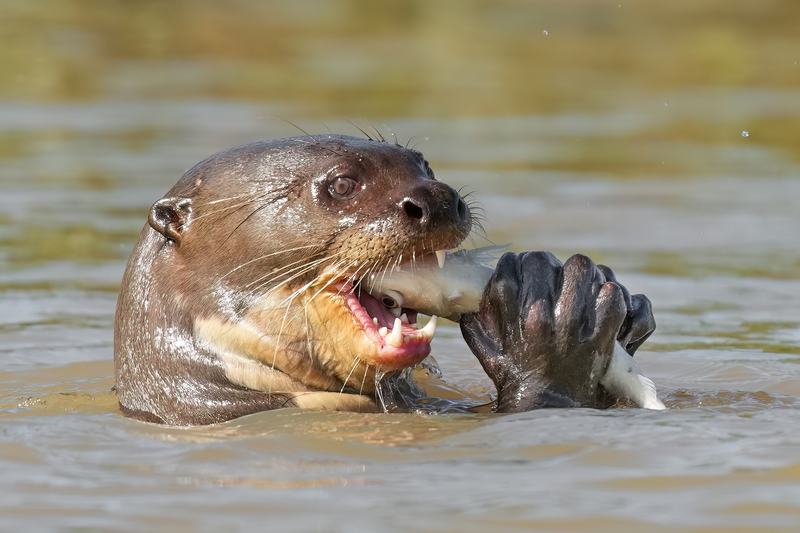
The giant otter of the Amazon can reach 1.8 metres from nose to tail tip, which makes it the longest member of the whole weasel family.[6] It lives in noisy family groups and is one of the most vocal animals in its habitat, with researchers cataloguing a whole range of distinct calls for warning, greeting, and coordinating a hunt. Local people call it the river wolf, and having watched a family fish together, I understand the name. They are magnificent and, sadly, endangered.
They Are Serious Eaters
An otter's engine runs hot. A sea otter eats roughly a quarter of its body weight in food every single day, simply to keep its furnace of a metabolism going in cold water.[2] That is a colossal amount of clams, crabs, and urchins. River otters are just as busy, hunting fish, frogs, and crayfish through the day. This constant appetite is why an otter is almost always doing something. Resting is a luxury when staying warm costs that much.
Built for the Water
Everything about an otter is arranged for swimming. The body is long and streamlined, the tail is thick and muscular and works like a rudder, and the feet are webbed. They can close their nostrils and ears underwater, and some species stay under for several minutes on one breath.[1] River otters have a party trick too. They slide down muddy or snowy banks on their bellies, again and again, in what genuinely looks like play. Scientists are cautious about the word. Anyone who has watched them is not.
Frequently Asked Questions
Do otters really use tools?
Yes. Sea otters use rocks as tools to crack open hard-shelled prey such as clams and sea urchins. They balance the rock on their chest while floating and smash the shell against it. Many otters keep a favourite stone and carry it in a loose pouch of skin under the foreleg.
Why do sea otters hold hands?
Sea otters hold hands, or link paws, while sleeping so they do not drift apart on the water. They rest in floating groups called rafts, and holding on keeps the group together against the tide. Mothers may also wrap pups in kelp to stop them floating away.
What is the difference between river otters and sea otters?
River otters live in and around freshwater and spend a good deal of time on land, while sea otters live almost entirely in the ocean. Sea otters are larger, float on their backs, and rarely come ashore. Both belong to the weasel family and share the same dense, waterproof fur.
Are otters endangered?
Some are. The giant otter and the sea otter have both suffered severe declines, largely from historic fur hunting and habitat loss, and remain protected today. Other species are more stable. Clean rivers and healthy coasts are the main things that keep otter populations recovering.