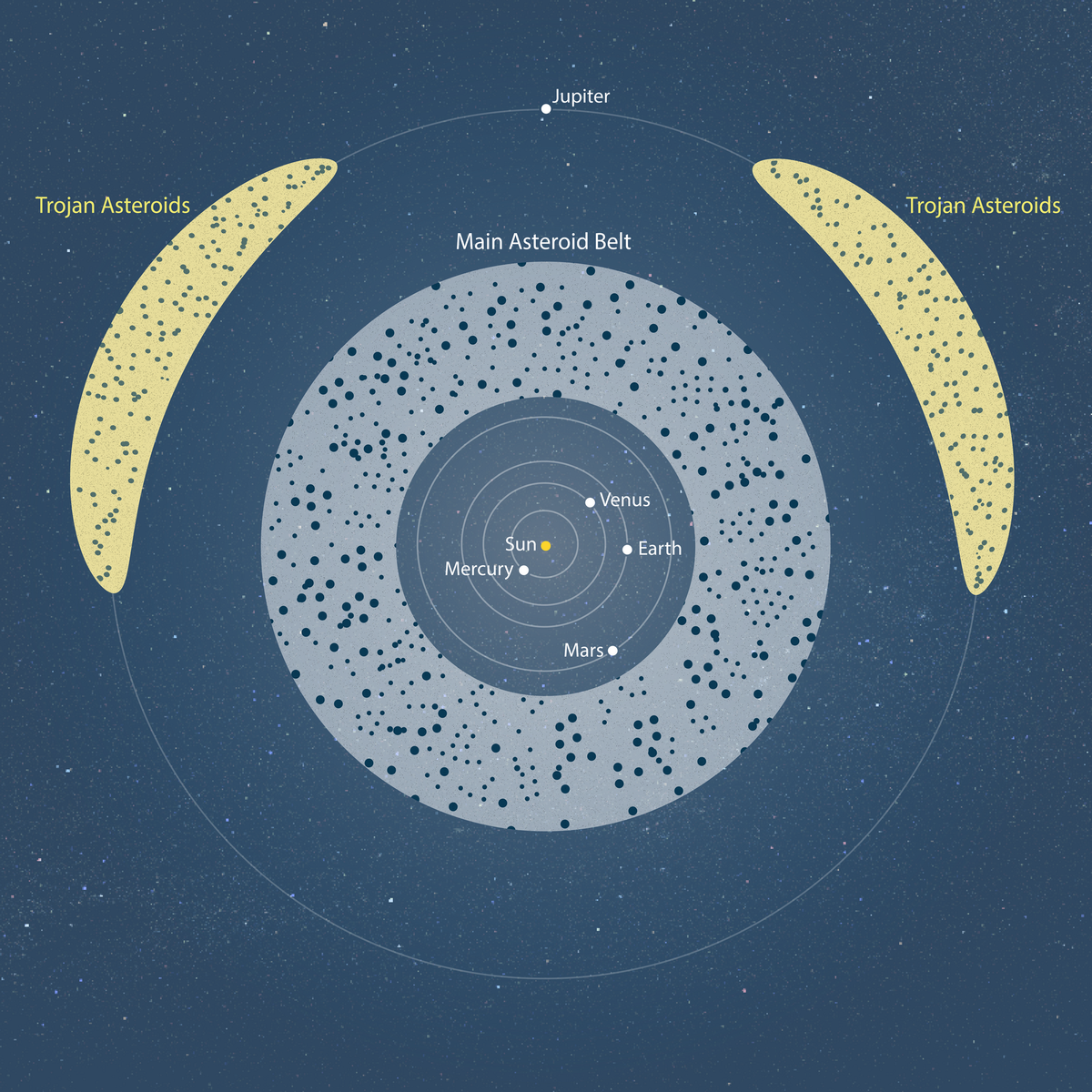
The asteroid belt is a torus-shaped region roughly spanning the space between the orbits of Jupiter and Mars, containing many irregularly shaped bodies that are, on average, about one million kilometers apart. That last detail surprises most people: despite how crowded science fiction makes it look, the asteroid belt is almost entirely empty space, with rocky bodies scattered across enormous distances from one another.
The asteroid belt is the innermost and smallest circumstellar disc in the Solar System. Its total mass is estimated to be 3% that of the Moon, with about 60% of that contained in the four largest asteroids: Ceres, Vesta, Pallas, and Hygiea. Nearly everything in the belt, in other words, is either one of four relatively substantial bodies or an enormous scattering of much smaller debris.
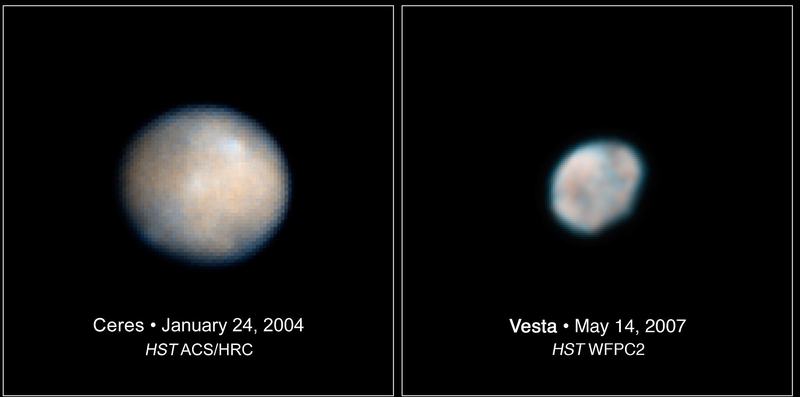
Even the largest resident isn't very large. Ceres, the only object in the asteroid belt large enough to be classified as a dwarf planet, is about 950 km in diameter, whereas Vesta, Pallas, and Hygiea have mean diameters less than 600 km. None of them come close to planetary scale.
A Predicted Gap, Then a Discovery
The belt's location wasn't stumbled upon by accident. Astronomers had suspected something belonged between Mars and Jupiter for decades before anyone found it, based on patterns in how the known planets were spaced. On January 1, 1801, Giuseppe Piazzi found a tiny moving object with an orbit exactly matching the radius predicted by that pattern. About 15 months later, Heinrich Olbers discovered a second object in the same region, Pallas — and it quickly became clear this wasn't a single missing planet, but something else entirely.
That "something else" was tempting to explain as a planet's remains. In 1802, Olbers suggested to Herschel and Gauss that Ceres and Pallas were fragments of a much larger destroyed planet, but the large amount of energy required to destroy a planet, combined with the belt's low combined mass, does not support that hypothesis. The belt was never a planet that broke apart — it was a planet that never got the chance to form in the first place.
Assembled Fast, Then Mostly Swept Away
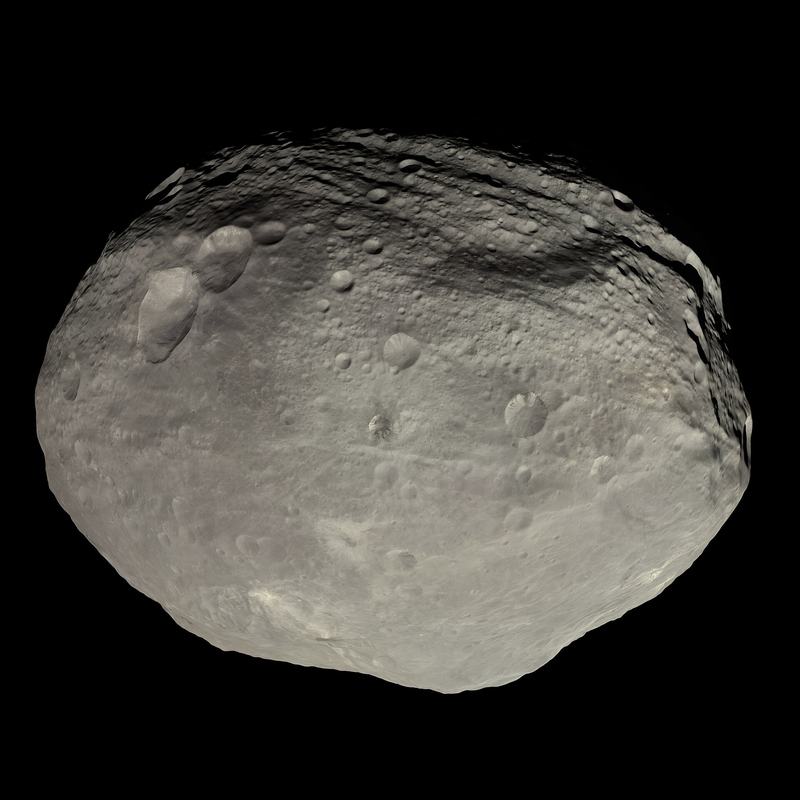
The belt's formation timeline turns out to have been remarkably quick. A 2007 study of zircon crystals in an Antarctic meteorite believed to originate from Vesta suggested that Vesta, and by extension the rest of the asteroid belt, formed within 10 million years of the Solar System's origin — a geological instant by planetary standards.

What didn't survive was the belt's original bulk. Most of the asteroid belt's original material was ejected within about 1 million years of formation due to gravitational perturbations, leaving behind less than 0.1% of the primordial belt's mass; the primordial population is estimated to have been 200 times what it is today. Jupiter's gravity, in effect, prevented a planet from forming here and then threw away nearly all of the raw material that might have built one.
What's Actually Left
Despite that dramatic loss, what remains is still substantial in number if not in mass. Over 200 asteroids in the belt are larger than 100 km, and infrared surveys suggest the belt holds between 700,000 and 1.7 million asteroids with a diameter of 1 km or more. It's a genuinely vast population of objects, just spread across a genuinely vast volume of space.

Composition varies by distance from the Sun. S-type (silicate-rich) asteroids form about 17% of the total asteroid population and are more common toward the inner region of the belt, within 2.5 AU of the Sun — a reminder that the belt isn't a uniform ring of identical rubble, but a zoned structure shaped by temperature and formation history.
The Gaps Jupiter Carved Out
Not every distance from the Sun within the belt is equally populated. In 1866, Daniel Kirkwood discovered gaps in the belt's orbital distances caused by resonances with Jupiter; at the 3:1 resonance, 2.502 AU from the Sun, an asteroid would orbit the Sun three times for each orbit Jupiter completes. Objects that would sit at those exact resonant distances get gravitationally destabilized over time and cleared out, leaving conspicuous empty bands.
Those resonances also define the belt's edges. The 4:1 orbital resonance with Jupiter, at a radius of 2.06 AU, can be considered the inner boundary of the asteroid belt. And the crowding isn't even across the whole structure: as of 2006, the compact "core" region of the main belt, lying between the strong 4:1 and 2:1 Kirkwood gaps at 2.06 and 3.27 AU, contained 93% of all discovered and numbered minor planets in the Solar System. Almost the entire known population is packed into a fairly narrow band, with a much sparser scattering beyond it.
A Belt That Keeps Breaking Itself Apart
The asteroid belt is not a static museum of leftover material — it is still actively colliding with itself. Impact events between main-belt bodies with a mean radius of 10 km are expected to occur about once every 10 million years, a slow but steady drumbeat of destruction that keeps reshaping the belt's population over cosmic timescales.
Those collisions leave a fingerprint that astronomers can trace. In 1918, Japanese astronomer Kiyotsugu Hirayama noticed that some asteroids' orbits shared similar parameters, identifying the first asteroid families; there are now about 20 to 30 associations likely to be asteroid families — clusters of fragments still drifting apart from a shared parent body. The Flora family, one of the largest asteroid families with more than 13,000 known members, may have formed from a collision less than 1 billion years ago. Some collisions are far more recent still: the Karin family apparently formed about 5.7 million years ago from a collision with a progenitor asteroid 33 km in radius — recent enough, on a Solar System timescale, to still be considered geologically fresh debris.
Some of that debris eventually reaches Earth. Of the 50,000 meteorites found on Earth to date, 99.8% are believed to have originated in the asteroid belt — nearly every rock that survives a fall through Earth's atmosphere traces its origin back to this same scattered region between Mars and Jupiter.
Visited, Orbited, and Mapped
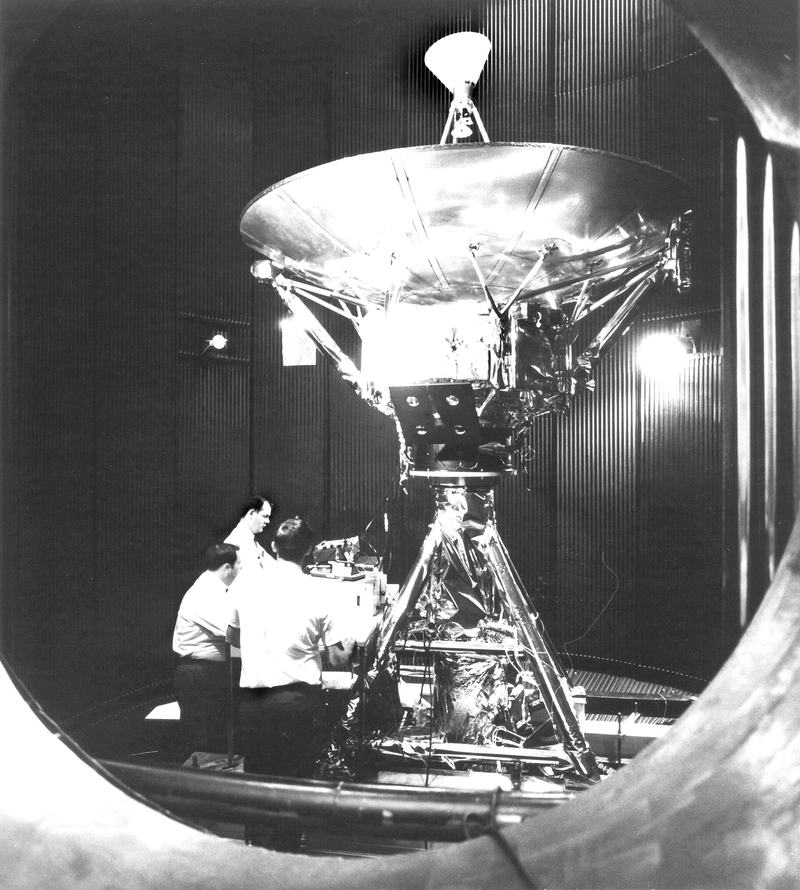

Spacecraft first crossed this territory more than half a century ago. The first spacecraft to traverse the asteroid belt was Pioneer 10, which entered the region on July 16, 1972, proving that a probe could pass through without being destroyed by debris, despite early fears about collision risk.
Decades later, a dedicated mission finally stopped to look closely. Dawn, launched by NASA in September 2007, entered orbit around Vesta on July 16, 2011 and completed a 14-month survey mission before leaving for Ceres, entering orbit around Ceres on March 6, 2015 — turning two of the belt's largest residents from distant points of light into mapped, photographed worlds.