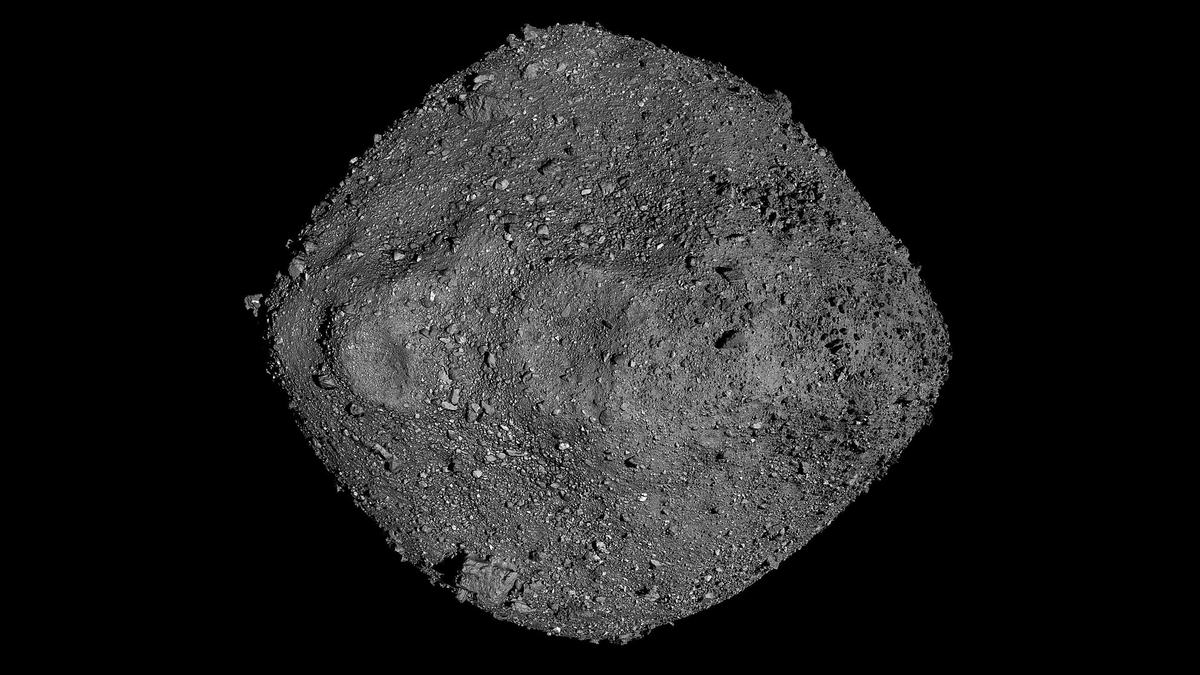
Asteroids sound like the simplest objects in the Solar System: rocks that never became planets. But some of them have their own moons, most are barely held together at all, and one small metal asteroid could theoretically be worth more than the economy of a mid-sized country. As of May 2025, the Minor Planet Center had data on 1,460,356 minor planets across the inner and outer Solar System — and only about 826,864 of them had enough tracking data to receive a permanent numbered designation. Most of what's out there, in other words, is still barely catalogued.
That number alone hints at how much variety hides in a category most people lump together as "space rocks." Asteroids differ enormously in composition, orbit, and structure, and a handful of them have been visited up close by spacecraft that landed, sampled, or orbited them for months. This is a tour through what actually distinguishes one asteroid from another — and why a few of them matter well beyond astronomy.
Not Quite a Planet, Not Quite a Comet
Asteroids are rocky, metallic, or icy bodies with no atmosphere, and they're broadly sorted into three main compositional groups: C-type (carbonaceous), M-type (metallic), and S-type (silicaceous). That three-letter shorthand carries real information — it roughly tells you whether a given asteroid is dark and carbon-rich, made of metal, or built from silicate rock, long before any spacecraft gets close enough to check.
The category itself only got its modern definition in 2006, when the International Astronomical Union introduced the broad term "small Solar System body" for anything that is neither a planet, a dwarf planet, nor a natural satellite. Asteroids, comets, centaurs, trojans, and trans-Neptunian objects all fall under that same umbrella — a reminder that "asteroid" is really just one label within a much messier taxonomy of leftover Solar System material.
The Ones That Ride Along With Jupiter
Not every asteroid orbits the Sun on its own path. Trojan asteroids share a planet's orbit without ever colliding with it, parked at one of two gravitationally stable points 60 degrees ahead of or behind the planet, called L4 and L5. More than a million Jupiter trojans larger than one kilometer are thought to exist, of which more than 7,000 are currently catalogued — a huge, largely unseen population riding along with the Solar System's largest planet.
Other planets barely compare. Only nine Mars trojans, 28 Neptune trojans, two Uranus trojans, and two Earth trojans have been found to date. Jupiter's overwhelming gravity, it turns out, is almost uniquely good at capturing and holding onto companions in this way — every other planet's trojan population is a rounding error by comparison.
The Neighbors That Cross Our Path
A near-Earth object is technically any small Solar System body whose closest approach to the Sun comes within 1.3 times the Earth-Sun distance — meaning its orbit doesn't have to bring it anywhere near Earth right now to earn the label, only that it's capable of getting close. If such an object's orbit crosses Earth's and it measures more than 140 meters across, it's automatically classified as a potentially hazardous object, regardless of whether it's actually on a collision course.
As of April 2022, a total of 28,772 near-Earth asteroids were known, of which 878 have a diameter of one kilometer or larger. That's a lot of large objects sharing our part of the Solar System, and the count keeps climbing every year as survey telescopes get better at spotting fainter, more distant candidates.
Asteroids With Moons of Their Own
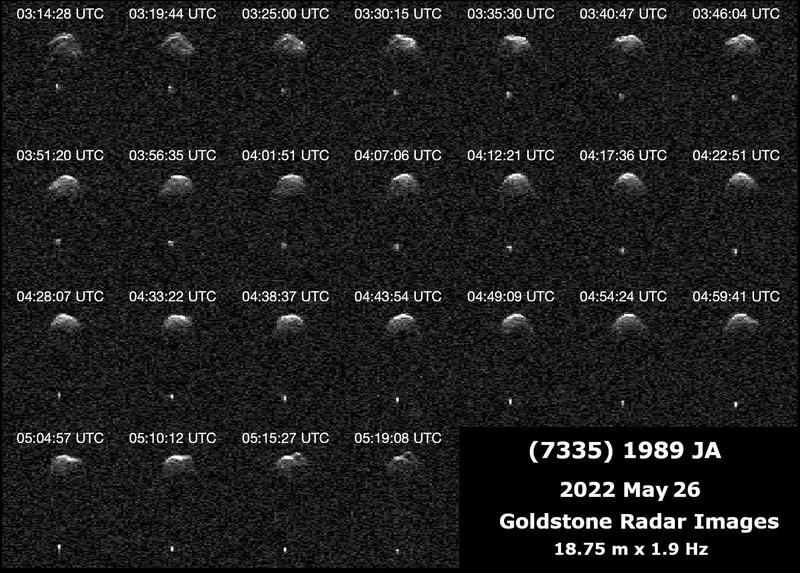
It's easy to picture an asteroid as a single lump of rock, but plenty of them aren't alone. As of October 2021, there were 85 near-Earth asteroids known to have at least one moon, including three known to have two moons — tiny multi-body systems tumbling through space together.
3122 Florence is a good example of what that looks like up close. One of the largest potentially hazardous asteroids, at 4.5 km across, Florence has two moons measuring 100-300 meters across, discovered by radar imaging during the asteroid's 2017 approach to Earth. Radar, unlike a regular telescope, can resolve detail on an object that size from tens of millions of kilometers away — which is exactly how astronomers caught a pair of moons that no optical image could have picked out.

Loose Piles of Rubble
Most asteroids aren't solid rock at all. Very few asteroids with a diameter larger than 100 meters have a rotation period less than 2.2 hours, which suggests that most asteroids that size are rubble piles formed through the accumulation of debris after collisions between asteroids. Spin an object like that any faster and it would fly apart — there simply isn't enough structural strength holding the pieces together, only gravity.
253 Mathilde makes the point vividly. This 50-km asteroid is a rubble pile so saturated with craters that some of them are as wide as the asteroid's own radius — evidence that an object this loosely bound can absorb enormous impacts without being blown apart, because the energy just gets absorbed into shifting rubble rather than shattering a rigid structure.
Two Worlds We've Visited Up Close
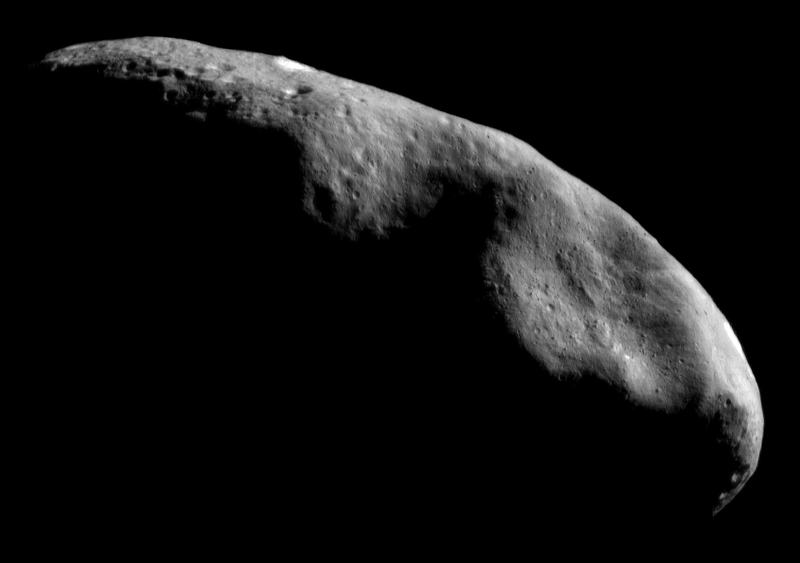
A handful of asteroids have been studied at a level of detail once reserved for planets. 433 Eros, a stony asteroid of the Amor group, was the first near-Earth asteroid ever discovered and remains the second-largest known, with a volume-equivalent diameter of about 16.8 km. NASA's NEAR Shoemaker probe visited it twice — a brief flyby in 1998, then an extended orbit starting in 2000 — before landing on its surface on 12 February 2001, the first time a near-Earth asteroid was closely visited by a spacecraft. Eros also has brutal temperature swings for a body with no atmosphere to smooth things out: daytime temperatures can reach about 100°C at perihelion, while nighttime measurements fall to near -150°C.

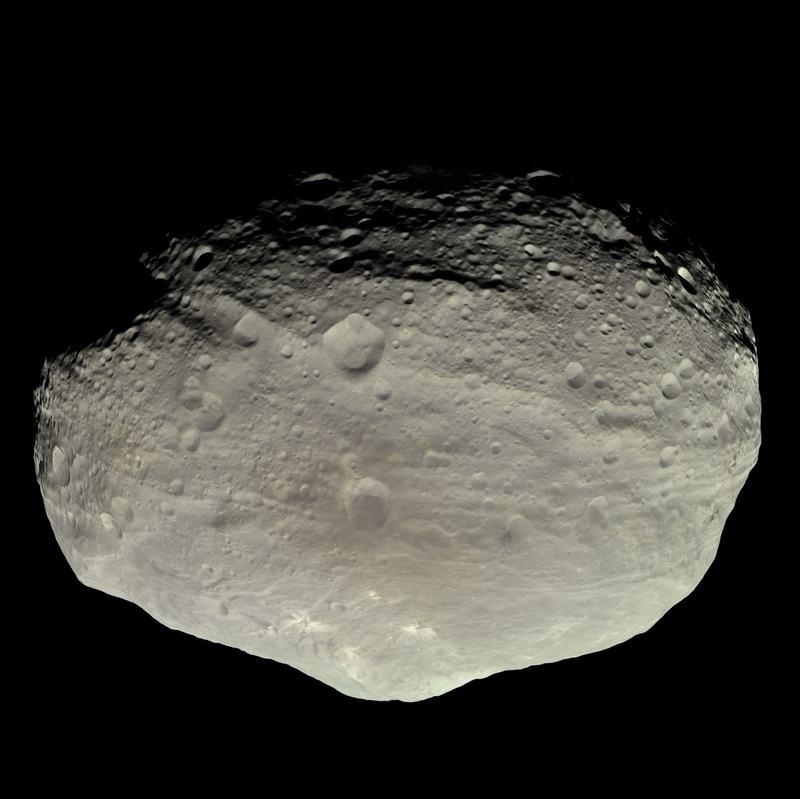
Vesta, thought to be the second-largest body in the asteroid belt by both mass and volume after the dwarf planet Ceres, tells a different story: violence written into its surface. Two enormous impact basins dominate it — the 500-km-wide Rheasilvia, centered near its south pole, and the 400-km-wide Veneneia. Rheasilvia's width equals 95% of Vesta's entire mean diameter, meaning a single ancient collision carved out a crater nearly as wide as the asteroid itself, and Vesta somehow held together anyway.

Digging for Trillion-Dollar Rocks
Asteroids aren't just scientifically interesting — some people think they're an untapped resource. As of 2024, only around 127 grams of asteroid material had ever been successfully brought to Earth by sample-return missions: less than 100 milligrams from Japan's Hayabusa, 5.4 grams from Hayabusa2, and approximately 121.6 grams from NASA's OSIRIS-REx. For all the ambition around asteroid mining, actual retrieved material still fits easily in the palm of a hand.
The theoretical upside is what keeps the idea alive. In 1997 it was speculated that a relatively small metallic asteroid just 1.6 km across could contain more than $20 trillion worth of industrial and precious metals. Nobody has built the technology to extract and return that value, but the number is large enough to explain why "asteroid mining" keeps resurfacing as a serious proposal rather than pure science fiction.
When the Sky Actually Falls
Impact risk isn't abstract. A collision 66 million years ago between Earth and an object roughly 10 km wide is thought to have produced the Chicxulub crater and triggered the Cretaceous-Paleogene extinction event that wiped out all non-avian dinosaurs. It's the clearest demonstration that asteroid impacts aren't just a hypothetical concern for astronomers — they've already reshaped life on Earth once.
That history is part of why missions like OSIRIS-REx matter beyond pure science. The NASA spacecraft visited and collected samples from 101955 Bennu, a carbonaceous near-Earth asteroid, returning the material to Earth in September 2023. Its work wasn't finished there: the spacecraft was renamed OSIRIS-APEX for a follow-up mission to 99942 Apophis, a near-Earth asteroid — turning a sample-return mission into an ongoing reconnaissance program for exactly the kind of object that a Chicxulub-scale impact would come from.