Most rocks that fall from space burn up completely before they ever reach the ground. The ones that survive — meteorites — turn out to be some of the oldest, most chemically informative material anyone can hold in their hands. Some are heavier than a loaded truck. Others carry amino acids or water that predate the Earth itself.
Meteorites are traditionally split into three broad categories: stony meteorites, made mainly of silicate rock; iron meteorites, largely ferronickel metal; and stony-iron meteorites, which mix large amounts of both. That three-way split matters because each type formed differently inside a shattered planetesimal, and each has ended up telling scientists a different story — about the Solar System's birth, about the planets it left behind, and occasionally about the deaths of the creatures that once lived on this one.
This is a tour through the meteorites that made that story possible: the heaviest one ever found, the most intensely studied, the oldest material ever recovered on Earth, and the craters — one in the Arizona desert, one buried under Mexico — that showed scientists how to prove an impact happened at all.
Rare Rocks That Outweigh Everything Else
Iron meteorites make up only about 5.7% of witnessed falls, yet they have historically been heavily over-represented in meteorite collections — museums and hunters have always favored them because they are easy to recognize and tough enough to survive intact. That imbalance runs deeper than collecting bias. Because iron meteorites are so much denser than stony ones, they account for almost 90% of the total mass of all known meteorites, about 500 tons in total. A small fraction of specimens by count turns out to hold nearly all the weight.
That density difference is also why the largest meteorites ever found are, without exception, iron ones: metal can survive atmospheric entry and a ground impact in one piece far more often than brittle stone can.
The 60-Tonne Rock Nobody Has Ever Moved
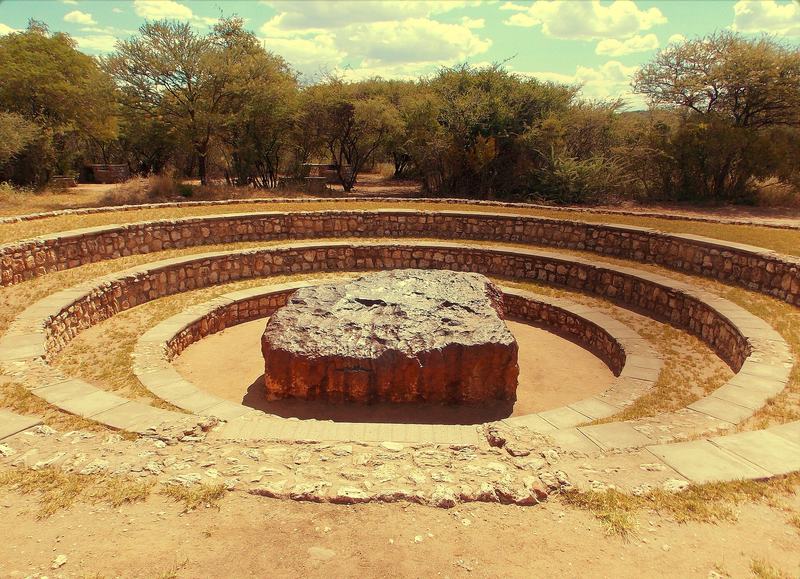
The Hoba meteorite, found on a farm near Grootfontein, Namibia, is the largest known intact meteorite. Its main mass is estimated at more than 60 tonnes — about twice as massive as the largest fragments of either the Cape York meteorite (the 31-tonne Ahnighito, now held by the American Museum of Natural History) or the Campo del Cielo meteorite (the 31-tonne Gancedo). It is composed of about 84% iron and 16% nickel, with traces of cobalt, and it is thought to have struck Earth less than 80,000 years ago.
Hoba was found in 1920, when landowner Jacobus Hermanus Brits struck it with his plough while working a field with an ox. Because of its sheer mass, it has never been moved from where it fell — every visitor to the site today is standing exactly where the meteorite landed tens of thousands of years ago.

The Best-Studied Fireball in History
The Allende meteorite is the largest carbonaceous chondrite ever found on Earth. It fell as a brilliant fireball over the Mexican state of Chihuahua at 01:05 on February 8, 1969, and more than 2 tonnes of fragments were recovered from the ground afterward. Because it fell just months before the Apollo program returned the first Moon rocks, scientists already had the instruments and the appetite ready to study it in extraordinary detail — which is part of why Allende is often described as the best-studied meteorite in history.
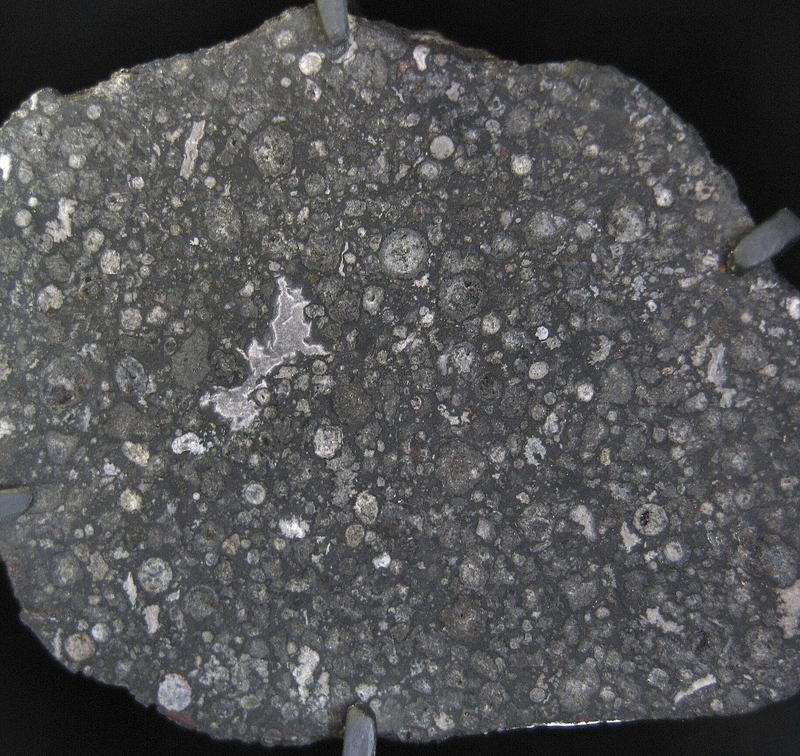

That scrutiny paid off. Allende contains chondrules and calcium-aluminium-rich inclusions dated to 4.567 billion years old, the oldest known solids to have formed in the Solar System. Those inclusions are about 30 million years older than Earth itself — meaning a piece of the Allende meteorite had already solidified before the planet it eventually landed on had finished forming.
Ingredients for Life, Sealed in Stone
The Murchison meteorite, which fell in Australia in 1969, belongs to the same carbonaceous chondrite family as Allende, and it has proven just as valuable to chemists. More than 15 amino acids — some of the basic components of life — have been identified in it across multiple studies, all of them formed by non-biological chemistry in space long before life existed anywhere.
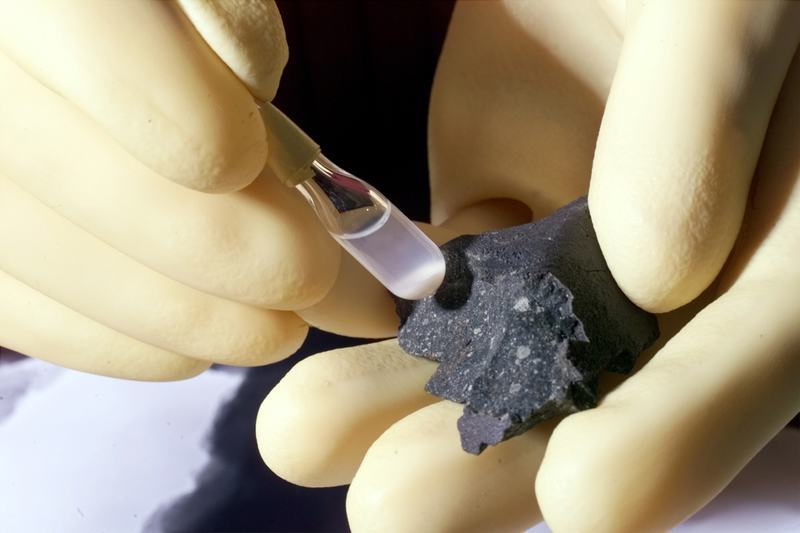

Murchison holds an even older record, though. Silicon carbide particles inside it have been dated to 7 billion years old, making them the oldest material ever found on Earth — about 2.5 billion years older than the Earth and the Solar System themselves. Those grains condensed around some other, long-dead star before our own Sun ever formed, and survived a multi-billion-year journey to end up in an Australian field.
A Crater You Can Still Walk Around
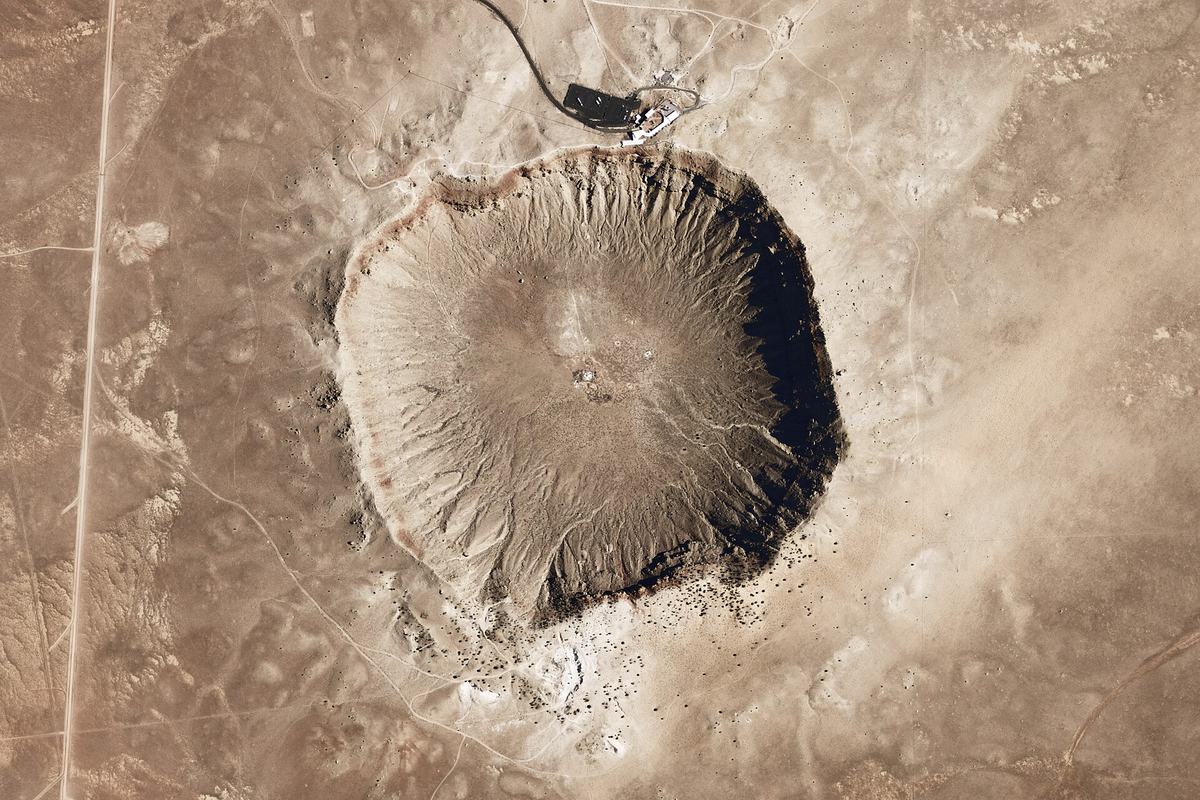
Not every meteorite survives as a museum specimen — some are only known today by the hole they left behind. Meteor Crater, also called Barringer Crater, sits in the Arizona desert and measures about 1,200 meters across and 170 meters deep, ringed by a rim that rises 45 meters above the surrounding plain. It was created about 50,000 years ago by a nickel-iron meteorite roughly 50 meters across — a single object smaller than a football field that punched out a crater visible from space.
For decades, geologists assumed the crater was volcanic. The case for an impact was made by Eugene Shoemaker, who found coesite and stishovite inside it — rare forms of silica that form only when quartz-bearing rock is instantaneously shocked by enormous overpressure. Aside from impacts, the only other ways to produce shocked quartz like that are a direct lightning strike or an artificial nuclear explosion. Finding it at Meteor Crater effectively ruled out any volcanic explanation for good.
The Impact With a Chemical Fingerprint
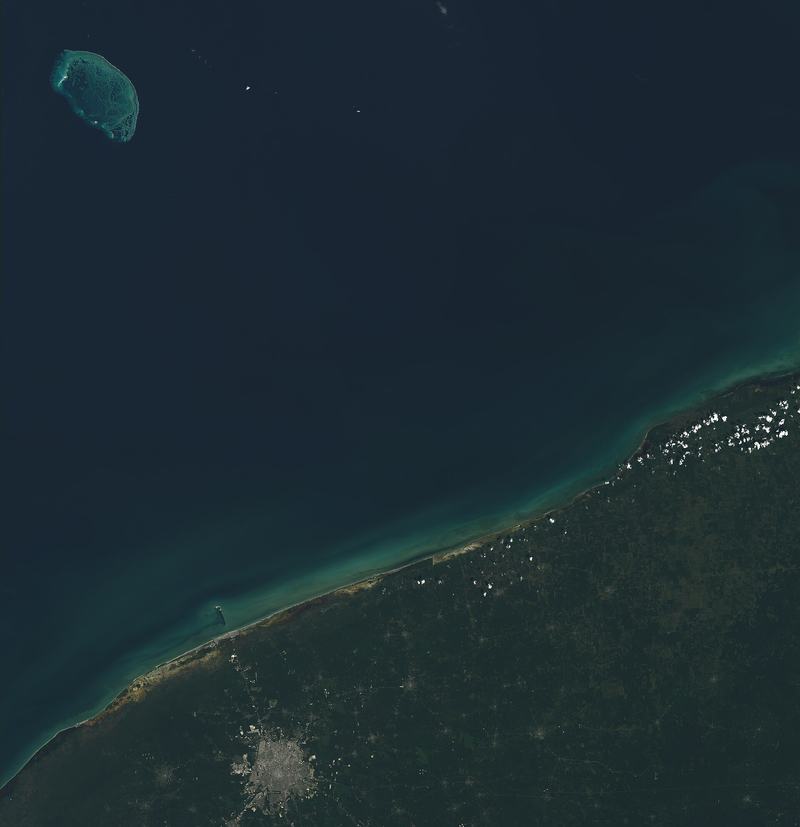
The Chicxulub crater, buried under Mexico's Yucatán Peninsula, is the scarred remains of a far bigger strike. It formed just over 66 million years ago when an asteroid about 10 kilometers across hit Earth, leaving behind a crater now estimated at 200 kilometers in diameter. Unlike Meteor Crater, nobody can see Chicxulub from the surface at all — it was only found because of what it left in the rock layers around the world.
Geologists Walter and Luis Alvarez proposed in the late 1970s that an impact had caused the mass extinction at the end of the Cretaceous period, after finding a thin global sediment layer with iridium levels as much as 160 times above background. Iridium is rare in Earth's crust but common in asteroids, so the anomaly worked like a chemical fingerprint left by the impactor — years before anyone had located the crater itself.
.jpg)
Messengers From Mars
A meteorite doesn't have to come from an asteroid. Until recently, the source of only about 6% of meteorites had been traced this precisely, and the confirmed parent bodies were just the Moon, Mars, and the asteroid Vesta — a short list for a category that includes tens of thousands of specimens. Among the Martian meteorites recovered in Northwest Africa, Tissint stands out as the first witnessed Martian meteorite fall in more than fifty years, while NWA 7034 is the oldest meteorite known to come from Mars, a unique water-bearing regolith breccia unlike any other Martian sample collected.
When a site yields more than one meteorite, collectors and the Meteoritical Society tell the individual stones apart by appending a number or letter to the site name — which is how the famous Martian meteorite Allan Hills 84001 got its designation, alongside less famous examples like Dimmitt (b).
Hunting for Space Rocks on Ice
Because meteorites are dark and instantly stand out against a plain, pale surface, some of the best hunting grounds on Earth are also some of the most extreme. Antarctica's blue ice fields turned out to be ideal: after a dozen meteorites were found at one site in 1973, a Japanese expedition was launched in 1974 dedicated entirely to searching for more. That single expedition recovered nearly 700 meteorites, transforming Antarctica from an afterthought into one of the most productive meteorite-hunting grounds in the world.