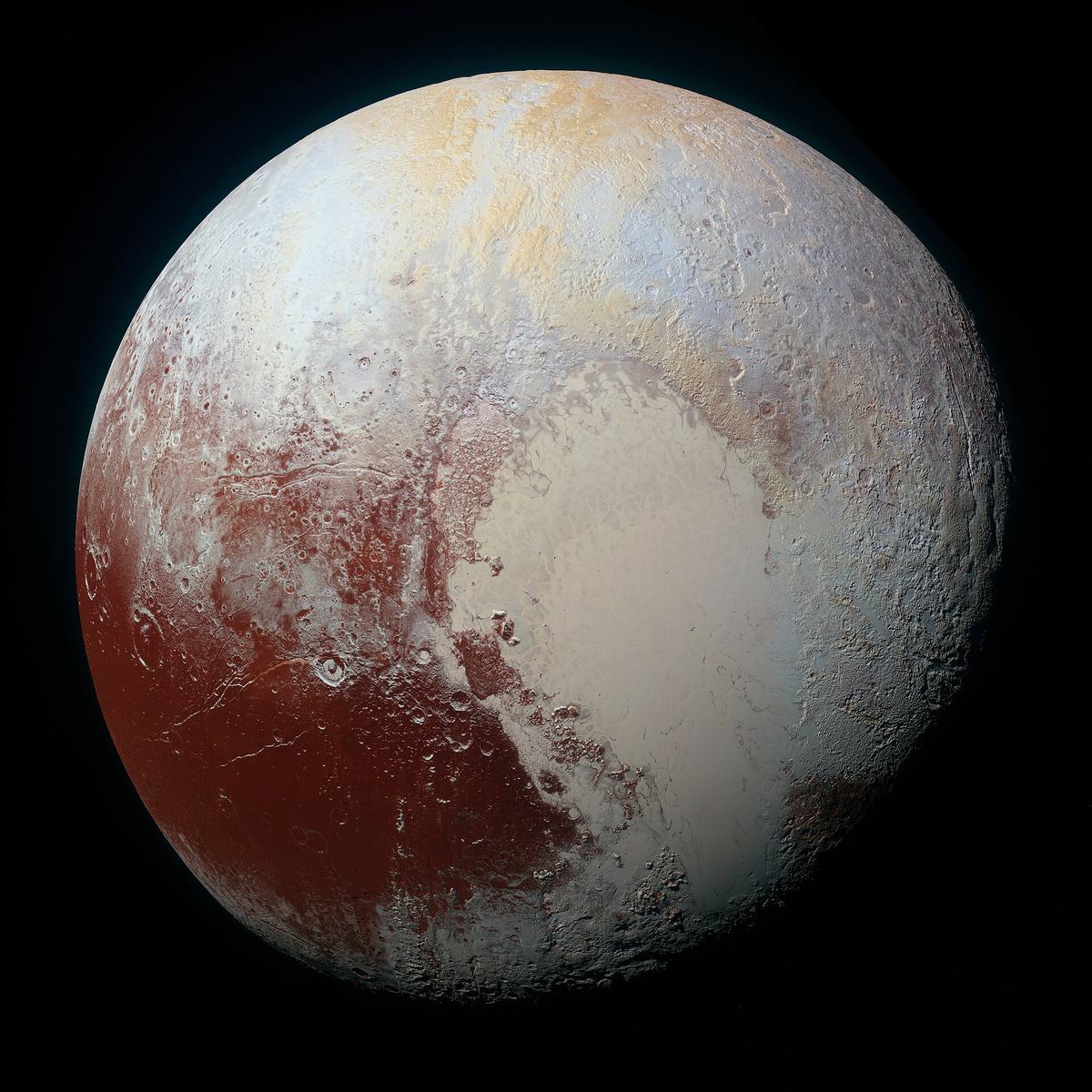
About 30 grams of Clyde Tombaugh's ashes ride aboard New Horizons, a quiet memorial to the man who discovered Pluto and never lived to see it up close.
New Horizons spent a decade crossing the solar system to reach that world, then kept going. Its flyby made it the first mission ever to explore a body so far from Earth, and its route afterward carried it deeper into the Kuiper belt, the ring of icy debris beyond Neptune where Pluto is only one resident among many.
The mission is worth revisiting for more than its postcard images. Getting to Pluto meant building one of the fastest spacecraft NASA had ever launched, surviving funding fights over what came next, and leaning on astronomy most people have never heard of just to aim the probe correctly. Here is what the mission, and the scientists who guided it, actually found.
A Spacecraft Built to Outrun Everything Before It
New Horizons was the fastest spacecraft NASA had ever launched, racing past Pluto at more than 30,000 mph — so fast that a chunk of debris no bigger than a grain of rice could have disabled it. That speed wasn't gained gradually. Launched by NASA in 2006, the probe shot directly onto a trajectory meant to carry it out of the solar system entirely, rather than looping past planets first to build up momentum the way many missions do.
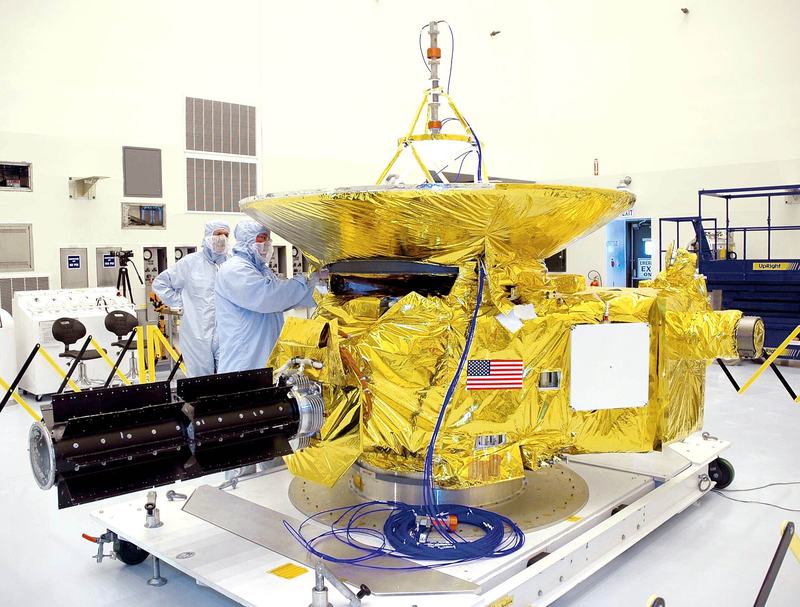

The tradeoff was a permanently thin margin: no amount of engineering can dodge a piece of debris in the road at that velocity, so the whole plan depended on nothing getting in the way.
A Speed Record That Belongs to Someone Else Now
New Horizons doesn't actually hold the outright speed record anymore. Voyager 1, launched decades earlier, still holds the mark for the highest velocity of any spacecraft measured far from the Sun, cruising at about 17 km/s (38,000 mph). And as of 2026, the fastest speed ever recorded for a spacecraft belongs to the Parker Solar Probe, a mission that repeatedly dives close enough to the Sun to pick up speed New Horizons never needed.
The distinction matters: New Horizons was built to launch fast and coast, not to keep accelerating, so its "fastest ever launched" title and these later records describe different chapters of spaceflight rather than a contradiction.
A Decade in Transit, Then One Pass
After a decade in transit, New Horizons made its nearest pass over Pluto at roughly 7,750 miles up — about the same distance separating New York and Mumbai — becoming the first mission ever to explore a world that far from Earth. That flyby was never meant to be the finish line. A stop at a Kuiper belt object beyond Pluto had been part of the plan since the US$700-million mission began in 2006.
Committing to a second target years in advance, before anyone knew whether a suitable object even existed nearby, meant the spacecraft had to carry enough fuel and patience for a mission that didn't fully take shape until after the Pluto flyby was already behind it.
Discovered in 1930, Barely Explored Since
Pluto's discovery came in 1930, but a single lap around the Sun takes the dwarf planet 248 years to finish. A year on Pluto lasts 247.94 Earth years, so the dwarf planet won't finish the orbit it was discovered partway through until 2178.
That slow clock explains why so little was known about Pluto before New Horizons arrived: the world had barely shifted along its own orbit since 1930, so telescopes on Earth had only ever glimpsed a narrow slice of its seasons.
The Heart That Hides an Active World
The most recognizable image from the flyby captured a large, bright feature shaped like a heart, roughly 1,000 miles (1,600 kilometers) across. Its western lobe, called Sputnik Planitia, measures about 1,400 by 1,200 km and sits partly buried under glaciers of nitrogen ice.
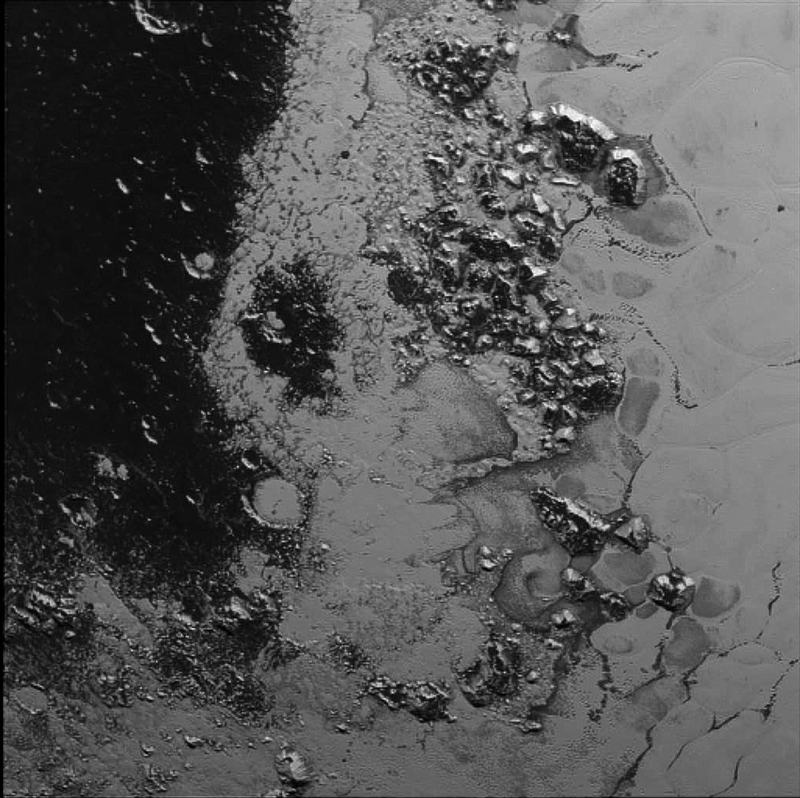

New Horizons found no impact craters anywhere on that lobe, pointing to a surface younger than 10 million years — remarkably young for a world this far from the Sun, and a sign that the ice there keeps erasing its own history.
Charon, the Oversized Neighbor
During the same flyby, New Horizons swung within 27,000 km (17,000 mi) of Charon, Pluto's largest moon. Charon's name carries an odd echo from fiction: decades before its real discovery, science-fiction writer Edmond Hamilton used the names Charon, Styx, and Cerberus for three moons of Pluto in a 1940 novel of his own.
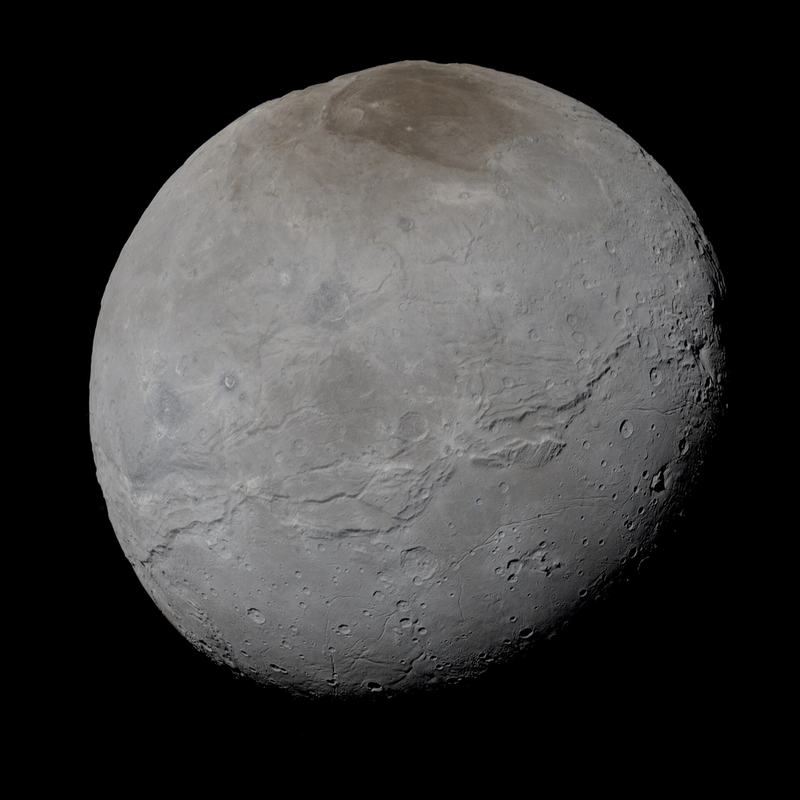

It's a coincidence with no explanation on record — just two people arriving, decades apart, at the same three names for the same small worlds.
One More Stop: Arrokoth at the Edge of the Kuiper Belt
Arrokoth, the Kuiper belt object New Horizons set out to find after Pluto, turned up in Hubble Space Telescope images on June 26, 2014 — the work of astronomer Marc Buie's New Horizons Search Team, which had been hunting for any Kuiper belt object the probe could reach. Locating one wasn't guaranteed: New Horizons scientists needed a huge amount of Hubble Space Telescope time, 160 orbits' worth, just to find a Kuiper belt object worth visiting once Pluto was behind them.
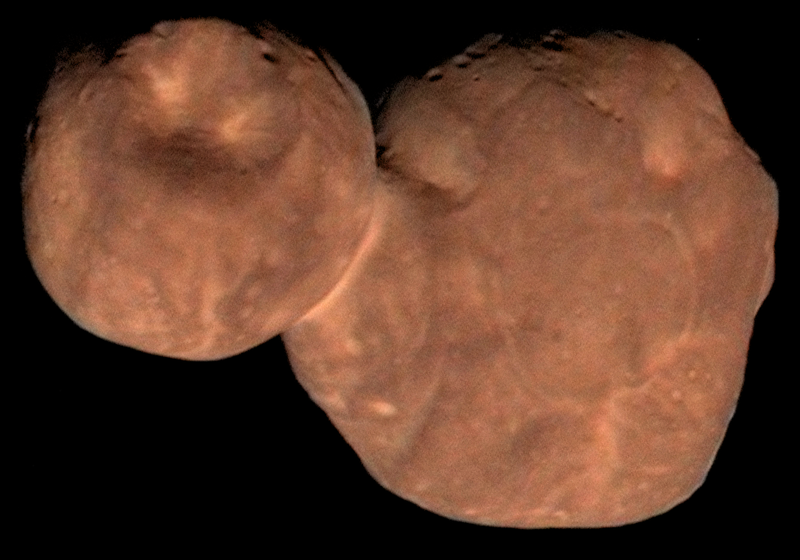

That kind of request shows how uncertain the follow-up mission really was: without enough telescope time, there might not have been a second flyby target to point the spacecraft at all.
Pinning Down a Moving Target
Hitting a small, distant object precisely takes more than a good trajectory — it takes knowing exactly where that object will be. Ahead of the Pluto encounter, astronomers used the bright quasar J1911-2006 with the ALMA radio telescope array to pinpoint Pluto's position and cut the uncertainty in half.
Quasars make useful reference points because they sit at the far edge of the observable universe and barely appear to shift, giving astronomers a fixed backdrop to measure a much closer, faster-moving dwarf planet against.
A Boundary at the Edge of the Solar System
New Horizons kept delivering results long after its main flybys. NASA announced in August 2018 that the probe's Alice instrument had confirmed a hydrogen-rich boundary far beyond the planets, first hinted at by the twin Voyager probes back in 1992.
Confirming a signal first hinted at more than two decades earlier turned New Horizons into more than a Pluto mission — proof that instruments built for one encounter can keep teaching astronomers about the solar system's outer edge long after the headline flyby is over.