Whatever sign a calendar assigns you, it names a fixed 30-degree wedge of sky, not the constellation you probably picture. Over more than two thousand years, Earth's slow axial wobble has carried the actual stars out from under the wedge that shares their name, so "your sign" and the patch of sky astronomers now see there are two increasingly different things.
Before it became astrology shorthand, the zodiac was a working measurement tool. It is a belt-shaped strip of sky reaching roughly 8 degrees to either side of the ecliptic, the Sun's apparent yearly track across the stars, and ancient skywatchers split that strip into 12 equal 30-degree sections to track where the Sun, Moon, and planets sat at any given moment.
This piece follows the zodiac from its Babylonian origins as a coordinate grid, through the physics of the wobble that eventually knocked it out of alignment with the stars, to Ophiuchus, the constellation the zodiac signs skip over even though the Sun passes through it every year.
A Belt Around the Sun's Path
The zodiac is not the constellations themselves but a coordinate system laid over them: a corridor of sky centered on the ecliptic and divided into 12 equal 30-degree segments, one per traditional sign. Anything with an orbit close to Earth's own — the Sun, Moon, and planets — spends its time somewhere inside that corridor.

The idea extends past the planets. Astronomers also speak of a "zodiac of the comets," the wider strip of sky that contains the paths of most short-period comets, since those orbits tend to stay close to the same plane the planets share. The zodiac, in other words, was always a description of orbital geometry before it was ever a description of personality types.
Built in Babylon, Around 401 BC
The 12-sign zodiac has a specific, dateable birth. Late in the fifth century BC, Babylonian skywatchers split the Sun's yearly track into 12 equal segments, echoing a calendar built from 12 months of 30 days apiece, so the heavens matched the arithmetic they already used on the ground. Astrophysicists who have reconstructed the sky those Babylonians would have observed now pin the invention to somewhere between 409 and 398 BC, likely within a few years of 401 BC.
That precision is possible because Babylonian astronomers left behind their working notes. The zodiac draws directly on entries in the Babylonian MUL.APIN star catalogue, a reference list of stars and their risings compiled around 1000 BC, which supplied the raw star positions the later 30-degree grid was built to organize.
Every Body Gets Its Own Band
Because "the zodiac" describes orbital geometry, its width depends on whose orbit you're measuring. The Moon's path strays further from the ecliptic than the Sun's does, so astronomers define a separate "zodiac of the Moon," a narrower band reaching just 5 degrees above and below the ecliptic rather than the roughly 8 degrees used for the Sun.
Planets vary the same way. Earth's own orbital plane sits a little more than 1 degree from the Solar System's invariable plane, the average plane of the whole planetary system, while Mercury's orbit tilts around 6 degrees away from it — the steepest lean of any major planet, which is one reason Mercury can stray furthest from the classic zodiac band.
The Planet That Ignores the 12 Signs
No planet keeps neatly to the 12 traditional signs. Venus is the only planet that occasionally crosses all 25 constellations the ecliptic's band actually touches, including ones with no zodiac tradition at all, such as Orion and Cetus. The 12-sign system was always a simplification: real planetary orbits wander through a wider, messier strip of sky than the tidy 30-degree grid suggests.
The Slow Wobble That Broke the Zodiac
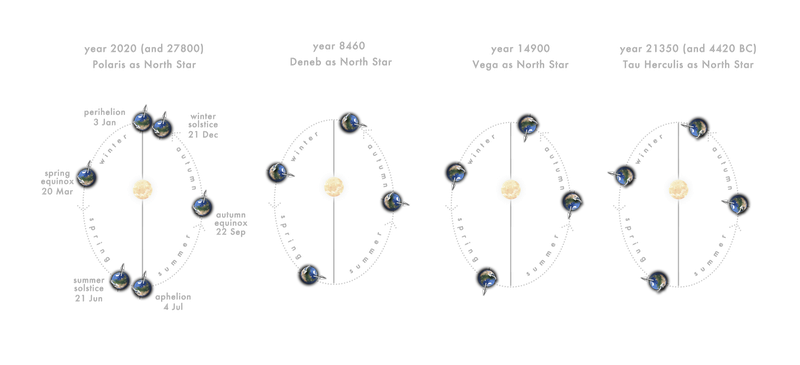

The gap between the zodiac signs and their namesake constellations traces back to a discovery credited to the Greek astronomer Hipparchus, around 130 BC. He identified precession: the way Earth's rotational axis itself slowly traces a cone, dragging the celestial poles around in a circle against the background stars over roughly 26,000 years.
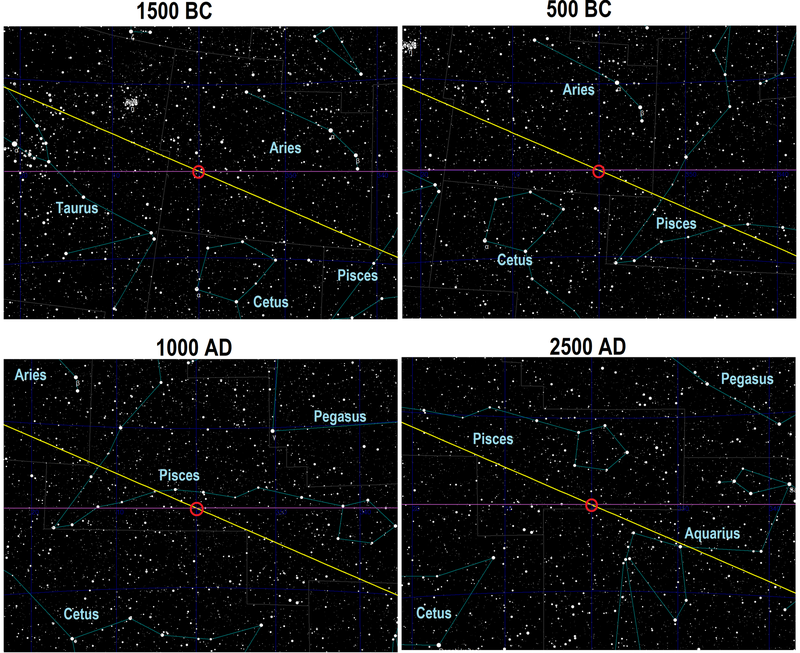
Precession is why the "first point of Aries," the zero-degree marker astronomers still use to measure the zodiac, no longer sits inside the constellation Aries. The first 30 degrees of the ecliptic keep the name "Aries" by convention, even though that stretch of sky has drifted away from the actual stars of Aries since the marker was fixed. Western astrology's sign boundaries have drifted the same way, sliding out of step with the constellations they were originally named after, while Hindu astrology's sidereal calculations are built to correct for that same slow shift.
88 Constellations, One Modern Map
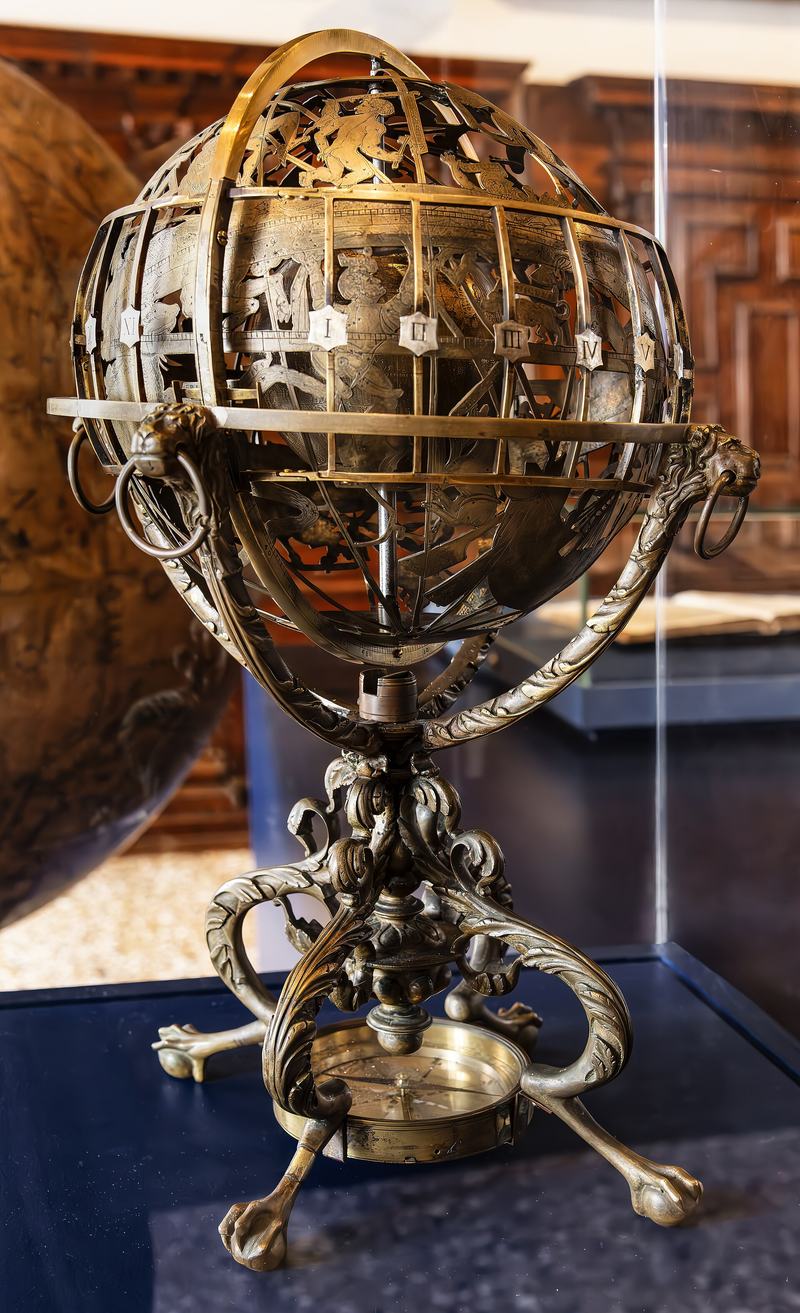
The zodiac's 12 signs are a tiny slice of the sky's official constellation count. Many of the 88 constellations recognized today by the International Astronomical Union, particularly in the deep southern sky, trace back to celestial globes that the cartographer Petrus Plancius introduced in the late 16th century, built from records kept by two navigators sailing for the Dutch, Pieter Dirkszoon Keyser and Frederick de Houtman.

That modern constellation map is a relatively recent overlay on an ancient measuring system: the zodiac's 30-degree grid is over two thousand years older than the official boundaries drawn around the constellations it runs through.
Ophiuchus and Its Own Fireworks
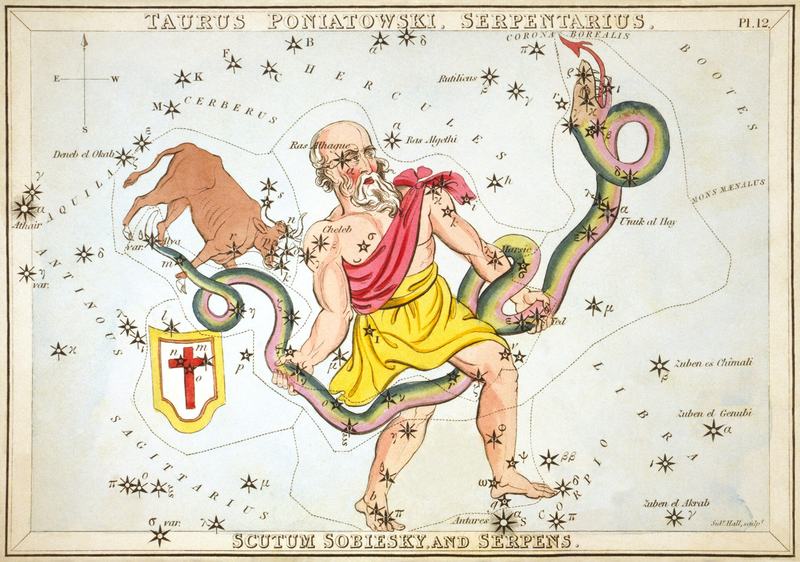

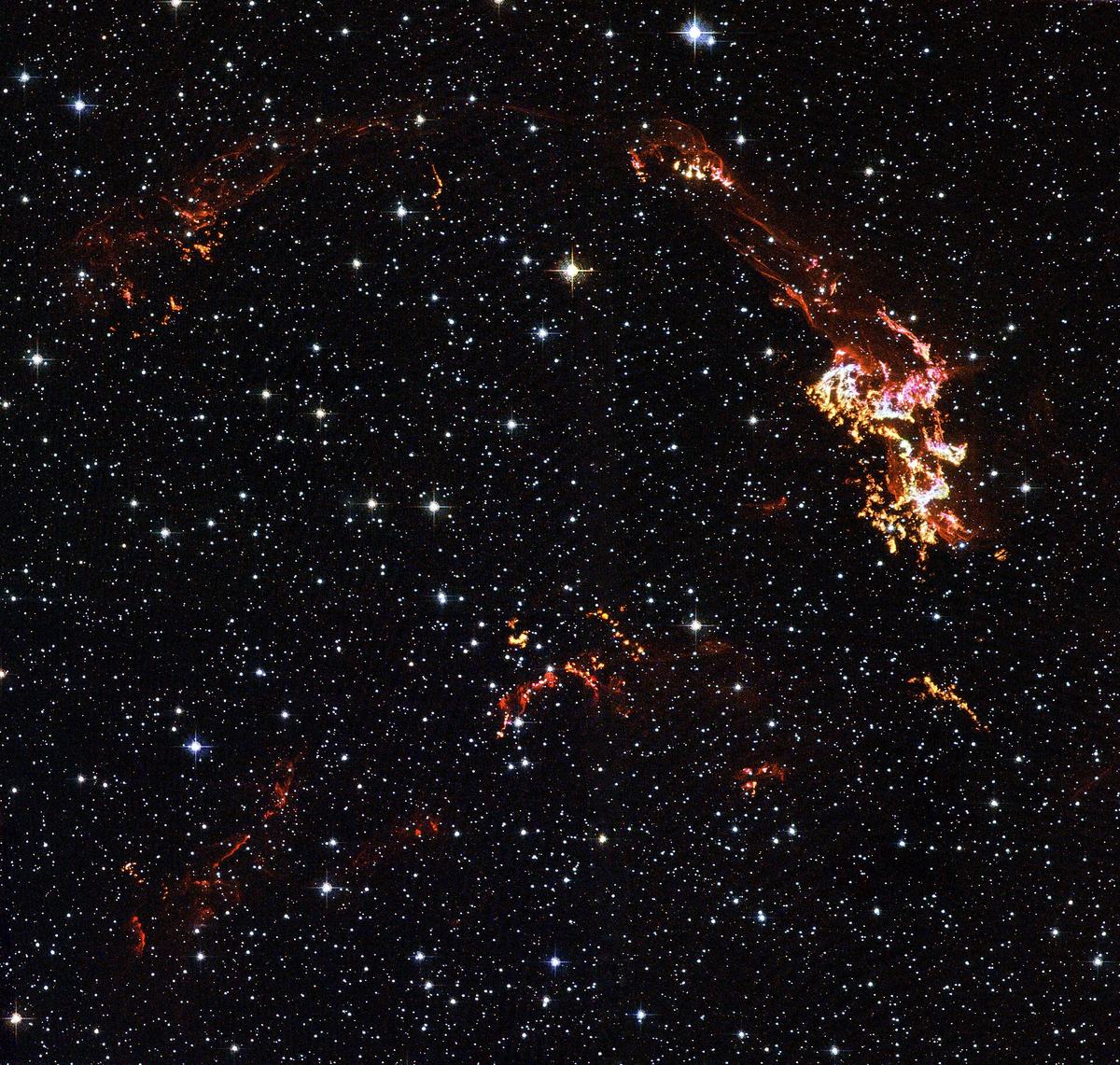
One constellation the ecliptic runs straight through, yet the 12-sign zodiac never named, is Ophiuchus. It has produced some of the more dramatic events in observational astronomy. The supernova of 1604 was first spotted on 9 October that year, near the star Theta Ophiuchi. Johannes Kepler picked it up a week later, on 16 October, and studied it so closely that history remembers the event as Kepler's Supernova rather than by its position alone.
Ophiuchus also hosts a recurrent nova that erupts roughly every 15 years, brightening to about magnitude 5.0 each time it flares, with its most recent outburst in 2021. Unlike a one-off supernova, a recurrent nova keeps repeating on a predictable rhythm, giving astronomers a rare chance to watch essentially the same stellar event happen again within a single human lifetime — a reminder that the sky the zodiac tried to tidy up never really held still.