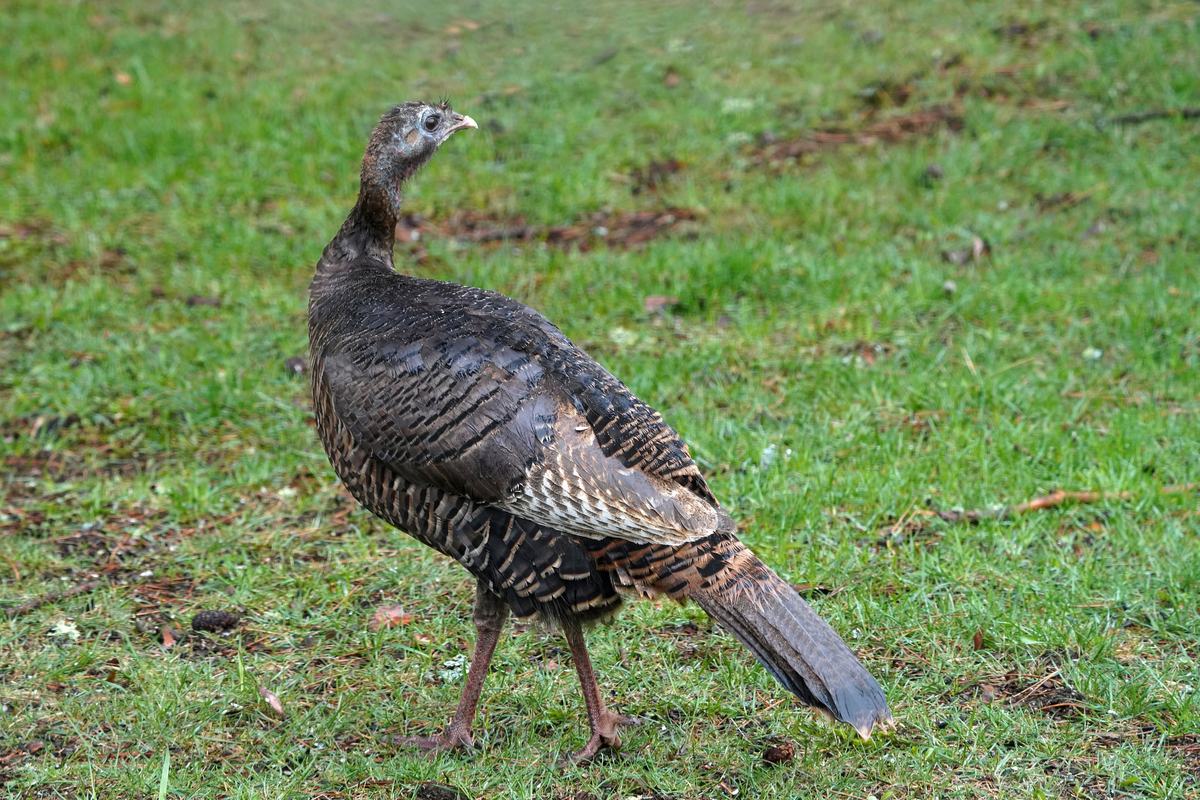
If you asked my Year 4 class to name a clever bird, they would say owl. Then possibly parrot. Nobody says turkey. Which is fair enough, given the reputation. But the turkey is stranger and sharper than its Christmas-dinner image lets on, and once you look closely it stops being the punchline and starts being the surprise.
Heads That Change Colour
A turkey's bare head is not just for show. It shifts between red, white and blue depending on how the bird is feeling. When a male is excited or trying to impress, the wattles flush bright red. When he is calm, or feeling cornered, the skin can turn a pale bluish white. It is mood written on skin, in real time. My kids would love this, mostly because it means you can tell when a turkey is showing off.
A Naming Mix-Up
The turkey is an American bird that got a Turkish name by accident. When it first reached English tables, people muddled it up with the guinea fowl, which had arrived in Europe through merchants trading via Turkey. The label "turkie" stuck to both, and then to the wrong bird entirely. So the animal is named after a country it has never lived in, thanks to a case of mistaken identity that nobody bothered to correct.
The Snood Tells a Story
That fleshy flap draped over a male turkey's beak is called a snood. It is not decoration for the sake of it. A study by Richard Buchholz found that female turkeys prefer males with longer snoods, and that snood length can even predict which of two males will win a standoff. So a bit of dangly skin doubles as a health report and a betting tip. Somehow, the hens read it better than we ever could.
Nearly Wiped Out, Then Back
In the 1930s the wild turkey almost vanished from the United States. Overhunting and lost forest had cut the population to an estimated 200,000 birds or fewer. Then conservationists began catching wild turkeys and releasing them into empty habitat, and it worked. Today there are more than 7 million, spread across nearly every state. It is one of the great quiet comebacks in wildlife, and hardly anybody talks about it.

They Can Actually Fly
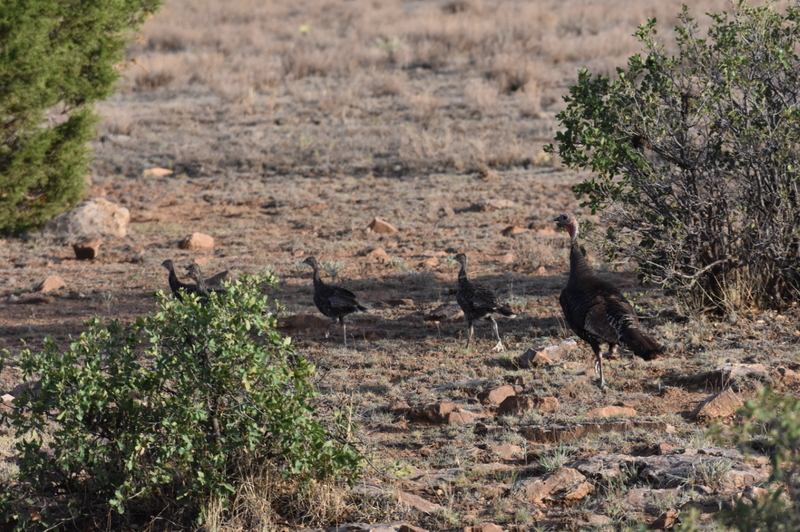
The birds on farms are too heavy to lift off, which is where the "turkeys cannot fly" idea comes from. Wild turkeys are a different animal. They fly in short, powerful bursts, reaching around 88 kilometres per hour, and they roost in trees at night to stay clear of foxes and coyotes. On the ground they can run at roughly 40 kilometres per hour. Not bad for a bird most people picture sitting on a plate.
A Gobble You Can Hear Far Off
Only male turkeys gobble, and the sound carries. On a still morning a tom's call can travel a mile or more, which is the point of it, since he is advertising to hens and warning off rivals. Their hearing and vision do the rest. A turkey's eyes give it a field of view of about 270 degrees, and it sees in colour, so sneaking up on one is largely a waste of your time.
Franklin and the Eagle
You may have heard that Benjamin Franklin wanted the turkey as America's national bird. He did not, quite. In a letter to his daughter he grumbled that the eagle on the new Great Seal looked more like a turkey, and then went on to defend the turkey as a bird of "more respectable" character. It was a joke with a sting in it, not a formal proposal, but the story has flown on its own ever since.
Older Than the Pilgrims
Long before turkey became a holiday centrepiece, people in central Mexico had domesticated the bird, in some cases as far back as 2,000 years ago. Early on it was kept less for meat than for its feathers and for ritual use. So the turkey on the table has a much deeper history than the seasonal association suggests. It was living alongside people for a very long time before anyone thought to roast it.
Frequently Asked Questions
Can wild turkeys really fly?
Yes. Wild turkeys fly in short bursts at speeds around 88 kilometres per hour and roost in trees overnight. Only domestic turkeys, bred to be heavy, are unable to get off the ground. The two are the same species but very different in build.
Why does a turkey's head change colour?
The bare skin on a turkey's head and neck flushes red, white or blue depending on its mood and state of arousal. Blood flow to the skin changes with excitement, stress or courtship, so the colour acts as a visible signal to other turkeys.
What is the snood on a turkey?
The snood is the fleshy flap that hangs over a male turkey's beak. It grows longer and redder when he is displaying. Research shows hens prefer males with longer snoods, and snood length is linked to the bird's health and dominance.
Did Benjamin Franklin want the turkey as the national bird?
Not formally. Franklin wrote privately that he thought the eagle a bird of poor moral character and praised the turkey by comparison. It was a wry aside in a letter, not a serious campaign, though the tale is often retold as fact.
How many wild turkeys are there now?
More than 7 million wild turkeys live across North America today. In the 1930s the population had crashed to a few hundred thousand, and a long conservation effort of trapping and releasing birds brought them back to nearly every US state.
Sources
- Wild Turkey - National Geographic
- 14 Fun Facts About Turkeys - Smithsonian Magazine
- Wild Turkey Fact Sheet - PBS Nature
- 10 Fun Facts About the Wild Turkey - Audubon
- Did Benjamin Franklin Want the National Bird To Be A Turkey - The Franklin Institute
- NETN Species Spotlight: Wild Turkey - National Park Service