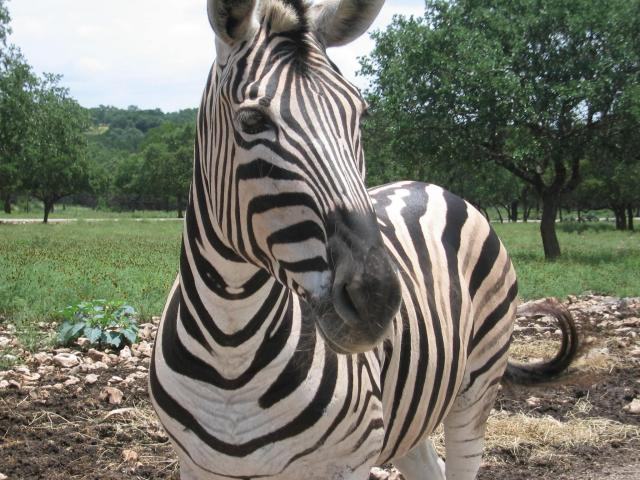
If you asked my Year 4 class to draw a zebra, every single one would reach for the white paper and add black stripes on top. Reasonable. Also, as it turns out, backwards. A zebra starts dark and the pale stripes are added, not the reverse. That is the first of several things about zebras that quietly refuse to behave the way you expect, so let us take them one at a time.
Black With White Stripes
Under all that pattern, a zebra's skin is black. In the womb the animal begins uniformly dark, and the white stripes form where pigment is held back during development. So the honest answer to the old playground question is that a zebra is a black animal with white stripes, not a white animal with black ones. (Yes, really.) It is a small fact, but it wins arguments.
Every Pattern Is Unique
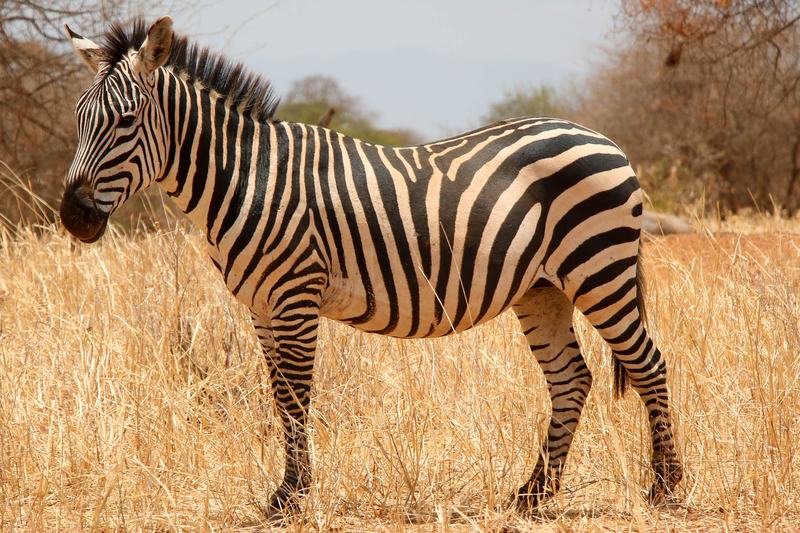
No two zebras share a stripe pattern. Each one is as individual as a human fingerprint, right down to the width and spacing of the bands. This is not just a fun detail for us. A foal learns its own mother by her stripes, her scent, and her call in the first days of life, picking her out of a crowded, milling herd. Researchers use the same patterns, photographed and matched by computer, to track individuals in the wild.
.jpg)
Nobody Fully Knows Why
You would think we had this one settled by now. We do not. The leading idea is that the stripes deter biting flies, which struggle to land neatly on a striped surface, and field tests with horses in striped coats back this up. Other suggestions include confusing predators when the herd moves as a blur, helping with temperature, and letting zebras recognise each other. It may be several of these at once. Somehow, a black and white animal is one of biology's tidier mysteries.
Three Species, Not One
"Zebra" is really three animals. The plains zebra is the common one, spread across the grasslands of eastern and southern Africa. Grevy's zebra is the largest, with narrow stripes and big rounded ears, and it is endangered, hanging on in parts of Kenya and Ethiopia. The mountain zebra is the smallest of the three. They do not all mix freely, and they differ in stripe pattern, size, and temperament.
A Group Is Called a Dazzle
A herd of zebras has one of the better collective nouns going: a dazzle. It fits, because a mass of moving stripes is genuinely hard for the eye, or a lion, to pick a single target from. Zebras are social and talk a good deal, using facial expressions, ear positions, and a range of barks and brays. Their alarm call is a sharp sound that sends the whole dazzle wheeling off together.

Foals Run Almost Straight Away
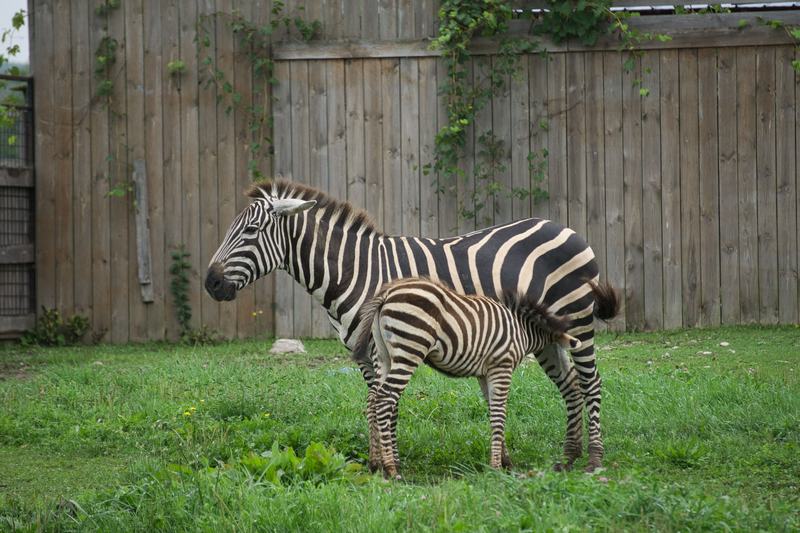
A newborn zebra does not lie about learning to walk. It can stand within minutes of birth and run within the hour, which is not optional when your neighbours include lions and hyenas. Foals are born with brownish stripes that darken as they grow, and the mother keeps other zebras at a distance for the first days so the foal fixes on her pattern first. By the time it is steady on its feet, it already knows exactly whom to follow.
They Refuse to Be Tamed
People have tried, for centuries, to turn zebras into horses. It has never really worked. Zebras are skittish, they bite and hold on, and they have a well timed duck that slips a lasso before it lands. A zebra kick can break bones and has killed lions. A wealthy Victorian, Lord Rothschild, famously drove a carriage pulled by zebras to prove a point, but the species as a whole simply did not sign up for domestication. Which, fair enough.
One of Africa's Great Journeys
Plains zebras make one of the longest overland journeys of any African mammal. A population moves between Namibia and Botswana across a round trip of several hundred kilometres, following the rains and fresh grazing. The migration was only mapped by researchers with GPS collars fairly recently, which is a reminder that even a famous, stripy animal can still be keeping the odd secret. And yet they had been doing it all along.
Frequently Asked Questions
Are zebras black or white?
Zebras are black with white stripes. Their skin is black, and in the womb the pale stripes form where pigment is withheld during development. So despite appearances, the base colour is dark and the white is added on top, not the other way round.
Why do zebras have stripes?
The strongest evidence is that stripes deter biting flies, which cannot land cleanly on the pattern. Other proposed reasons include confusing predators, helping regulate temperature, and aiding social recognition. Scientists have not agreed on a single answer, and more than one factor may be at work.
Can you ride or tame a zebra?
Not practically. Zebras are nervous, aggressive when cornered, and skilled at dodging capture, and they lack the temperament that made horses trainable. A few individuals have been made to pull carts as a novelty, but the species has never been domesticated in any real sense.
What is a group of zebras called?
A group of zebras is called a dazzle, though the words zeal and herd are also used. The name suits them, because a moving mass of stripes makes it hard for a predator to lock onto any single animal.