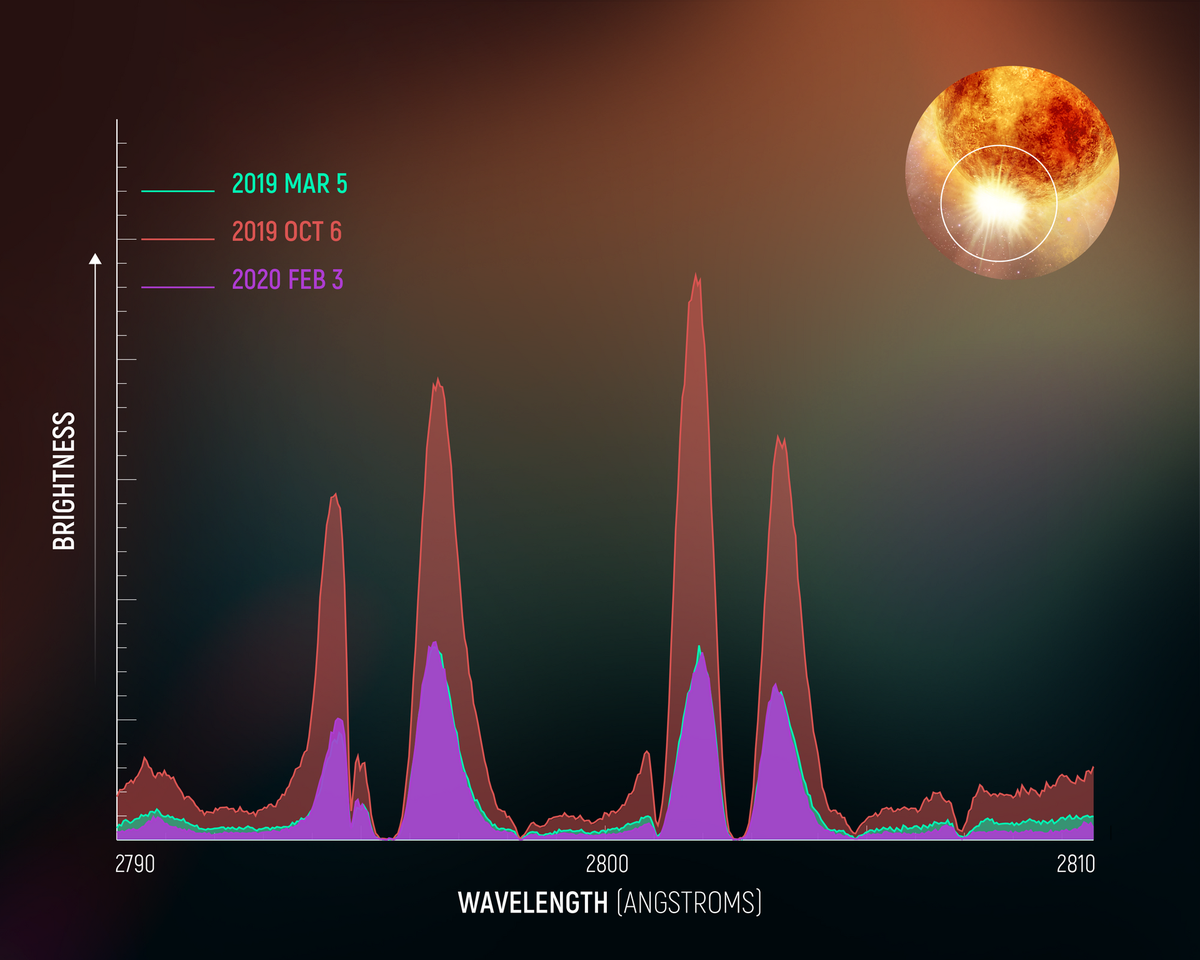
Pull Betelgeuse out of Orion's shoulder and drop it where the Sun sits, and its surface would swallow Mercury, Venus, Earth, and Mars whole. The star's radius runs between 640 and 764 times the Sun's, big enough that its outer layers would reach past the asteroid belt. As seen from Earth, only two objects in the sky, R Doradus and the Sun, appear to span a wider angular diameter.
It sits somewhere between 400 and 600 light-years away, a distance that has stayed stubbornly hard to pin down even with modern instruments. Betelgeuse is a red supergiant, one of the last, brief stages a very massive star passes through before its core collapses. Everything about it, its size, its restless surface, its flickering brightness, is a symptom of a star running out of road.
A Star Big Enough to Swallow Four Planets

Size alone makes Betelgeuse strange. As seen from Earth, only two objects in the sky show a wider angular diameter: the Sun, and the much closer red giant R Doradus. Betelgeuse earns its spot on that short list purely by being enormous, not by being near, which is what makes the comparison so striking.
That bulk is also why the star looks unstable up close. A body hundreds of times wider than the Sun holds its outer gas so loosely that massive convection cells can rise, sink, and reshuffle its visible surface, something no ordinary star's gravity would allow.
The Great Dimming of 2019
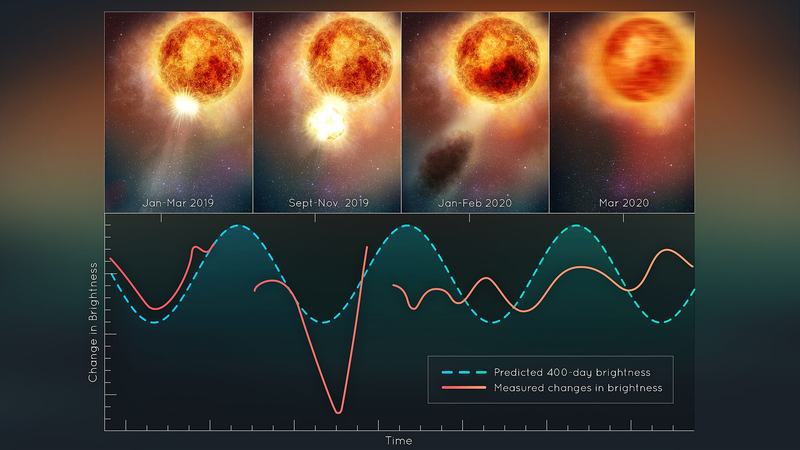

In October 2019, Betelgeuse started fading, and it did not stop at a barely noticeable dip. By mid-February 2020, over two-thirds of the star's brightness had drained away, an unprecedented fade that became obvious even to the naked eye. Skywatchers who knew Orion well could see Betelgeuse's shoulder had visibly dulled.
The timing mattered because Betelgeuse, at only about 8.5 million years old, is already expected to end its life soon. What was actually happening turned out to be less explosive but still remarkable: a wall of ejected material had drifted between the star and Earth, cooling as it went.
Hubble Solves the Mystery

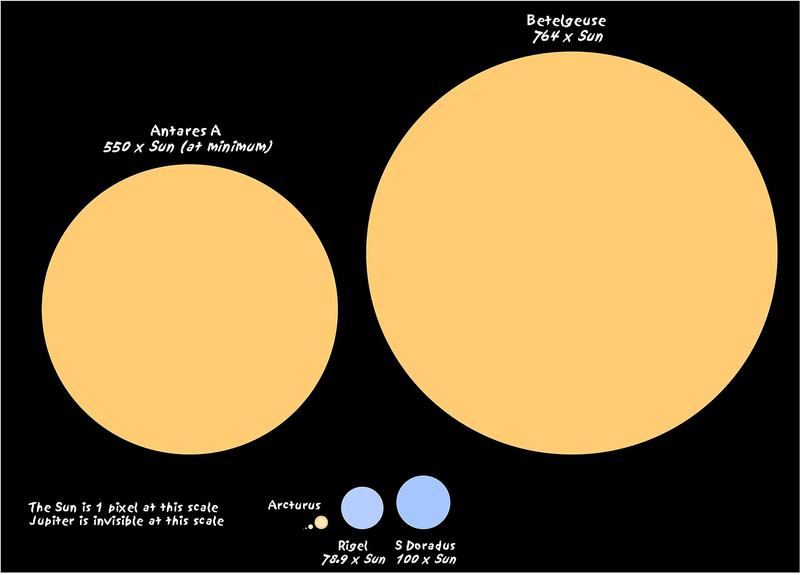
Hubble Space Telescope observations gave the clearest answer. Betelgeuse most likely threw a huge quantity of superheated gas into space, and that gas then cooled into a dust cloud sitting between Earth and the star's glowing surface. That cloud ended up covering about a quarter of the star's visible disk starting in late 2019, which lines up neatly with how much brightness was lost.
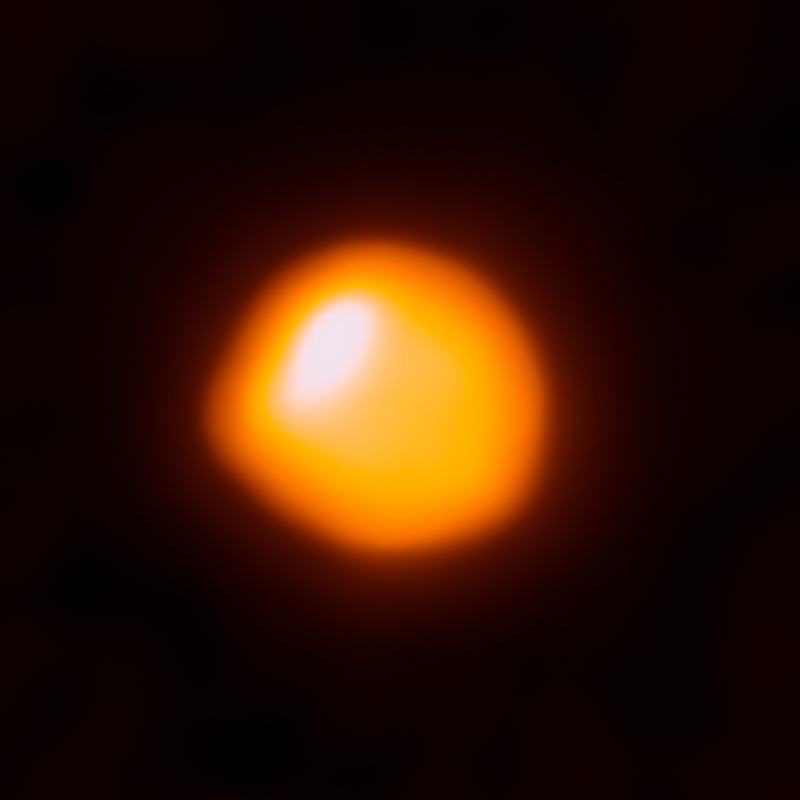
None of this came out of nowhere. Betelgeuse sheds mass constantly, at a rate roughly 30 million times higher than the Sun's, so an outburst large enough to dim the whole star is well within its normal, if extreme, behavior. Hubble can even watch that surface directly: Betelgeuse is the only star besides the Sun where Hubble has been able to resolve individual surface features rather than a single point of light.
It first did so back in 1995, when images revealed a mottled surface covered in convection cells large enough to individually brighten and darken as they shifted. The 2019–2020 dimming event was, in effect, that same restless surface caught doing something unusually large.
A Runaway Star From Orion's Nursery
Betelgeuse was not born where it sits now. It formed inside the Orion OB1 association, the loose cluster of hot young stars that includes the stars forming Orion's Belt, before being flung out as a runaway. It now plows through the surrounding interstellar gas at 30 kilometers per second, fast enough to pile up a bow shock more than four light-years across in front of it, a shockwave bigger than the distance to our nearest stellar neighbors.
Measuring a Star a Century Ago
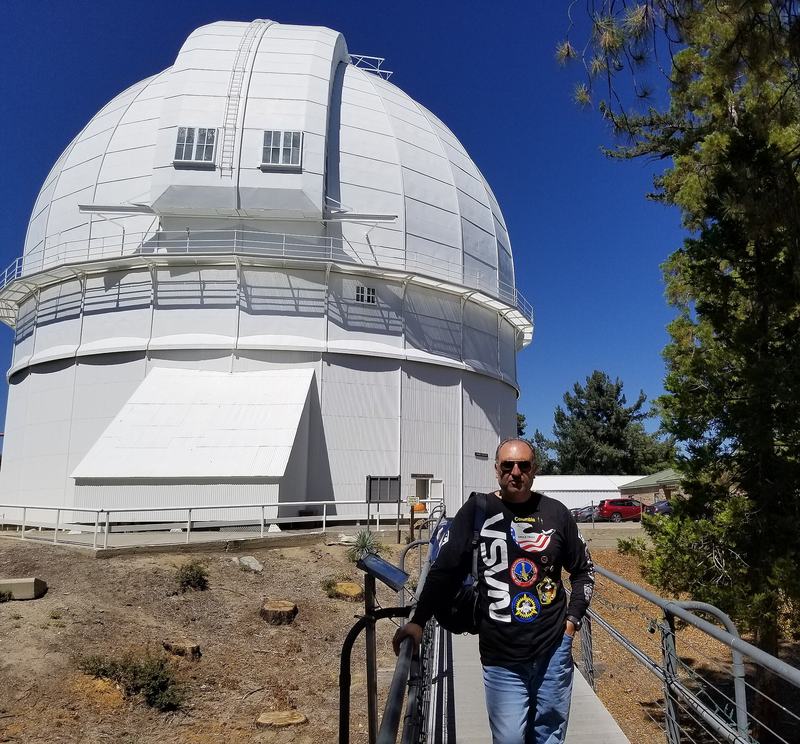

Astronomers were already trying to measure Betelgeuse's true size a hundred years ago, without modern electronics. In 1920, Albert Michelson and Francis Pease attached a 6-meter interferometer to Mount Wilson Observatory's 2.5-meter telescope, with help from John August Anderson, in one of the first attempts to directly measure the diameter of a star other than the Sun.
Their instrument put Betelgeuse's angular diameter at 0.047 arcseconds, translating to a diameter of about 2.58 astronomical units, based on a parallax of 0.018 arcseconds. That 1920s figure has not aged perfectly: a 2009 infrared interferometric study measured a 15% contraction against the star's 1993 diameter, with the shrinking pace still accelerating and no matching drop in brightness. A star this large, it turns out, is not just big. It is still visibly changing shape on timescales of decades.
Waiting for the End
Betelgeuse carries about 20 times the Sun's mass, and despite being only around 8.5 million years old, it is already running out of fuel. Heavier stars burn through their nuclear fuel far faster than lighter ones, which is why so much mass buys Betelgeuse such a short life rather than a long one.
Recent studies put the likely fuse length at under a million years, with a supernova possible in as little as 100,000 years, both of which count as "any minute" on astronomical timescales. When it does go, Betelgeuse will not be entirely alone. In September 2025, the International Astronomical Union's naming body officially recognized Siwarha as the name for its candidate companion star, a reminder that even a star this well studied still has details being filled in.