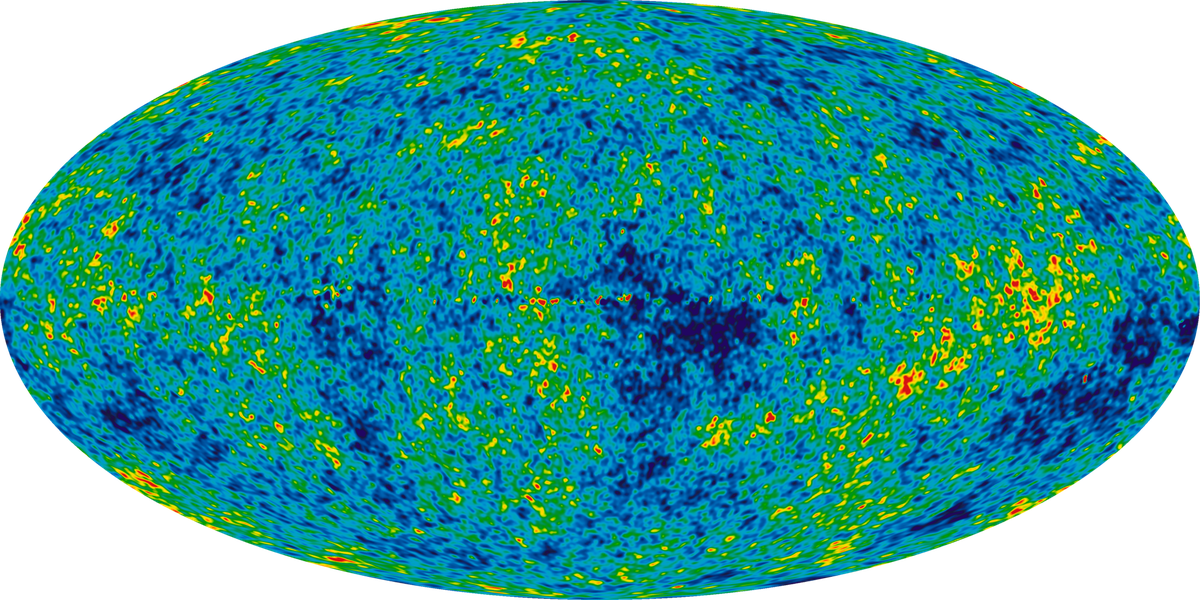
Everything you can touch, weigh, or point a telescope at — every star, planet, and person — adds up to just 5% of the universe. That is not a rounding error; it is one of the most tightly confirmed numbers in cosmology, refined over decades of measurements of the leftover light from the universe's birth. The rest is dark matter and dark energy, two components astronomers can measure precisely without yet knowing what either one actually is — a strange kind of confidence, being sure something exists long before knowing what it is made of.
The Big Bang is the name cosmologists give to the hot, dense state everything traces back to, some 13.787 billion years ago, accurate to within 0.02 billion years either way — a remarkably tight number for something that happened before atoms existed. Getting to that number took nearly a century of accidental discoveries, stubborn astronomers, and one Belgian priest with a very good idea.
This guide walks through the evidence: the afterglow still crossing the sky, the instruments built to map it, the people who argued over what it meant, and just how strange the universe's household budget turns out to be.
The Afterglow Still Crossing the Sky
About 375,000 years after the universe's birth, it cooled enough for atoms to form and the fog of charged particles to clear, letting light travel freely for the first time. That first light still washes over Earth today as the cosmic microwave background, arriving from every direction at once.
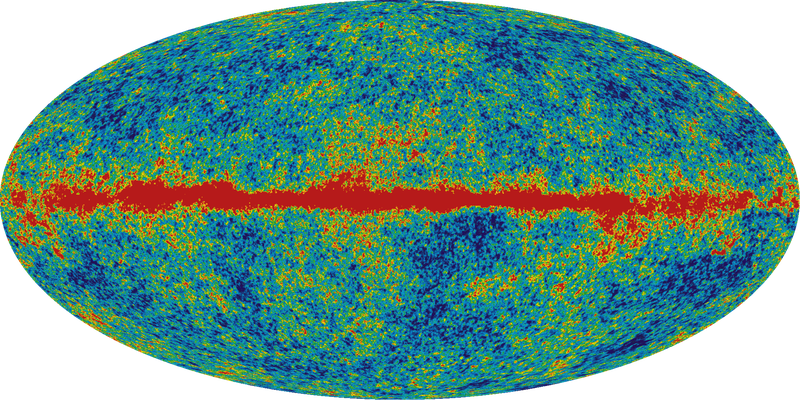

It is not perfectly uniform. Satellite measurements have found that one patch of sky sits at a temperature of 2.7251 Kelvin while another reads 2.7249 Kelvin — a difference of two ten-thousandths of a degree. That sliver of unevenness is exactly what cosmologists needed: without it, gravity would have had nothing extra to grab onto, and matter might never have clumped into galaxies at all. Mapping those tiny variations precisely enough to matter took decades and several generations of spacecraft, each one chasing a signal fainter than the one before.
An Accidental Discovery That Won a Nobel Prize
In 1964, Bell Labs radio astronomers Arno Penzias and Robert Wilson picked up a faint, uniform hiss in their antenna that would not go away no matter which direction they pointed it. They were not hunting for the birth of the universe; they were trying to track down equipment noise, and the "noise" turned out to be the cosmic background radiation itself. It is one of the more improbable origin stories in science: the biggest cosmological find of the decade showed up disguised as a malfunction.
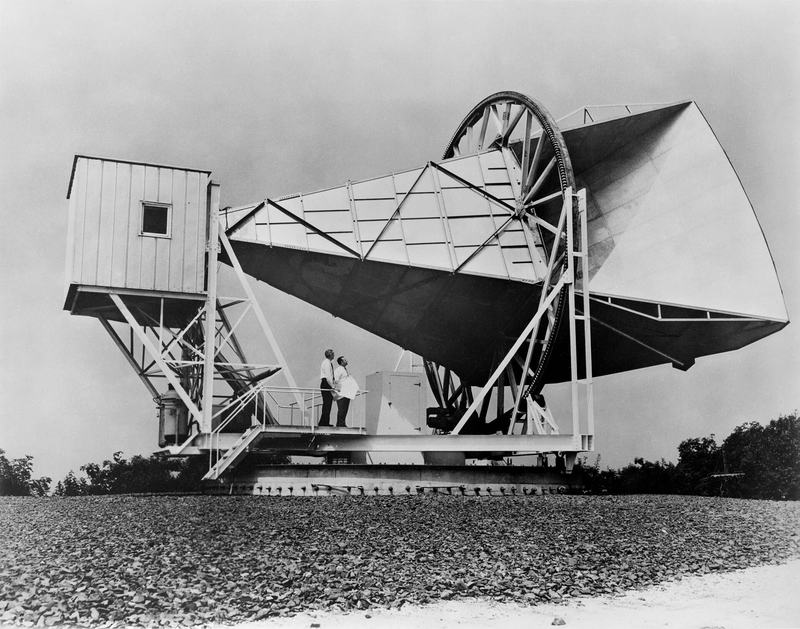

Fourteen years later, in 1978, the pair collected the Nobel Prize in Physics for that discovery, which gave cosmology its strongest evidence yet that the universe had begun in a hot, dense state rather than sitting around forever in a steady condition.
A Satellite That Mapped the Baby Picture of Everything
Penzias and Wilson's antenna could confirm that the background radiation existed, but it could not show what the sky looked like in detail. That took dedicated spacecraft: NASA's Cosmic Background Explorer picked out the faint temperature ripples across broad patches of sky in 1992, and the Wilkinson Microwave Anisotropy Probe later sharpened that picture into the first full-sky map at a resolution of just 0.2 degrees.
Physicist Adam Riess, who later shared a Nobel Prize of his own in 2011 for unrelated work on cosmic acceleration, summed up the mission's impact simply: it had brought precision to cosmology, and the field would never look the same again. A map that fine-grained turned the Big Bang from a rough sketch into something closer to an engineering blueprint, with numbers other scientists could actually build on.
The Astronomers Who Saw the Expansion Coming
Long before anyone had heard of the cosmic microwave background, the clues were already sitting in ordinary starlight. In 1912, Vesto Slipher aimed his spectrograph at what were then called spiral nebulae and noticed something odd: nearly every one of them was racing away from Earth.
By the late 1920s, Edwin Hubble had turned that oddity into a pattern, showing that distant galaxies were retreating in every direction, just as Einstein's own equations predicted if space itself were stretching. It was less a single "discovery" moment than years of evidence quietly pointing the same way, with Slipher's spectra doing much of the early legwork that Hubble's name eventually became attached to.
The Priest Who Named the Beginning
Georges Lemaître, a Belgian physicist and Catholic priest, reached a similar conclusion independently. In 1931 he proposed that the universe had sprung from what he called a "primeval atom" — the idea that eventually grew into the modern Big Bang model.
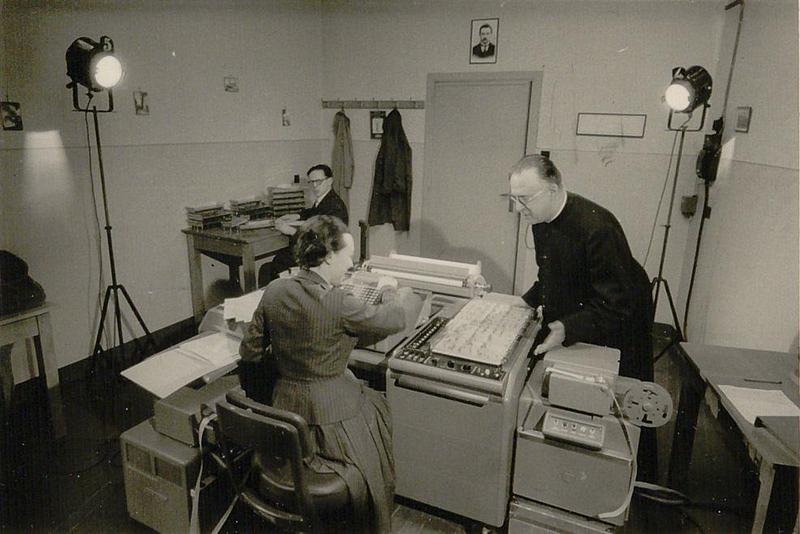

Lemaître's fingerprints go back even further than that famous paper. The very first data point behind what is now called the Hubble Constant, the number describing how fast the universe expands, actually came from a 1927 paper of his, built on galaxy distances that Hubble himself had measured and published. History ended up naming the constant after the person who supplied the distances rather than the priest who first plotted them against velocity.
Built Mostly From Stuff We Cannot See
Add up every star, planet, moon, and person, and ordinary atoms still make up only about 5% of the universe's mass and energy. The rest splits between two components that give off no light at all: dark matter, at 27%, and dark energy, at a dominant 68%.
Nobody has directly detected either one. Dark matter is inferred from its gravity — it holds galaxies together far more tightly than their visible matter could manage on its own — while dark energy is inferred from the fact that the universe's expansion keeps speeding up rather than slowing down. Ordinary matter, the stuff of the periodic table, turns out to be the minority shareholder in its own universe, a fact that took the better part of a century of measurement to pin down with any confidence.
The First Fireworks of Cosmic Chemistry
Within roughly the first 20 minutes after the Big Bang, conditions were hot and dense enough for protons and neutrons to start fusing into the universe's first light nuclei — hydrogen-2, helium-3, helium-4, and lithium-7. This process, called Big Bang nucleosynthesis, is why the periodic table effectively started with helium already baked in, long before any star had switched on.
Astronomers estimate the universe's very first stars dwarfed the Sun, some 30 to 300 times as massive and shining millions of times more brightly — giants compared to the star at the center of our own solar system.
A Universe Too Big to See All at Once
The part of the universe within reach of our telescopes is filled fairly evenly with galaxies in every direction, stretching for over 10 billion light-years — roughly 6 billion trillion miles from Earth. Beyond that boundary, light simply has not had time to reach Earth yet — it does not mean the universe stops there, only that our view of it does.
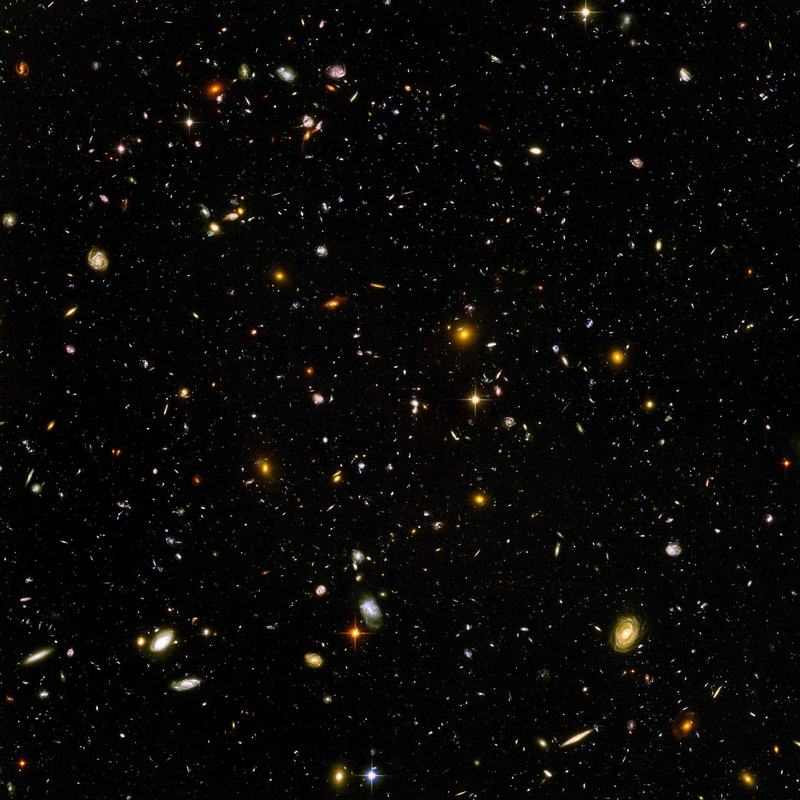

Among the most distant objects found within that reach is GN-z11, a galaxy captured by the Hubble Space Telescope in 2016 at a redshift of about z≈11.1, seen as it looked roughly 400 million years into the universe's history — a snapshot from when the cosmos was a small fraction of its current age. Every fact in this guide, from the antenna in New Jersey to the afterglow overhead tonight, is really one long argument for the same conclusion: the universe had a beginning, and the evidence for it is still arriving.