In the Lambda-CDM model that cosmologists currently use to describe the universe, ordinary matter — the atoms that make up stars, planets, and people — adds up to just 5 percent of everything that exists. Dark matter, a form of mass nobody has ever directly detected, comes to 26.8 percent, more than five times as much, with the remaining 68.2 percent made up of dark energy, a separate mystery this article only touches on in passing.
Nobody has isolated a particle of dark matter, photographed it, or explained exactly what it is made of. What convinced scientists it exists at all is roughly a century of indirect clues: galaxies spinning faster than they should, clusters of galaxies carrying far more gravity than their visible matter can supply, and light bending around clumps of mass that give off no light of their own. This article walks through where each of those clues came from, in the order astronomers actually found them.
A Name Coined Before Any Evidence
The term itself is older than most of the evidence for it. In 1906, French mathematician and physicist Henri Poincaré used the phrase matière obscure — literally "dark matter" — while discussing an earlier estimate by Lord Kelvin, who had suggested that many of the countless stars near the Sun might be dark, non-luminous bodies rather than shining ones. Poincaré's essay came out decades before Fritz Zwicky's cluster measurements or Vera Rubin's galaxy studies: astronomers had a word for the mystery well before they had proof of it.
A Spinning Galaxy Gives the First Clue
The earliest hard data came from Vesto Slipher, who pointed a telescope at the Andromeda galaxy in 1914 and made what were the first measurements tied to what astronomers now call a galaxy rotation curve — how orbital speed changes with distance from a galaxy's center.

Slipher found something odd: stars on one side of Andromeda's central bulge were approaching Earth at around 320 kilometers per second, while stars on the opposite side were moving at only about 280 kilometers per second. The mismatch wasn't proof of dark matter on its own, but it was an early sign that spiral galaxies don't rotate the simple way a solar system does, and it planted a question that would take decades to work out properly.
The Astronomer Who Weighed a Cluster and Found It Wanting
Fritz Zwicky took the puzzle further in 1933. The Swiss astrophysicist, working at Caltech, studied a cluster of galaxies and tried to weigh it two different ways: once by adding up the light coming from its member galaxies, and once by measuring how fast those galaxies moved around each other under the cluster's gravity. The two answers did not match.
Zwicky's velocity-based estimate came out to about 400 times more mass than the visible galaxies could account for — a gap far too large to explain with ordinary stars and gas alone. He concluded that most of the cluster's gravitating material had to be dark, invisible matter, an idea that had to wait for better instruments before the rest of astronomy took it up in earnest.
The Woman Who Had to Fight to Look
Vera Rubin ran into a barrier before she ever got near the puzzle of galaxy rotation: simply getting telescope time. While at the Carnegie Institution, she applied in 1965 for observing time at the Palomar Observatory, becoming the first female astronomer permitted to observe there.
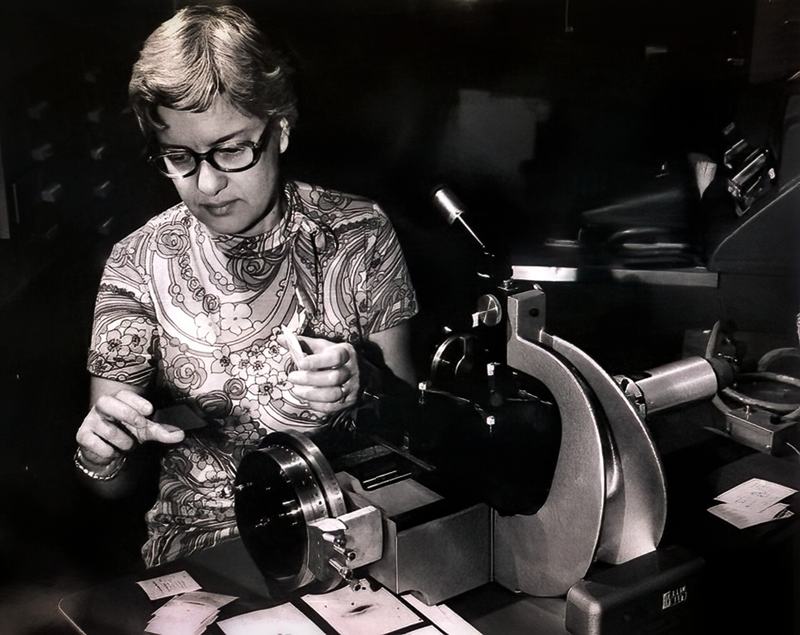

She got her chance to settle the bigger question a decade later. Teaming up with astronomer Kent Ford, Rubin presented findings to the American Astronomical Society in 1975: across spiral galaxies, stars near the edge move at close to the same velocity as stars nearer the center, regardless of how far out they sit — meaning galaxy mass keeps climbing well past the point where the visible stars run out. That is exactly the kind of extra, unseen mass Zwicky had inferred from galaxy clusters, now measured directly inside individual galaxies.
Bending Light to Map the Invisible
Gravity does one more useful thing: it bends light. Dark matter cannot be photographed directly, but research published in Nature identifies gravitational lensing as the most effective way to detect it: light from distant galaxies bends as it passes concentrations of foreground mass. Because the effect depends only on gravity, it picks up dark matter and ordinary matter alike, which makes it one of the few tools that can trace where all the mass in the universe actually sits.
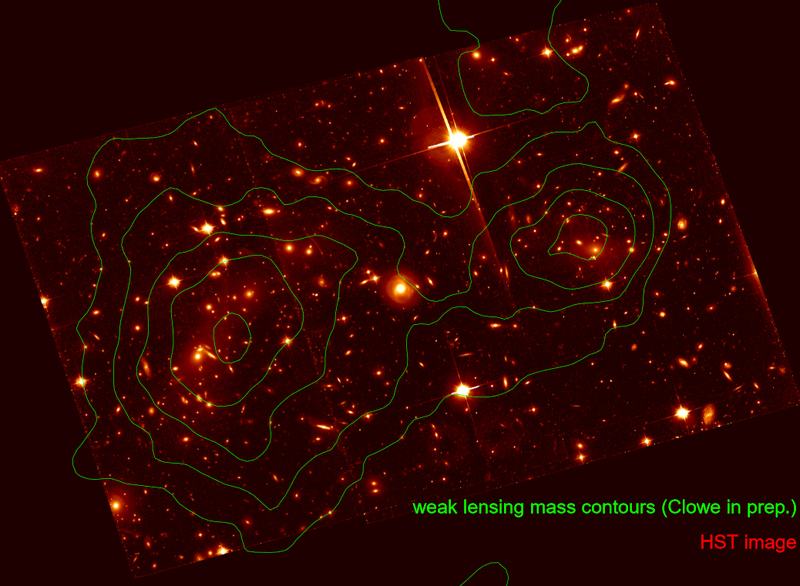

That technique has produced some detailed mass maps. An international team analyzed images covering five patches of sky — a combined footprint equal to about 2200 full Moons placed side by side — containing roughly 15 million galaxies, tracking how gravity from the cosmic web bent their light. Separately, a team using the Hubble Space Telescope's Cosmic Evolution Survey (COSMOS), the largest survey of the universe the telescope has carried out, involving 70 astronomers led by Nick Scoville of Caltech, built a three-dimensional map of dark matter's distribution using the same lensing principle.
The two approaches do not always agree with other methods, either. The wide-sky survey team found that their own estimate of how much matter clumps together across the cosmos came out well under the figure calculated from the Planck satellite's observations — a mismatch scientists are still working to resolve.
An Echo From the Early Universe
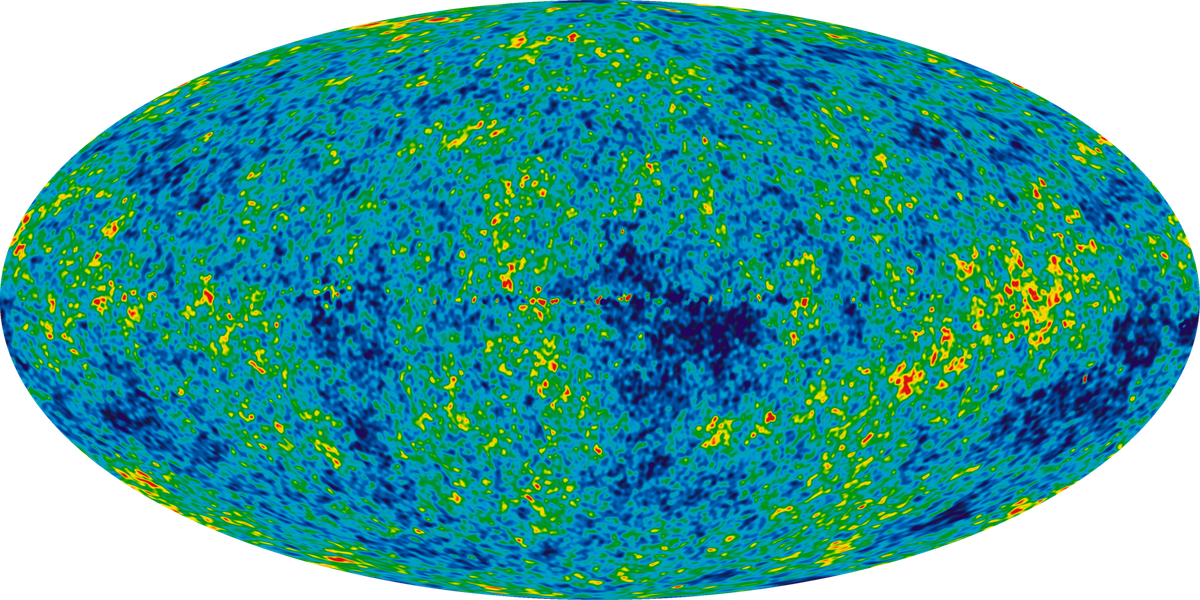
Dark matter also left fingerprints on the oldest light in the universe. The cosmic microwave background — light released when the universe was roughly 375,000 years old — carries tiny temperature differences that trace how matter, including dark matter, was already starting to clump together at that early stage.
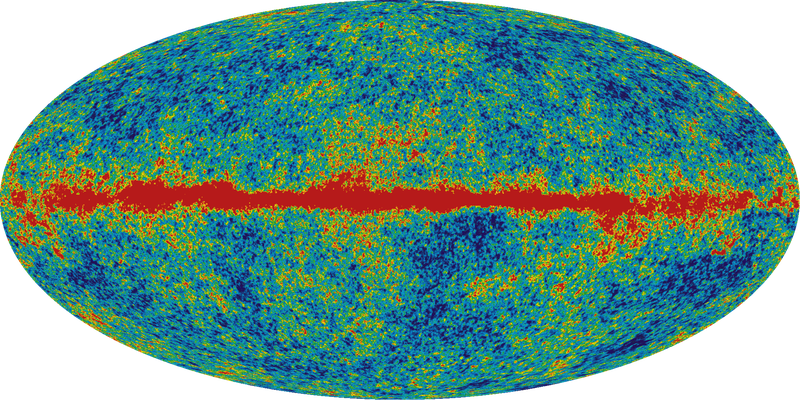

NASA's Cosmic Background Explorer (COBE) satellite first picked up those tiny temperature differences across the sky in 1992, and later missions refined the picture. NASA's own timeline places that snapshot within a universe that has been evolving for 13.77 billion years, long enough for gravity to pull small early-universe fluctuations into the galaxies, clusters, and cosmic web astronomers map today.
A Rival Theory, and a Search That Continues
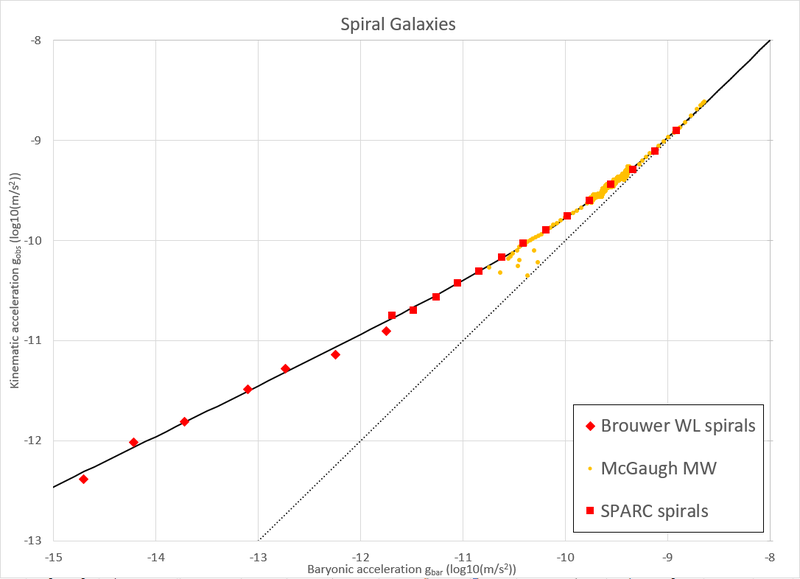
Not every astrophysicist is convinced dark matter is the right answer. For decades, researchers have measured more gravitational pull in space than the visible or known matter can account for, and the standard fix has been to assume unseen mass is filling the gap. A minority instead argue the real problem is with the law of gravity itself: galaxies appear to break rules dating back to Isaac Newton's work in the late 1600s, which has kept modified Newtonian dynamics, or MOND, alive as a rival explanation.
Meanwhile, the direct search for a dark matter particle keeps running. In late 2025, the LZ dark matter detector excluded WIMP interactions with cross-sections above 9 GeV/c2 as a possible explanation, while also reporting the first confirmed detection of boron-8 solar neutrinos through a related process called coherent elastic neutrino-nucleus scattering. Whichever explanation eventually wins, the hunt for the universe's missing mass is still very much underway.
Sources
- Unique prediction of 'modified gravity' challenges dark matter | ScienceDaily
- Dark Matter May be Smoother than Expected | ESO
- WMAP Overview - NASA Science
- ESA - First 3D map of the Universe's dark matter scaffolding
- Dark matter maps reveal cosmic scaffolding | Nature
- Wikipedia: Dark matter
- Wikipedia: Vera Rubin
- Wikipedia: Galaxy rotation curve