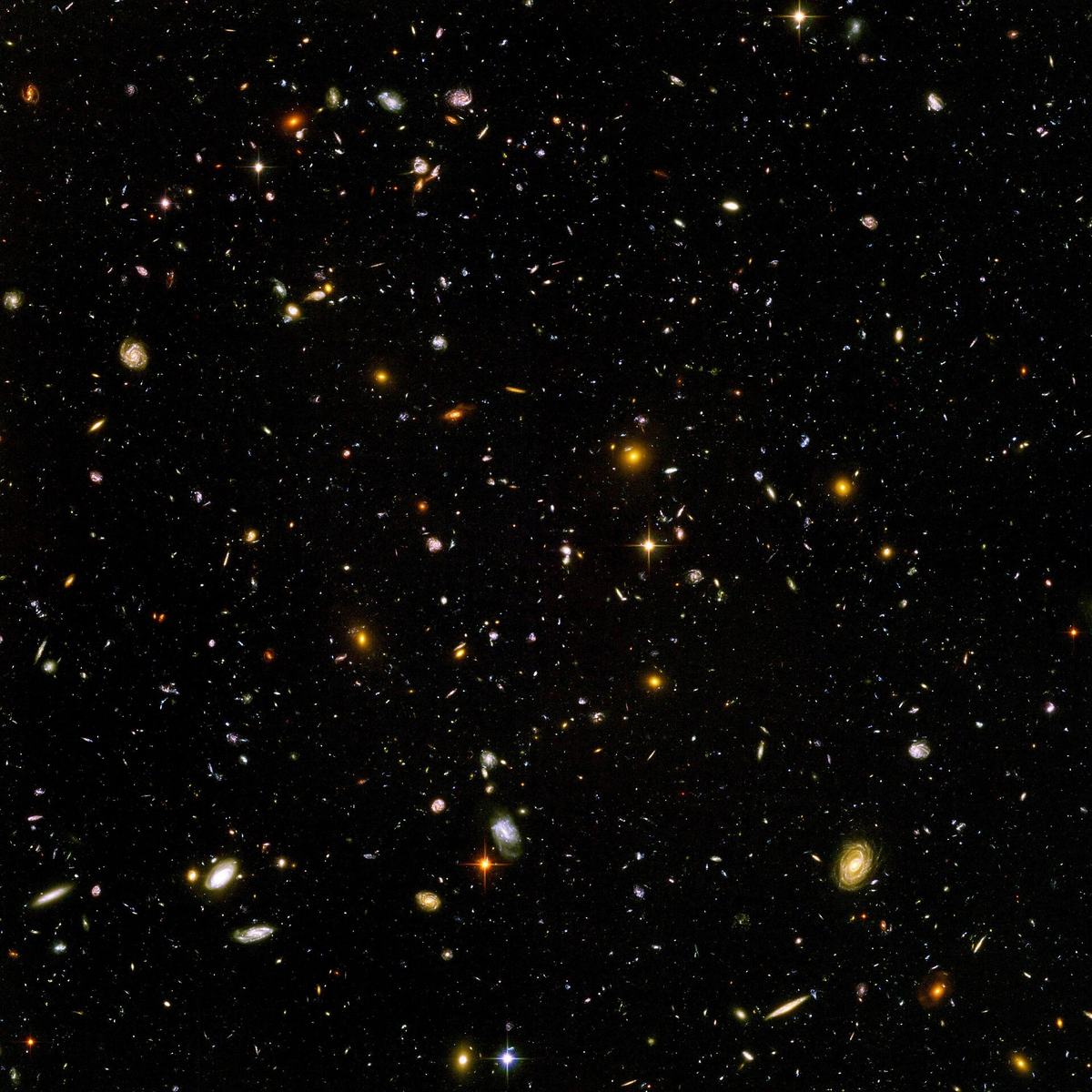
Roughly 68% of everything that exists is something no instrument has ever directly detected: dark energy. Cosmologists currently put dark matter's share at 27% and ordinary atoms — the stuff of stars, planets, and people — at a mere 5%. Despite outweighing everything else combined, dark energy went unnamed and unnoticed until the closing years of the twentieth century.
That changed in 1998, when two rival teams studying exploding stars found that the universe's expansion is speeding up rather than slowing down. The result was so unexpected that it sent physicists back to an idea Albert Einstein had introduced, then abandoned, decades earlier.
This article walks through what those observations actually showed, how the universe's oldest light backs them up, and why explaining dark energy is still considered one of the hardest open problems in physics.
The Universe's Missing 68 Percent
The 68/27/5 split is cosmology's current best accounting of everything in existence, and it keeps getting refined as instruments improve. Data from the European Space Agency's Planck satellite put dark matter's share at 26.8%, nearly a fifth higher than earlier estimates had suggested — a sign that even the "settled" numbers in cosmology are still moving targets.
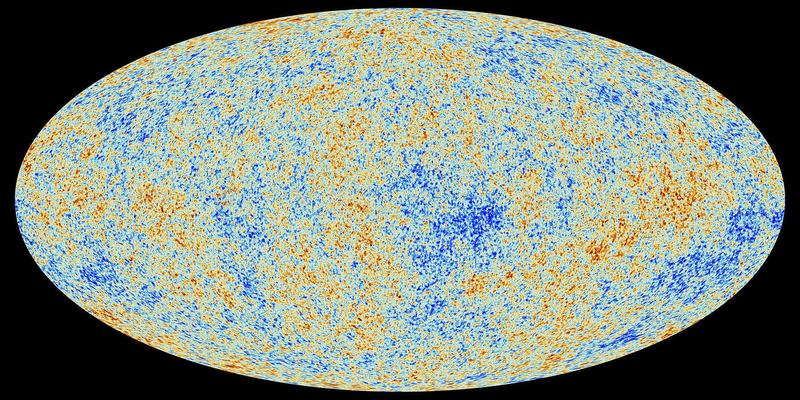

What makes dark energy strange is how it dominates the cosmic budget while barely existing at all. Its density works out to about 7×10⁻³⁰ grams per cubic centimeter, equivalent to roughly 6×10⁻¹⁰ joules per cubic meter of mass-energy — far below what ordinary matter or dark matter reach when packed inside a galaxy. It wins the accounting not by being concentrated anywhere, but simply by being everywhere at once, so its total effect grows as the universe itself grows.
A Blunder That Turned Out Right
Long before anyone measured an acceleration, Einstein had already built the mathematical tool that would end up describing it. He added an extra term to his gravitational equations specifically to allow for a static, unchanging universe, which was the standard assumption of his era. When later observations showed the cosmos expanding instead, Einstein threw out his own fix, calling it a blunder.
That abandoned term sat mostly forgotten until cosmologist Michael S. Turner revived the concept under a new label. Writing a paper with Saul Perlmutter and Martin White in 1998, Turner coined the term "dark energy" for whatever force was driving the newly discovered acceleration — effectively rehabilitating the very idea Einstein had discarded.
Exploding Stars That Rewrote Cosmology
The breakthrough came in 1998, when two rival groups — the Supernova Cosmology Project on one side, the High-Z Supernova Search Team on the other — independently used distant type Ia supernovae to track how the pace of cosmic expansion has changed over billions of years.
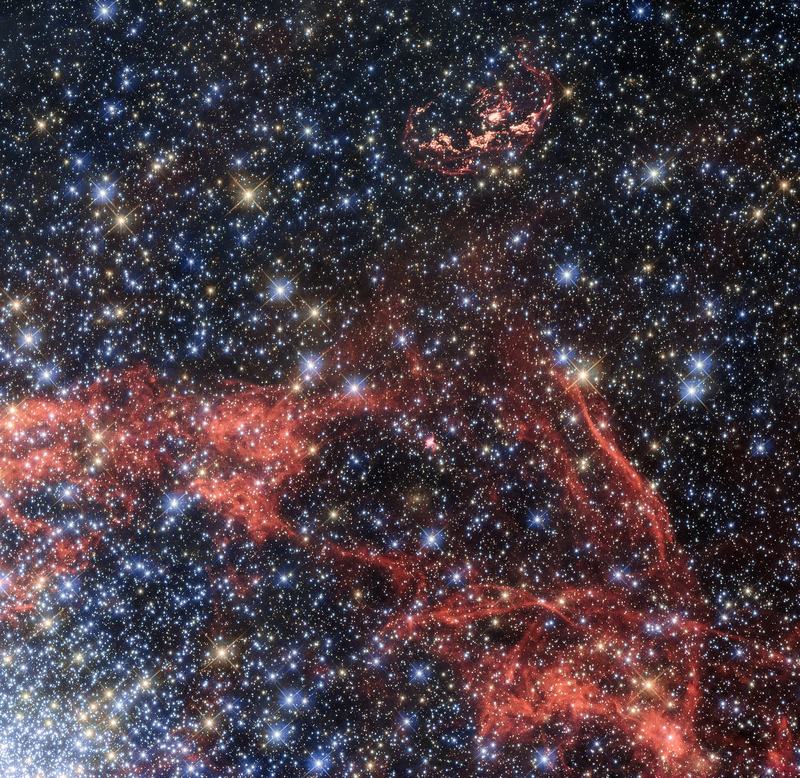

These particular supernovae make reliable cosmic yardsticks because of how consistently they detonate. They occur when a carbon-oxygen white dwarf's mass creeps up toward roughly 1.44 solar masses, the threshold beyond which the star can no longer hold itself up. Because that limit is nearly identical from star to star, the resulting explosions reach comparable peak brightness, which is what let both teams use them to gauge distance. When those distances were compared against how much the light had redshifted, the numbers only made sense if the expansion itself was accelerating.
The Universe's Oldest Light
Dark energy's story also runs through the oldest light astronomers can observe. The cosmic microwave background was found entirely by accident in 1965, when two Bell Labs researchers, Arno Penzias and Robert Wilson, were chasing down a source of radio interference and instead stumbled on a faint glow covering the whole sky.
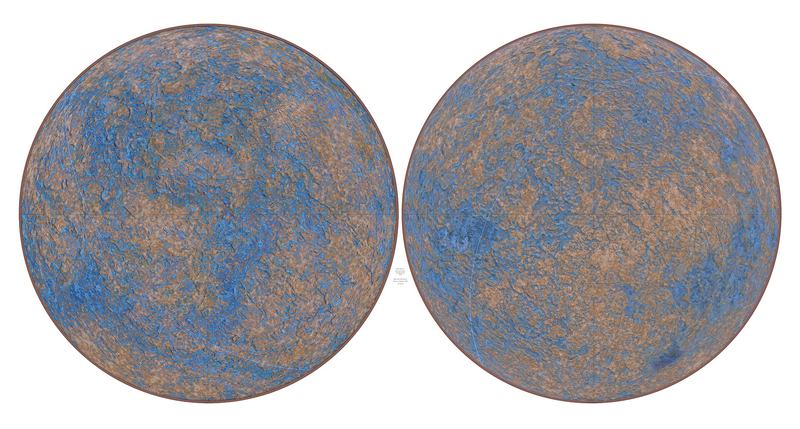

That glow is a snapshot of the cosmos from roughly 375,000 years after it began, back when everything was still a hot, dense soup of particles. As space has stretched since then, the light itself has stretched with it, cooling into microwave wavelengths equivalent to just 2.7 degrees above absolute zero today. In 1992, NASA's Cosmic Background Explorer satellite found that this glow isn't perfectly smooth — it carries tiny temperature variations across the sky, and mapping those variations with ever-finer precision is how cosmologists arrived at today's 68/27/5 recipe in the first place.
Physics' Worst Prediction
Knowing dark energy exists is one thing; explaining what it actually is remains far harder. One leading idea treats it as the intrinsic energy of empty space, the vacuum described by quantum field theory. The trouble is that when physicists try to calculate how much energy that vacuum should carry, the result overshoots what's actually observed by about 120 orders of magnitude — a gap so enormous that some researchers rank it as physics' least accurate calculation on record. No adjustment to the math has closed that gap, which is a large part of why dark energy is still treated as unfinished business.
Testing Einstein at Cosmic Scale
If dark energy isn't real, something else has to explain the acceleration — and the leading alternative is that Einstein's own theory of gravity breaks down once distances get large enough, letting space stretch faster than gravity can restrain it. Ruling that out took decades, and only became possible once astronomers could measure gravitational waves directly.
GW170817, the first gravitational wave pinned down through non-gravitational observations as well, let physicists clock the speed of gravity precisely enough to rule out many of the modified-gravity theories that had been proposed as alternatives to dark energy.
The Case for a Changing Universe
The story isn't finished. The Dark Energy Spectroscopic Instrument collaboration, reporting back in March of 2025, found that dark energy's strength might not be constant after all. Combining the instrument's baryon acoustic oscillation data with cosmic microwave background measurements, weak lensing surveys, and supernova catalogs, the team found evidence for a dark energy that evolves over time, with a statistical confidence that fell somewhere between 2.8 and 4.2 sigma, depending on which datasets were combined.
That result is intriguing but not yet settled, which keeps the true nature of dark energy an open question decades after Turner first gave it a name.
Sources
- NASA: WMAP Overview
- ESA: Planck Reveals an Almost Perfect Universe
- Phys.org: Quest to Settle Riddle Over Einstein's Theory
- Scientific American: The End of Cosmology?
- Wikipedia: Dark Energy
- Wikipedia: Accelerating Expansion of the Universe
- Wikipedia: Cosmological Constant
- Wikipedia: Type Ia Supernova