Kepler-51b weighs in at roughly double Earth's mass, yet it puffs up to nearly the size of Saturn, a planet that outweighs Earth a hundredfold. That kind of mismatch between mass and size is exactly why exoplanets, worlds orbiting stars other than the Sun, keep surprising the astronomers who study them.
Barely three decades ago, nobody had confirmed a single planet beyond our solar system. Today thousands are catalogued, and the tally keeps climbing as space telescopes and ground-based surveys refine the search. This guide pulls together the discoveries, the near-misses, and the physics that make exoplanets one of the liveliest fields in astronomy.

The Discoveries That Started It All
The first confirmed exoplanets were not the cozy, Earth-like worlds fiction had promised. They were two terrestrial-mass planets found orbiting a millisecond pulsar, the collapsed, rapidly spinning remnant of a dead star, announced in 1992 by Aleksander Wolszczan and Dale Frail. Pulsars emit radio pulses with such clockwork precision that tiny timing wobbles betrayed the gravity of unseen companions.
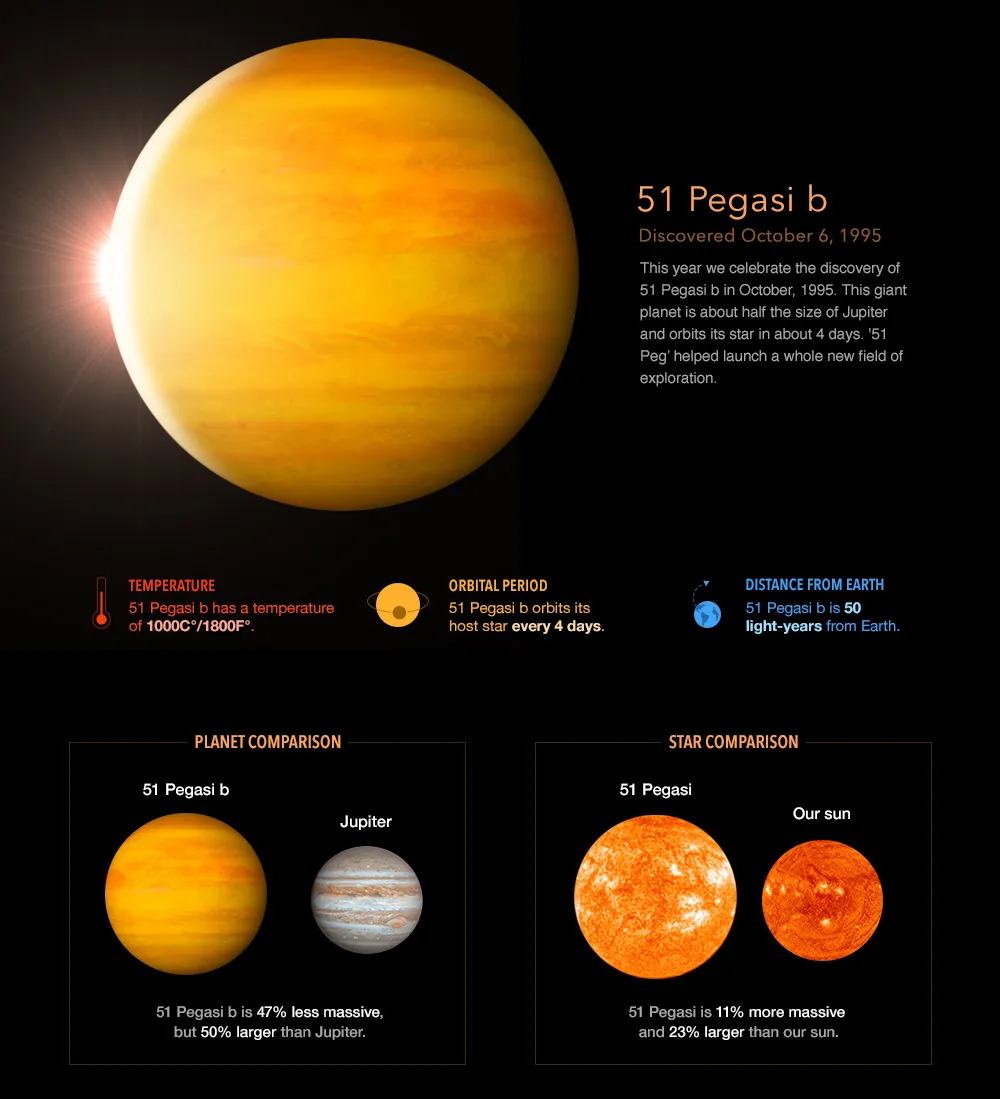
Three years later came a discovery that felt more familiar. Astronomers found the first confirmed exoplanet around a Sun-like main-sequence star in a tight, four-day orbit around 51 Pegasi in 1995. Researchers pinned it down with a spectroscope precise enough to catch velocity changes of around 70 metres per second in the star's light, the faint gravitational tug of an orbiting planet dragging its star back and forth. That instrument-level precision, detecting a wobble slower than a brisk jog, is what turned exoplanet hunting from speculation into a repeatable science.
Worlds That Break the Rules of Planet-Building
Not every exoplanet fits the tidy categories astronomers built from our own eight planets. Kepler-51b carries only about twice Earth's mass, yet its bulk swells to nearly the size of Saturn, a planet a hundred times heavier. A planet that puffy for its mass has to be extraordinarily low in density, hinting at an atmosphere so extended and lightweight that it barely holds itself together.

Mass and size mismatches run in both directions. Among the entries in NASA's Exoplanet Archive, none outweighs HR 2562 b, which tips the scales at roughly 30 times the mass of Jupiter, itself already the heaviest planet in our own solar system. At the other extreme, a broader survey of thousands of exoplanets found a pattern in how they move rather than how big they are: large planets tend to settle into elliptical orbits, while smaller planets favor closer to circular paths. Nobody plans a solar system that way; it is simply what gravity and leftover debris produce over billions of years.
A Planet Losing a Race Against Its Own Star
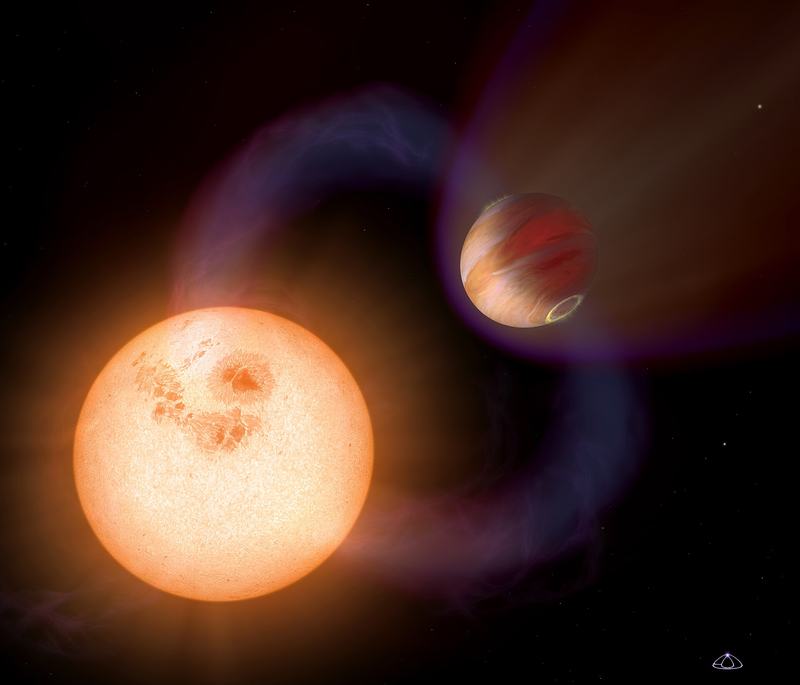
Some exoplanets do not just orbit their star, they slowly disintegrate in front of it. One such doomed world, spotted by Kepler, completes a lap around its host star in just 16 hours and trails a comet-like tail of dust boiled off its own surface. Astronomers only detected it because that dust cloud periodically dims the starlight as it passes, a signature unlike the clean, repeatable dips of an intact planet.
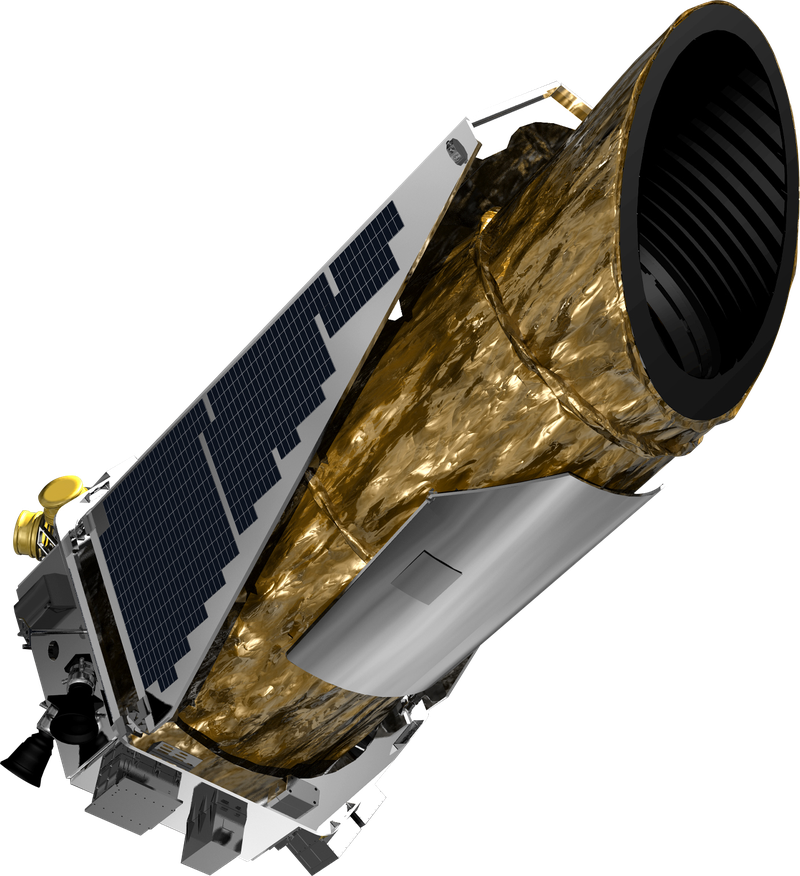
Catching a planet in this state required watching an enormous number of stars at once, which is exactly what Kepler was built for: the telescope monitored more than 145,000 stars simultaneously, hunting for the brief, shallow dimming that signals a transiting exoplanet. Most of the planets discovered this way behave normally. This one stood out precisely because it did not.
A Bigger, Older Cousin to Earth
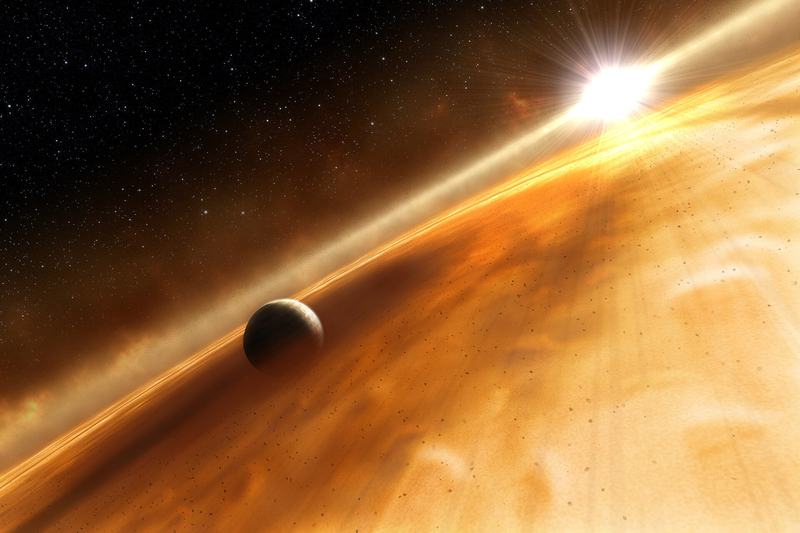
Among Kepler's discoveries, Kepler-452b earned a nickname for a reason. The planet is about 60 percent larger than Earth and circles a G2-type star, the same broad class as the Sun — except this one has racked up 6 billion years, a full 1.5 billion more than our own star has seen. Kepler data analysis lead Jon Jenkins called it "an older, bigger cousin to Earth," one that lets scientists "understand and reflect upon Earth's evolving environment."

What makes Kepler-452b's orbit notable is how ordinary it looks despite the planet's larger size: a full lap takes 385 days, just 5 percent more than Earth needs for one trip around the Sun. A planet that much bigger might be expected to sit much farther from its star, yet the numbers land remarkably close to home, a reminder that size and orbital distance do not automatically scale together.
What Gas Giants Are Made Of
Understanding a planet's interior is harder than spotting it in the first place, since no telescope can see through a planet's clouds. Laboratory experiments fill that gap by recreating the crushing pressures found deep inside gas giants. Squeezing hydrogen, in the form of deuterium, to about 150 gigapascals of pressure flips it from a transparent state to an opaque one, a threshold relevant to modeling what happens inside massive gas giant exoplanets and their solar-system cousins. Results like these let astronomers translate a planet's measured mass and radius into an educated guess about its internal structure, since two planets with identical outer statistics can hide very different interiors.
Worlds Around a Neighboring Star
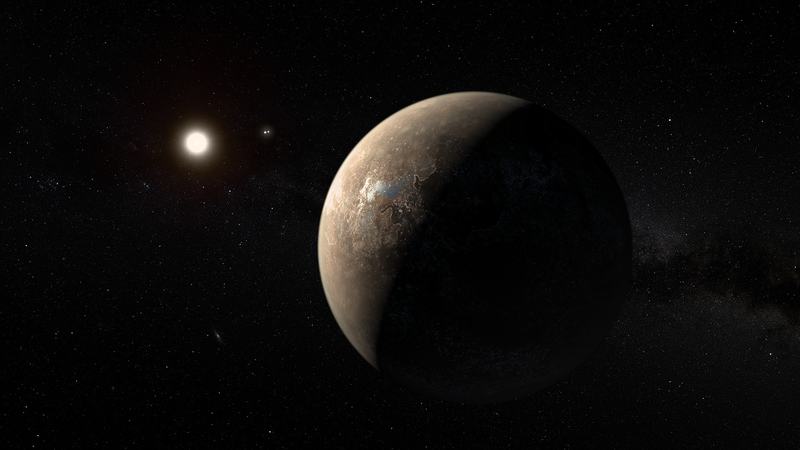
The nearest star to the Sun turned out to host a planet of its own. Proxima Centauri b, discovered orbiting that neighboring star, completes an orbit every 11.2 Earth days at a distance of just about 0.04848 AU, tighter than Mercury's loop around the Sun. Being that close to its star is what keeps the planet warm enough to be of interest despite orbiting a much fainter star than the Sun.

Slightly farther out in the search for nearby planetary systems, TRAPPIST-1 delivered a different kind of prize. Its planetary system was discovered in 2016 by a team led by Belgian astronomer Michael Gillon using observations from the La Silla Observatory in Chile, revealing a compact family of planets clustered around a small, cool star. Finding a whole system in one campaign, rather than one planet at a time, reshaped how astronomers plan future surveys.
Planets Beyond Even the Milky Way
Every exoplanet discussed so far belongs to our own galaxy. That boundary held until researchers combined NASA's Chandra X-ray Observatory with a microlensing technique, watching a distant quasar galaxy for the fingerprints of unseen planets bending its light. The analysis found evidence of roughly 2,000 extragalactic planets for every star beyond the Milky Way. It was the first data to suggest that our own galaxy is just one island among a count of exoplanets that tops a trillion once you look beyond it, a number so large it turns individual planets into a statistical background hum rather than discrete objects to catalog one by one.
Instruments built to catch a single wobbling star or a single dimming light curve were never designed with a trillion planets in mind. That the same detection principles, tiny gravitational and optical distortions, scale from a lone star system to an entire galaxy's worth of planets says as much about the ingenuity of the methods as it does about how common planets turn out to be.
Why the Search Keeps Getting Better
Kepler's own hardware illustrates how much precision this hunt demands. Its primary mirror measured 1.4 meters across, and when Kepler launched, no other telescope flying beyond Earth's atmosphere carried a bigger one — a record the Herschel Space Observatory took over just a few months later. Building an instrument that large, and pointing it at the same patch of sky for years, was the price of catching the faint, repeating transits that reveal a planet the size of Earth.
Each generation of exoplanet science has built on the last: pulsar timing gave way to stellar wobbles, stellar wobbles gave way to transit photometry watching hundreds of thousands of stars at once, and transit photometry now stretches all the way to galaxies beyond our own. The next surprise, whether a planet stranger than Kepler-51b or evidence reshaping how common planets really are, is likely already sitting in data waiting to be analyzed.
Sources
- ScienceDaily: Under Pressure, Hydrogen Offers a Reflection of Giant Planet Interiors
- NASA: Kepler Mission Discovers Bigger, Older Cousin to Earth
- Phys.org: Evaporating Exoplanet Stirs Up Dust
- National Geographic: New Discovery Says Exoplanets May Exist Outside the Milky Way Galaxy
- Wikipedia: Exoplanet
- Wikipedia: 51 Pegasi b
- Wikipedia: Kepler space telescope
- Wikipedia: Proxima Centauri b
- Wikipedia: TRAPPIST-1